
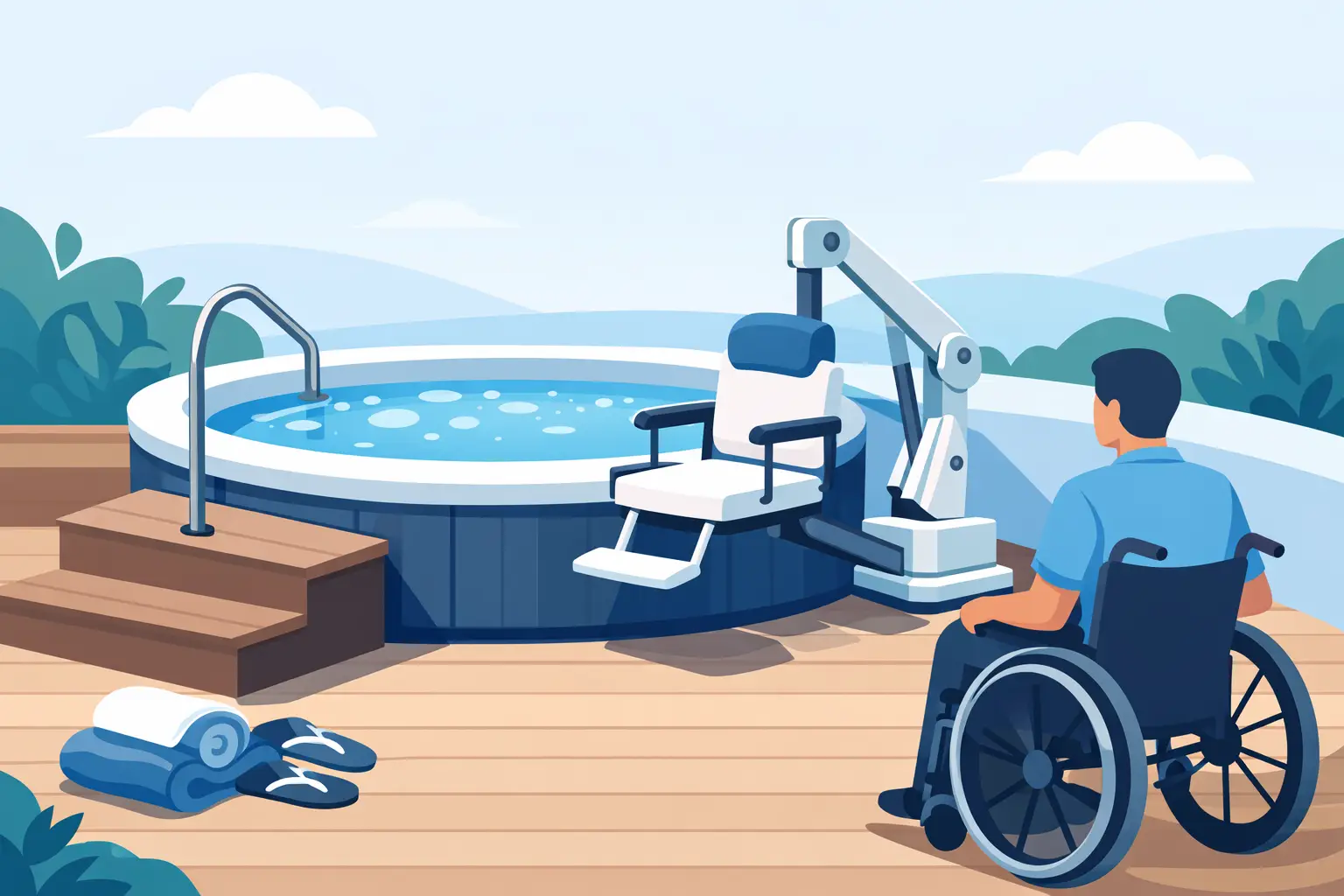
A beautiful hot tub setup can still be frustrating if getting in and out feels awkward, slippery, or harder than it should. For many homeowners, learning how to improve hot tub accessibility starts with a simple truth: access is not just about convenience. It affects safety, comfort, confidence, and how often the spa gets used.
The best accessibility upgrades usually have very little to do with the hot tub shell itself. They come from the space around it – the steps, the handholds, the deck relationship, the storage layout, and the way every piece works together. When those details are planned well, entry and exit feel natural. When they are not, even a premium spa can feel inconvenient.
How to improve hot tub accessibility starts with the approach
Most access problems begin before anyone reaches the first step. If the path to the spa is uneven, narrow, poorly lit, or cluttered, the entire experience becomes less safe. That matters for older adults, families with children, and anyone using the spa after dark or in wet weather.
A good approach path should be stable, slip resistant, and wide enough to walk comfortably without twisting around furniture or planters. If your spa is set into a deck or patio corner, pay attention to turning space. Tight approaches often force users to enter from an awkward angle, which makes stepping up and over more difficult.
Lighting also carries more weight than many homeowners expect. Soft ambient backyard lighting may look great, but it often does not provide enough visibility where feet actually land. The entry area should clearly show the edge of each step, the top platform, and any change in elevation from patio to spa surround.
The right steps matter more than most owners realize
If there is one upgrade that changes access most quickly, it is the step system. Too many hot tubs are paired with generic steps that are too narrow, too steep, or poorly matched to the spa height. That creates hesitation on the way in and instability on the way out.
The ideal hot tub steps have broad, secure treads and a rise that feels easy to manage. A wider platform at the top can make a major difference because it gives users a stable transition point before swinging their legs into the water. That is especially useful for anyone with limited mobility, joint stiffness, or balance concerns.
Material quality matters here too. Outdoor steps live through sun, rain, snow, and constant water exposure. If the material becomes slick, warps over time, or feels flimsy underfoot, accessibility drops quickly. Well-built, all-weather steps keep their shape, maintain traction, and provide a more dependable feel every season.
Why fit and height should be customized
Not every hot tub sits at the same elevation, and not every backyard surface is perfectly level. That is why one-size-fits-all steps can be a compromise. A step system should match the height of the spa and the grade of the surrounding area so users are not making an awkward first climb or stepping down onto an uneven landing.
This is also where aesthetics and accessibility meet. When steps are designed to fit the spa rather than treated like an afterthought, they look integrated and perform better. For premium outdoor spaces, that combination matters.
Handrails add confidence, not clutter
Some homeowners hesitate to add a handrail because they worry it will make the spa area look too clinical. In practice, a well-placed rail often does the opposite. It makes the space feel intentional and easier to use, which is exactly what a well-designed backyard should deliver.
A handrail is especially valuable when the spa is taller, the deck surface gets wet, or users need extra stability while shifting weight. The key is placement. A rail should support the natural motion of entering and exiting the tub, not sit off to the side where users have to reach awkwardly.
There is also a difference between having a rail available and having one positioned correctly. Some installations benefit from a single sturdy support near the main step entry, while others may need a more integrated solution around a platform or surround. It depends on who uses the spa most and how they move.
A surround can solve access issues and improve the entire space
For many premium spa owners, the smartest answer to how to improve hot tub accessibility is not one accessory but a coordinated surround system. This is where accessibility moves beyond a basic step add-on and becomes part of the outdoor living design.
A well-designed surround creates a more generous, stable perimeter around the spa. That extra surface area gives users a better place to stand, turn, set down towels, or transition before entering the water. It can also reduce the visual and physical abruptness of climbing directly into a raised shell.
Surrounds are particularly useful when homeowners want a cleaner, more custom-built appearance without the expense or permanence of full deck construction. They can make the spa easier to access while also improving storage, organization, and visual balance in the yard.
Accessibility and storage are closely connected
This part gets overlooked. If towels, cover lifter bars, chemicals, and accessories are scattered around the entry zone, people naturally take less stable routes around the tub. That increases tripping risk and makes the area feel cramped.
Built-in storage or coordinated accessory placement keeps the access side open and predictable. When everything has a place, users can approach the spa directly and move with less hesitation. Good accessibility is often the result of fewer obstacles, not just more equipment.
Think about who uses the hot tub now and later
Accessibility planning works best when it reflects real use. A younger couple may only need wider steps and better nighttime lighting today, but that same setup should still feel comfortable years from now. Families may be thinking about kids now and aging parents later. Dealers and installers see this often – buyers want the spa to remain usable through different stages of life.
That is why flexible, durable upgrades usually outperform quick fixes. A stronger step system, a better landing area, and thoughtfully integrated support features are worth more over time than low-cost accessories that need replacing or never quite solve the problem.
This is also where consultation matters. In a premium category, the right answer depends on spa model, patio layout, user height, mobility needs, and design preferences. A custom-fit approach tends to produce better results than guessing from catalog dimensions alone.
Materials affect safety and long-term performance
Accessibility products should not only look good on day one. They need to perform after years of sun exposure, moisture, freeze-thaw cycles, and regular use. If a step becomes wobbly or a surface starts to degrade, confidence drops immediately.
That is why material selection deserves close attention. Furniture-grade recycled HDPE has become a strong choice for high-end spa accessories because it resists rot, splintering, and many of the maintenance issues that come with traditional materials. It also allows for a cleaner finished look and dependable color coordination around the spa.
For homeowners investing in a polished backyard environment, durability is part of accessibility. A product that stays stable, attractive, and easy to maintain is simply easier to live with.
Small layout changes can make a big difference
Not every accessibility improvement requires a major purchase. Sometimes the issue is the orientation of the steps, the location of nearby furniture, or the way the cover lifter opens into the traffic path. If the spa entry faces the wrong direction or forces users to squeeze between obstacles, the area will always feel harder to use than it needs to.
Try looking at the space from the perspective of someone carrying a towel, stepping onto a wet surface, or exiting the tub on a cold evening. Where do they put their feet first? What do they grab for support? Where do they pause? Those answers usually reveal the weak points.
When homeowners want a cleaner and more permanent solution, companies such as A&B Outdoor Products help address those details with custom accessories designed around actual spa models and backyard layouts rather than generic dimensions.
When accessibility should be a priority, not a future project
If anyone in the household avoids using the spa because entry feels difficult, accessibility already needs attention. The same is true if users brace on the cabinet, step down cautiously every time, or complain that the area feels slippery or crowded. These are not small annoyances. They are signs that the setup is working against the experience.
A well-planned spa area should feel easy from the first step to the last. It should welcome daily use, support different users confidently, and still look refined in a high-end outdoor setting. That balance is possible when access is treated as part of the design, not an accessory added later.
The most successful hot tub spaces do not just look finished. They feel comfortable to use every single time, which is what makes them worth coming back to.
