
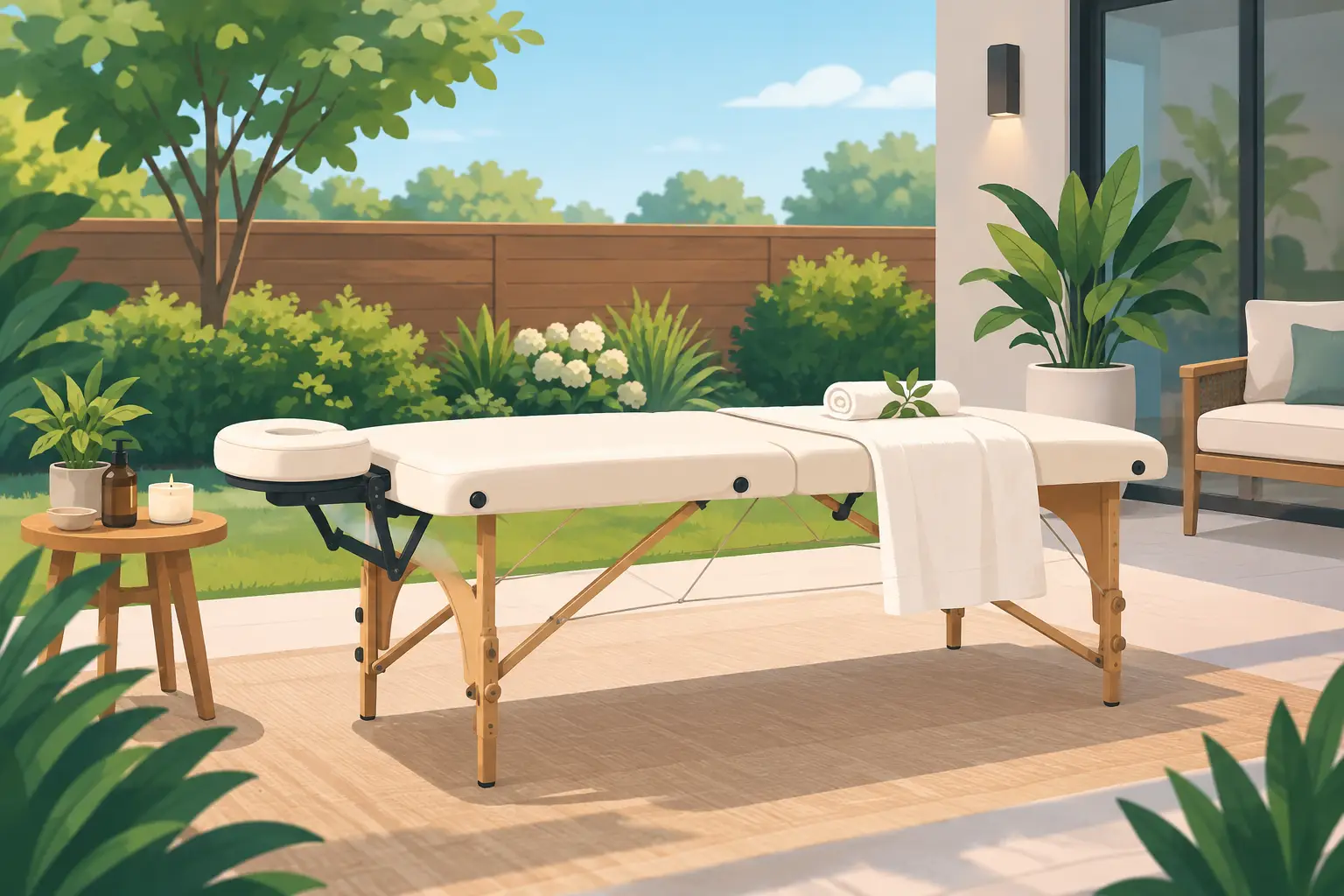
A hot tub is where people gather, relax, and set the day aside. Yet without the right spa tables, that experience often includes balancing a drink on the cover lifter, leaving towels on a nearby chair, or walking back inside for every small necessity. A well-chosen table gives the spa area a finished look while making it far more useful.
The best choice is not simply the smallest outdoor table that fits beside the cabinet. It should suit the way you use the spa, complement its color and scale, and withstand the water, sun, temperature swings, and regular cleaning that come with an outdoor spa environment.
What Spa Tables Should Do
A spa-side table has a practical job. It keeps drinks, reading material, towels, aromatherapy products, and other essentials within easy reach without crowding the entry area. For many homeowners, it also creates a more intentional space around the tub. Instead of looking like an appliance placed on a patio, the hot tub becomes part of a coordinated outdoor living area.
Placement matters as much as appearance. A table near the seating area can serve guests before and after a soak. A narrower surface by the steps can hold towels or personal items, provided it does not interfere with a safe path in and out of the water. Around a swim spa, tables may help define a lounge zone apart from the exercise area.
The right design balances convenience with clear access. A table that looks attractive but forces people to squeeze between it and the spa will quickly become a frustration. Measure the usable deck or patio space, account for the cover and cover lifter in both open and closed positions, and leave room for comfortable traffic flow.
Choose Materials Made for Spa-Side Conditions
Not all outdoor furniture holds up equally well next to hot, treated water. Spa environments expose surfaces to splashes, humidity, sunlight, and seasonal weather. Materials that may perform adequately under a covered porch can fade, crack, rust, or require frequent refinishing when installed beside a hot tub.
Furniture-grade recycled HDPE is a strong choice for spa tables because it is built for outdoor exposure and easy ownership. It will not rot, splinter, or absorb moisture like unfinished wood. Unlike painted surfaces, its color runs through the material, helping it maintain a clean appearance over years of use. Routine care is straightforward: wash it with mild soap and water as needed, then rinse.
This material also has the weight and substance expected in a premium backyard setting. Lightweight patio pieces may be easy to move, but they can feel temporary and may shift in strong weather. A substantial table is better suited to a permanent spa installation where quality, stability, and visual continuity matter.
Why wood and metal can be a trade-off
Wood brings natural warmth, but it typically demands ongoing sealing, staining, or refinishing. Near a spa, repeated moisture exposure can accelerate that maintenance. Metal can offer a sleek appearance, although powder-coated finishes can chip and exposed hardware may corrode over time, particularly in humid or coastal locations.
Those materials can still make sense in certain covered or highly protected installations. For most open-air hot tub patios, however, a weather-resistant HDPE table reduces maintenance without sacrificing a refined finish.
Match the Table to Your Spa Area
Color coordination is one of the details that separates a polished installation from a collection of unrelated outdoor pieces. The table does not need to match every component exactly, but it should relate to the spa cabinet, steps, surround, or existing patio furniture.
A darker table can ground a light-colored spa and create a tailored contrast. Coordinating colors can produce a more unified, built-in appearance. If the spa is the focal point of a compact patio, choosing a table from the same design family as the steps or storage pieces helps the whole area feel planned rather than added over time.
Scale deserves the same attention. A large rectangular table may be useful beside a swim spa seating area, where several people gather and there is room to spread out. Around a smaller hot tub, a compact side table or a pair of smaller tables often works better. The goal is to add function without visually overwhelming the spa or blocking the view across the backyard.
A custom approach is particularly valuable when standard dimensions will not work. Curved patios, raised decks, unusual spa placements, and built-in landscaping all create constraints. A table designed around the actual site can preserve access, coordinate with the spa, and make better use of every available inch.
Think Beyond Drinks and Towels
The most useful tables support the full spa routine. Before guests arrive, they provide a place for clean towels, water, snacks, and outdoor-safe serving pieces. During a soak, they keep phones and personal belongings off the ground and away from wet surfaces. Afterward, they can hold robes, a book, or a warm drink while everyone cools down.
If storage is a concern, consider how the table will work alongside steps, cabinets, or a spa surround. A table is not always the answer to every organization problem. In a tight space, integrated storage or a larger coordinated accessory may deliver more value than adding another freestanding surface. It depends on whether your biggest need is immediate reach, concealed storage, seating support, or a more finished appearance.
For dealers and spa professionals, this distinction is worth discussing with customers early. A thoughtful recommendation can prevent an accessory from becoming an afterthought and helps create an installation that photographs well, functions well, and reflects the quality of the spa itself.
Details That Make a Table Safer and Easier to Use
Spa-side furniture should make the area more comfortable, not introduce new hazards. Look for smooth, finished edges, stable construction, and a footprint that does not wobble on the installation surface. Tables should sit on a level, durable base rather than loose gravel or uneven pavers.
Avoid placing a table where it can become a handhold during entry or exit. People naturally reach for what is nearby when they are wet, so steps and railings should remain the dedicated supports for safe access. Keep electrical controls, service panels, and cover-lifter hardware clear as well.
Height is another small but meaningful consideration. A low table may look right next to lounge chairs, while a slightly taller surface can be more convenient for people standing beside the spa. Consider who uses the space most often. If grandchildren, older adults, or frequent guests are part of the picture, clear pathways and easy-to-reach surfaces become even more valuable.
A Long-Term Addition to the Backyard
Premium spa accessories should earn their place over time. A table that coordinates with the spa today should still look appropriate after years of seasonal use, family gatherings, and everyday relaxation. That is why construction quality, color options, and fit deserve more attention than a quick patio-furniture purchase.
A&B Outdoor Products has built its reputation on USA-made spa accessories that combine practical function with furniture-grade finishes. When tables, steps, surrounds, and storage elements share a common design language, the result is a backyard spa area that feels considered from every angle.
Before choosing a table, stand beside the spa with the cover open, picture where guests will walk, and identify the items you reach for most often. The best spa table will not call attention to itself every time you use it. It will simply make every soak easier, tidier, and more inviting.
