
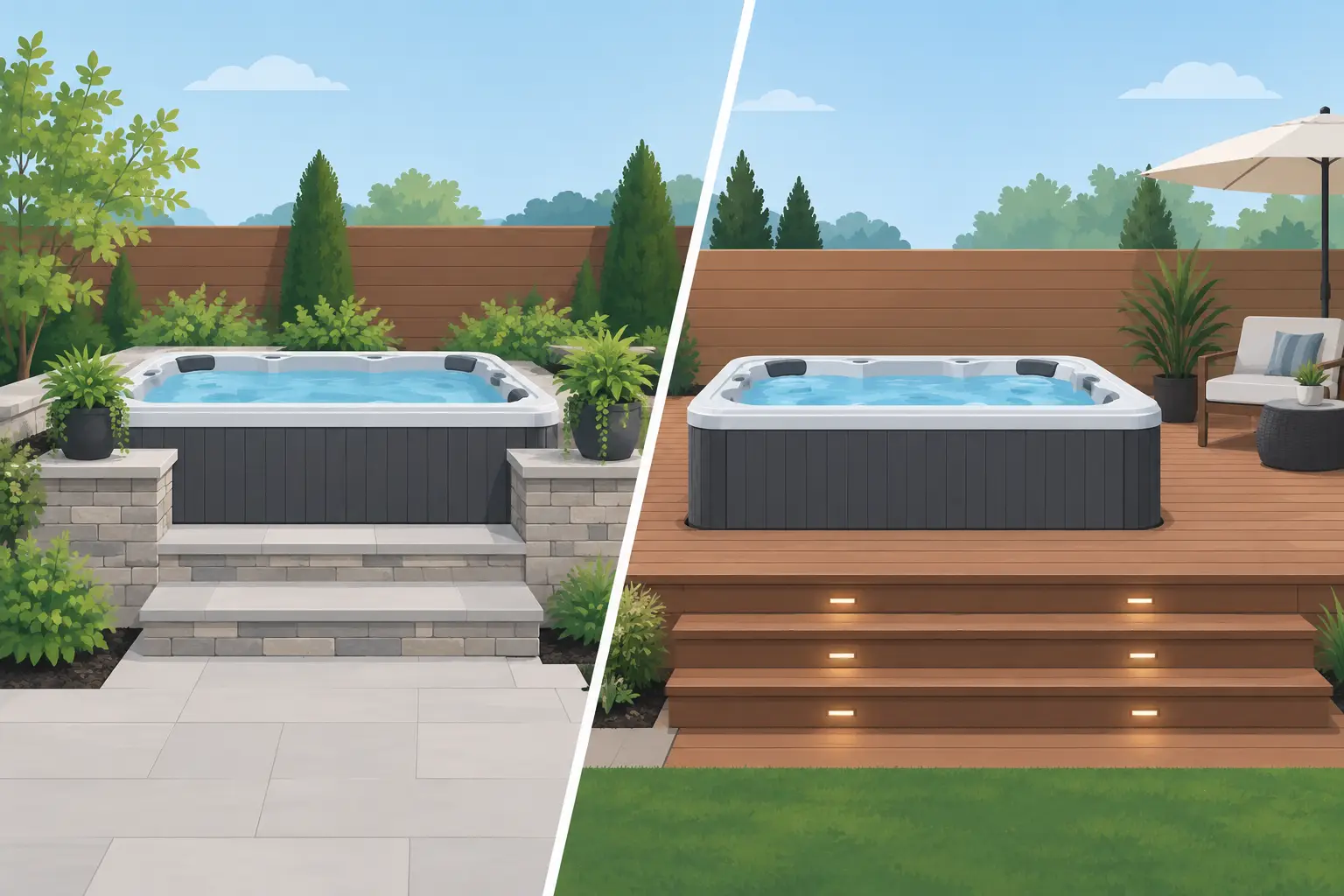
A hot tub can be the best seat in the backyard, but the area around it determines whether it feels finished or simply installed. The choice between a spa surround versus deck affects how easily you enter the water, where towels and supplies go, how the space holds up to weather, and how polished the entire backyard appears. Both can be excellent solutions. The better choice depends on your spa location, available space, maintenance expectations, and the way you plan to use it.
What Is the Difference Between a Spa Surround and a Deck?
A spa surround is a purpose-built structure designed specifically for a hot tub or swim spa. It typically wraps one or more sides of the spa and may include integrated steps, seating, storage, bar-height surfaces, or access panels for service. A quality surround is designed to make the spa look intentional while solving the everyday details that come with ownership.
A deck is a larger platform, often built from wood or composite materials, that creates an outdoor floor around the spa. It can extend from the house, connect multiple outdoor living areas, or place the hot tub within a broad entertaining space. A deck may sit level with the spa lip, step down around it, or accommodate a spa that is partially recessed.
The distinction matters because one is generally a spa accessory system and the other is a construction project. A surround can provide a high-end, coordinated spa area without rebuilding the yard. A deck can create a more expansive destination, but it usually requires greater planning, cost, and long-term maintenance.
Spa Surround Versus Deck: Compare the Daily Experience
The right decision becomes clearer when you consider the routine moments: stepping into the spa after dark, setting down a drink, reaching for a towel, covering the tub, or hosting family and friends.
Entry, exit, and safety
A surround with properly sized steps gives bathers a predictable, secure route into the hot tub. This is especially valuable when the spa sits on a patio or concrete pad and its entry height feels substantial. Wider treads, a stable platform, and a landing space can make entry more comfortable for children, older adults, and anyone carrying towels or water-care supplies.
A deck can also create easy entry, particularly when it is built close to the spa’s rim. Still, a flush or nearly flush installation needs careful thought. A surface that looks sleek can leave little visual distinction between deck and water, while an overly recessed spa can make service access difficult. The most attractive layout is not always the most practical one.
Wet surfaces deserve attention in either design. Choose materials with dependable traction, avoid awkward step transitions, and provide enough clear space for a cover lifter and safe movement around the spa. Good access should feel natural before anyone gets into the water.
Storage and convenience
This is where a dedicated surround often has an advantage. Spa ownership comes with items that need a nearby home: towels, chemicals, test strips, skimmer nets, cover-care products, drinks, and personal items. A surround can incorporate storage cabinets, shelves, and tables without cluttering the patio with mismatched furniture.
A deck offers open square footage, but it does not automatically create organization. Homeowners may still need weather-resistant cabinets, benches, or freestanding tables. Those pieces can work well, although they need to be selected carefully if the goal is a refined, coordinated outdoor setting.
For a homeowner who wants everything needed for a soak within reach, a surround delivers concentrated function in a smaller footprint. For someone planning a full outdoor kitchen, fire feature, dining area, and lounge zone, the broader canvas of a deck may be more useful.
Appearance and design flexibility
A deck can make a spa feel integrated with a home’s architecture, particularly when it extends from an existing porch or patio. It is a strong choice for large yards and major outdoor renovations. With thoughtful lighting, railings, and furniture, it can turn the spa into one part of a complete entertaining environment.
A custom surround brings a different kind of design flexibility. It can be tailored to the specific spa model, available clearance, preferred entry side, and backyard layout. Color-coordinated panels and furniture-grade materials help the spa area look considered rather than pieced together over time.
This is particularly helpful when the hot tub is freestanding on a compact patio. Instead of committing to a large construction project, you can give the spa a finished, built-in appearance with steps, surfaces, and storage designed around the equipment itself.
Installation, Service Access, and Cost Considerations
A deck is usually the more involved option. Depending on its size, height, and location, it may require site preparation, footings, framing, permits, inspections, and coordination with a contractor. If the spa will be set into the deck, the design must leave adequate room to remove panels and reach pumps, heaters, controls, and plumbing when service is needed.
That access is easy to overlook. Hot tubs are durable appliances, but every spa needs occasional maintenance. A deck that traps the cabinet behind fixed framing can turn a routine repair into an expensive construction issue. Before building, confirm the manufacturer’s required service clearances and decide how removable sections will work.
A spa surround generally installs with less disruption and can be a more efficient investment when the spa already has a solid, level base. It does not eliminate the need for proper spa placement or electrical work, but it can add a substantial upgrade without altering the entire landscape.
Upfront price should be weighed against what each option replaces. A deck may provide a large entertaining area but can require a larger budget. A surround can combine steps, a privacy element, storage, and serving surfaces in one coordinated installation. The best value is not simply the lower initial number. It is the solution that adds the function you will use for years.
Material Durability Matters Around Water
The spa environment is hard on outdoor materials. Water splashes, humidity, ultraviolet exposure, temperature swings, and chemical residue all take a toll. Wood decks can be beautiful, but they need regular cleaning, sealing or staining, and inspection for splinters, warping, and fastener issues. Composite decking reduces some of that work, though it still needs cleaning and can become warm in direct sun.
For spa surrounds, recycled HDPE is a practical premium material. It will not rot, crack, peel, or need painting, and it is easy to maintain with basic cleaning. Furniture-grade HDPE also offers the substantial feel and clean finish homeowners expect from a permanent outdoor feature.
Material choice should match the climate as well as your maintenance preferences. In areas with intense sun, freezing winters, heavy rain, or coastal conditions, an all-weather surround material can save considerable effort over the life of the spa area.
When a Spa Surround Makes the Most Sense
A surround is often the stronger choice when the spa is already positioned on a patio, slab, or paver base and needs more function around it. It is also ideal for homeowners who want coordinated steps, storage, tables, or privacy without committing to a full backyard renovation.
It works especially well for compact spaces. Rather than consuming the yard with a large platform, a custom-fit surround can create a defined spa zone that feels generous and organized. For dealers and installers, a model-compatible surround is also a reliable way to offer customers a finished look without introducing the variables of a site-built deck.
When a Deck Is Worth the Investment
Choose a deck when the spa is part of a larger outdoor-living plan. If you are already building a raised patio, connecting the backyard to the home, or creating multiple gathering spaces, a deck can provide continuity and room for guests.
It may also be the preferred solution on sloped sites where a level platform is necessary. Just make sure the design protects service access, accounts for drainage, and gives the cover and cover lifter room to operate. A well-built deck should support spa ownership, not complicate it.
Plan the Space Before You Build
Before choosing either option, measure more than the spa cabinet. Account for the cover lifter, electrical access, drainage path, service panels, steps, and the clearance needed for people to move comfortably around the water. Consider where guests will set drinks, change shoes, hang towels, and walk after a soak.
A quality spa area is built around those practical details. Whether you select a tailored surround or a full deck, the finished space should make every visit to the hot tub feel easier, safer, and more inviting. A&B Outdoor Products can help homeowners and spa professionals evaluate custom, USA-made accessory options that bring that level of fit, durability, and finish to the backyard.
