
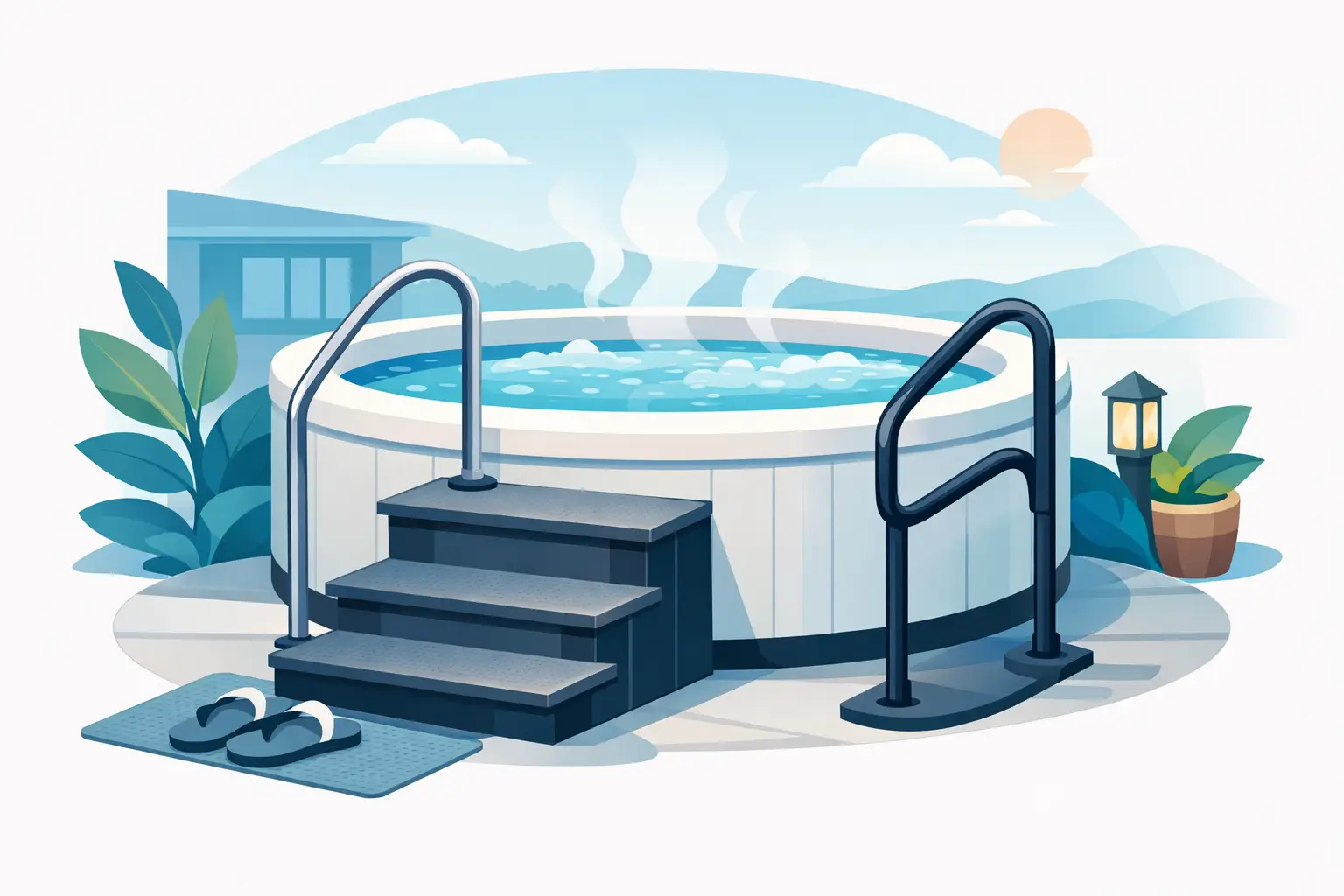
A hot tub should feel relaxing before you ever get in the water. If entry feels awkward, slippery, or unstable, the entire experience changes. That is why safe hot tub entry solutions matter so much – not as an afterthought, but as a core part of how a spa area functions day after day, season after season.
Many owners start with whatever came with the spa, or with a generic set of steps added later. Sometimes that works for a while. More often, it creates small frustrations that build into a bigger safety issue: a tread that is too narrow, a step height that feels off, a rail that wobbles, or materials that become slick after rain, snow, or repeated use. The right entry setup solves those problems while also making the spa area look finished and intentional.
What safe hot tub entry solutions actually solve
Getting into a hot tub is not the same as stepping onto a deck or patio. Users are often barefoot. Surfaces may be wet. Lighting may be low. The body is shifting weight up and over a spa wall, then stepping down again when muscles are warm and relaxed. That combination makes entry and exit one of the highest-risk moments in spa use.
Safe hot tub entry solutions address stability, footing, and predictability. Stability means the step system does not shift, flex, or rock under load. Footing means the walking surface offers dependable traction in wet conditions. Predictability means each step feels natural in height, depth, and placement, so users are not guessing where to put a foot.
For many households, there is another layer to consider. Guests, older adults, taller users, shorter users, and anyone with limited mobility may use the same spa. A solution that works for one person may feel uncomfortable for another. That is where product design and layout matter more than most buyers expect.
Why generic steps often fall short
The biggest problem with low-quality spa steps is not always obvious on day one. A product may look acceptable at first, then become a problem as it weathers. Plastic can fade or feel flimsy. Metal components can corrode. Lightweight units can slide out of place. Narrow top platforms can make the transition over the spa wall feel less secure than it should.
There is also the issue of fit. A hot tub is a substantial visual feature in the backyard, and the entry system sits right at the front of it. If the size, height, or color feels mismatched, the entire setting can look pieced together. For premium spa owners, safety and appearance usually go hand in hand. The best entry products do both.
Choosing hot tub steps that feel secure every time
For most spa owners, steps are the starting point. Good steps should provide enough depth for a confident foot placement and enough width to avoid the cramped feeling common with smaller units. The rise between levels matters too. If each step is too tall, entry feels awkward. If spacing is inconsistent, users tend to hesitate, and hesitation around wet surfaces is not ideal.
Material quality plays a major role. All-weather, furniture-grade recycled HDPE is a strong option for outdoor spa environments because it resists moisture, holds up well in sun and seasonal temperature swings, and is easy to maintain. It also gives a more substantial, finished look than bargain alternatives. That matters when the goal is a spa area that feels permanent rather than improvised.
Design should also match how the spa is used. A compact two-step model may be enough for a lower-profile hot tub on a level patio. A taller installation may need broader, deeper steps or a multi-level system. If the spa is used frequently at night or throughout winter, traction and visual clarity become even more important.
When wider steps make more sense
A wider step system is often the better choice for families, frequent entertainers, and homeowners who want a more luxurious approach to access. The extra width creates a more stable visual and physical transition into the spa. It can also make entry feel less precarious for users who prefer to turn and sit before swinging their legs in.
This is one of those areas where it depends on the setting. If space is limited, a compact footprint may be necessary. But if the patio allows it, a broader entry system usually improves both safety and comfort.
Handrails and support bars add confidence
Steps handle the vertical distance, but hand support often provides the extra confidence users need. A well-placed rail can help with balance on the way in and control on the way out, especially when surfaces are wet or the user is moving carefully.
Not every spa owner needs a handrail. A younger household with a low spa and broad steps may feel comfortable without one. But many buyers appreciate the added support once they use it, particularly if the spa is used by parents, grandparents, or guests unfamiliar with the setup.
The key is rigidity and placement. A rail should feel solid in the hand and positioned where it naturally supports movement, not where it simply fit during installation. It should complement the steps rather than crowd them. A handrail that interferes with foot placement can create a different problem than the one it was meant to solve.
Surrounds can create the safest overall entry zone
If steps are the basic answer, a well-designed surround is often the best complete answer. Surround systems create a larger, more integrated platform around the spa, which can dramatically improve access. Instead of stepping onto a small unit placed in front of the hot tub, users approach an entry area that feels built into the environment.
This has practical benefits. There is more standing room, more predictable footing, and often a more graceful transition into the spa. It also improves the overall look of the backyard by visually anchoring the hot tub within a coordinated outdoor living space.
For homeowners investing in a premium spa, this is frequently the point where safety and design fully meet. A surround can reduce the makeshift feel that comes with add-on accessories and replace it with something tailored, polished, and easier to use. For many installations, that added usability is what justifies stepping up from basic stairs to a more complete system.
Custom fit matters more than buyers expect
The closer an entry solution matches the spa model and site conditions, the better it tends to perform. Exact fit affects more than appearance. It can influence step alignment, usable space, and how naturally someone moves into and out of the tub.
Custom or model-specific options are especially valuable when the spa has unique dimensions, cabinetry details, or a surrounding patio layout that leaves little room for error. This is where a consultative approach pays off. A&B Outdoor Products has built its reputation on helping owners and dealers solve these exact fit and access challenges with products designed to look right and function properly over the long term.
Don’t overlook the environment around the steps
Even the best steps will underperform if the surrounding area is poorly planned. Ground surface matters. If the base underneath the steps is uneven or unstable, the safest product in the world will not feel secure. Drainage matters too. Water that pools near the entry point increases slip risk and shortens the life of surrounding materials.
Lighting is another factor that often gets less attention than it deserves. A step that feels safe in daylight can feel very different after sunset. If your spa is used in the evening, the approach and entry area should be clearly visible without glare.
Seasonal climate also changes the equation. In warm, dry regions, buyers may focus on UV resistance and ease of maintenance. In colder climates, snow, ice, and freeze-thaw cycles put more pressure on both materials and traction. The right solution is not just about the spa. It is about where and how the spa lives outdoors.
How to evaluate safe hot tub entry solutions before you buy
Start by looking at the actual use case, not just the product photo. Who uses the spa most often? Is anyone in the household concerned about balance, knee comfort, or stepping over the spa wall? Is the tub set high? Is the entry area exposed to weather? Those answers should shape the decision.
From there, pay close attention to step depth, overall width, structural feel, weather resistance, and whether the design coordinates with the spa itself. If you are deciding between a lower-cost generic option and a premium entry system, think beyond initial price. A cheaper product that feels unstable, fades quickly, or needs replacement sooner is rarely the better value.
The strongest solutions tend to share a few traits: they are built from durable all-weather materials, they feel substantial underfoot, and they look like they belong with the spa rather than next to it. That last point may sound cosmetic, but it usually reflects better design discipline overall.
A spa should be easy to enjoy without second-guessing each step. When entry feels stable, natural, and well integrated with the space, the entire backyard experience improves – and that is the kind of upgrade you notice every time you lift the cover.
