
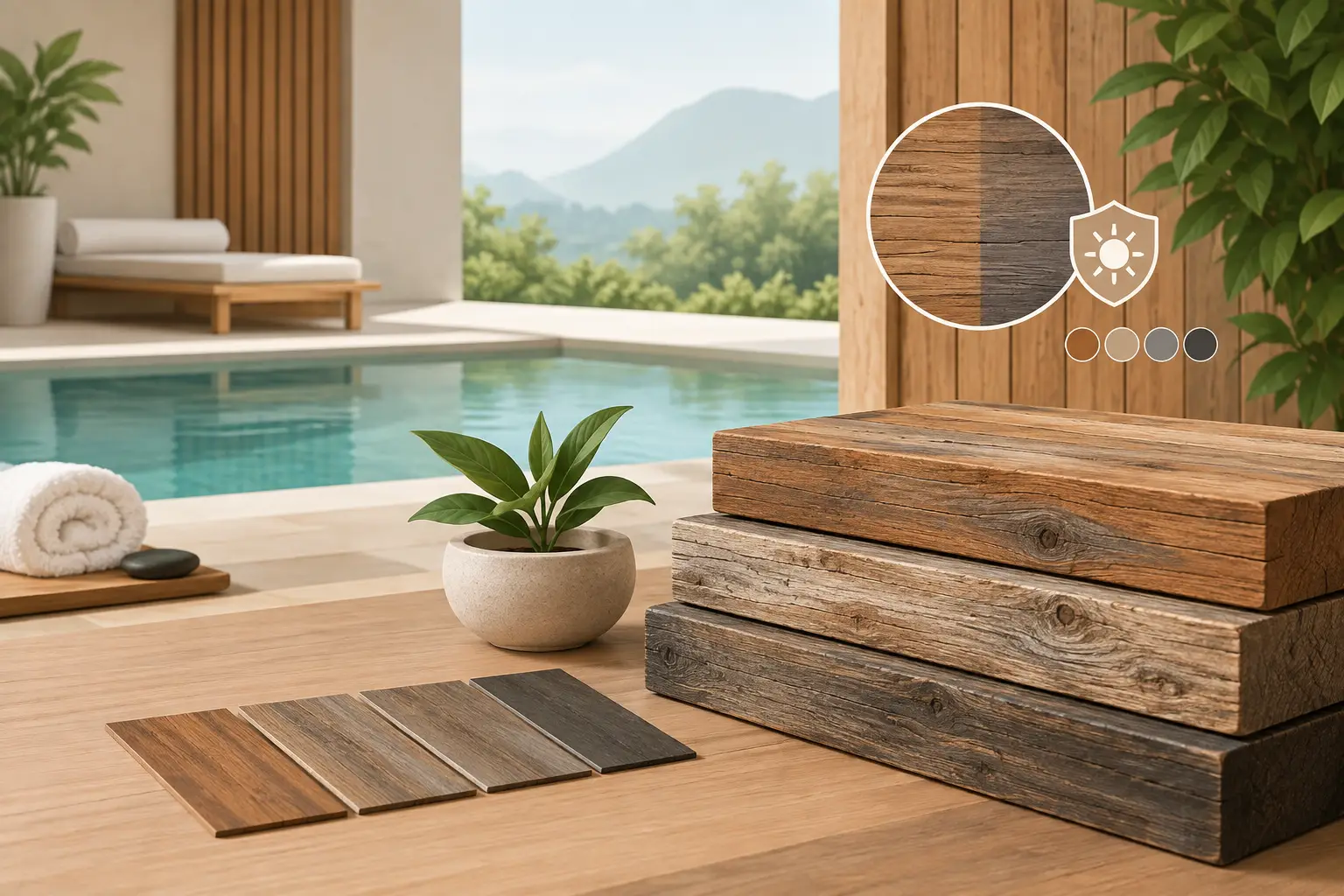
A hot tub area can look carefully designed on installation day, then slowly lose its polish when steps, storage, and surrounding furniture age at different rates. That is why recycled lumber colorfastness matters to spa owners. The question is not simply whether an outdoor accessory will survive the weather. It is whether it will continue to look at home beside your spa after seasons of sun, rain, humidity, and regular use.
For premium spa spaces, color is part of the overall design. A warm brown step may complement a cabinet panel, while a cool gray surround can create a clean, tailored contrast around a modern swim spa. Materials that become chalky, uneven, or noticeably faded can interrupt that effect long before they stop functioning. Choosing furniture-grade recycled HDPE lumber gives homeowners a more dependable path to long-term color coordination, with a few practical factors worth understanding before making a selection.
What Recycled Lumber Colorfastness Really Means
Colorfastness describes how well a material holds its intended color when exposed to light, weather, moisture, and cleaning. In an outdoor spa setting, ultraviolet exposure is usually the greatest concern. Sunlight can gradually alter surfaces, especially materials that rely on a thin painted or coated finish for their appearance.
Recycled HDPE lumber is different from painted wood or many lower-grade composite products. Quality HDPE lumber is manufactured with color integrated throughout the material rather than applied as a surface coating. This means a minor scratch is less likely to reveal a dramatically different color beneath it. The material also does not absorb water the way natural wood does, so it will not swell, rot, peel, or require seasonal staining to preserve its appearance.
That does not mean every color, every manufacturer, and every backyard will age exactly the same way. Even premium outdoor materials live outdoors. A deck that receives intense afternoon sun in Arizona will place more demand on color retention than a shaded patio in Michigan. The goal is realistic longevity: accessories that retain a consistent, attractive appearance for years, with far less upkeep and far fewer visual surprises than conventional exterior wood products.
Why Color Retention Matters Around a Hot Tub
A spa is typically the visual anchor of the backyard. Its cabinet color, cover, shell, and surrounding hardscape establish a design direction. Steps and accessories should support that direction, not compete with it after one or two summers.
When accessories fade unevenly, the result is often more noticeable than homeowners expect. A faded step can look disconnected from a newer towel bar or storage unit. A surface that develops visible chalking can make an otherwise high-end spa area feel neglected. This is particularly relevant when building a complete outdoor arrangement with coordinated steps, tables, privacy features, and swim spa access products.
Colorfast recycled lumber also makes future additions easier to plan. If you begin with a set of spa steps and later add a side table, storage cabinet, or surround element, a consistently manufactured material and established color selection provide a stronger foundation for a cohesive installation. Exact matches can depend on product lines, production timing, and the original spa cabinet finish, but stable material color helps preserve the intended relationship among the pieces.
How Quality Recycled HDPE Holds Its Color
The performance of recycled lumber begins with the manufacturing process. Premium recycled HDPE products use carefully selected recycled plastic feedstock, color pigments, and UV-inhibiting additives formulated for exterior use. Those ingredients are blended into the material before it is formed into boards or components.
Because the color runs through the lumber, routine wear is generally less disruptive to the finish than it would be with painted surfaces. This is especially valuable around hot tubs, where accessories see wet feet, dropped cover lifters, moving cushions, pool chemicals, and frequent cleaning. A small mark may still be visible depending on its depth and the lighting, but it is not typically a paint failure waiting to spread.
Material thickness and construction also matter. A well-built step or cabinet should use durable components, sound fastening methods, and designs that resist unnecessary flexing. Color retention is only one part of long-term appearance. An accessory that holds its color but sags, warps, or loosens is not delivering the premium ownership experience homeowners expect.
At A&B Outdoor Products, USA-made, furniture-grade recycled HDPE is chosen for this balance of refined appearance, practical strength, and easy maintenance. It is designed for spa environments where accessories need to look finished while standing up to daily outdoor use.
Factors That Can Change the Appearance Over Time
No honest discussion of outdoor color retention should promise that a backyard product will look untouched forever. The most visible changes usually result from the environment, the selected color, and the way the product is maintained.
Darker colors can absorb more heat in direct sun. They often create a rich, sophisticated look, but they may feel hotter to the touch on a bright summer afternoon. Lighter colors tend to show less heat buildup and can work especially well near light stone, concrete, or bright spa cabinetry. The right choice depends on your design preferences, climate, and how much direct exposure the space receives.
Shade patterns also influence how color is perceived. An accessory placed partly beneath a pergola and partly in full sun may weather differently across its surfaces over time. This is not necessarily a defect. It is one reason it helps to consider product placement during the design process, rather than treating steps and storage as afterthoughts.
Chemical residue deserves attention as well. Spa water, sanitizer splash, sunscreen, and harsh household cleaners can leave a film on any outdoor surface. That film may make lumber look dull or streaked even when the color itself remains in good condition. Regular rinsing and gentle cleaning preserve the clean, even look that makes coordinated outdoor accessories feel premium.
Maintaining the Finish Without High Maintenance
One of the strongest advantages of recycled HDPE lumber is that maintenance is straightforward. Most routine cleaning requires mild soap, water, and a soft brush or cloth. Rinse thoroughly afterward, especially around textured areas, joints, and lower surfaces where dust or spa residue can collect.
Avoid treating recycled lumber like stained wood. It does not need sealing, painting, or staining, and applying those products can create unnecessary maintenance down the road. Abrasive pads, aggressive solvents, and highly caustic cleaners should also be avoided unless the product manufacturer specifically recommends them. A gentle approach is usually enough to restore the clean appearance of a step, table, or storage piece.
For stubborn grime, clean the entire visible panel rather than only one small spot. This helps prevent an uneven appearance caused by cleaning away dirt in one concentrated area while leaving buildup elsewhere. It is a simple habit that makes a meaningful difference in polished outdoor spaces.
Choosing Colors for a Coordinated Spa Area
The best color is not always an exact copy of the spa cabinet. In some settings, a close match creates a tailored, built-in appearance. In others, a complementary color gives the area more depth. Black or charcoal accessories can ground lighter spas. Driftwood, brown, or cedar-toned selections can soften stone patios and natural landscapes. Gray often provides a versatile bridge between contemporary cabinetry and concrete hardscapes.
Before committing, view samples or finished products in natural light whenever possible. Colors look different outdoors than they do in a showroom, on a screen, or under indoor lighting. Consider the spa cabinet, cover, decking, exterior siding, railings, and nearby furniture together. A color that seems subtle by itself may become either too warm or too cool next to the larger materials in your yard.
For dealers and spa professionals, this is also an opportunity to guide customers beyond a basic accessory sale. Discuss whether the homeowner needs a matching access solution, a safe entry point, hidden storage, or a coordinated arrangement that frames the spa as part of the landscape. The more intentionally those pieces work together, the more valuable the finished installation becomes.
A Long-Term Choice for a Finished Backyard
Recycled lumber colorfastness is about more than avoiding fade. It supports a spa area that continues to feel considered, clean, and inviting through changing seasons. By selecting furniture-grade recycled HDPE, choosing colors with the site in mind, and using simple cleaning practices, homeowners can protect the visual connection between their spa and the accessories that make it easier to enjoy.
A well-designed backyard should not demand a refinishing project every spring. It should be ready when you are, with dependable access, useful storage, and color-coordinated details that still look right beside the water.
