
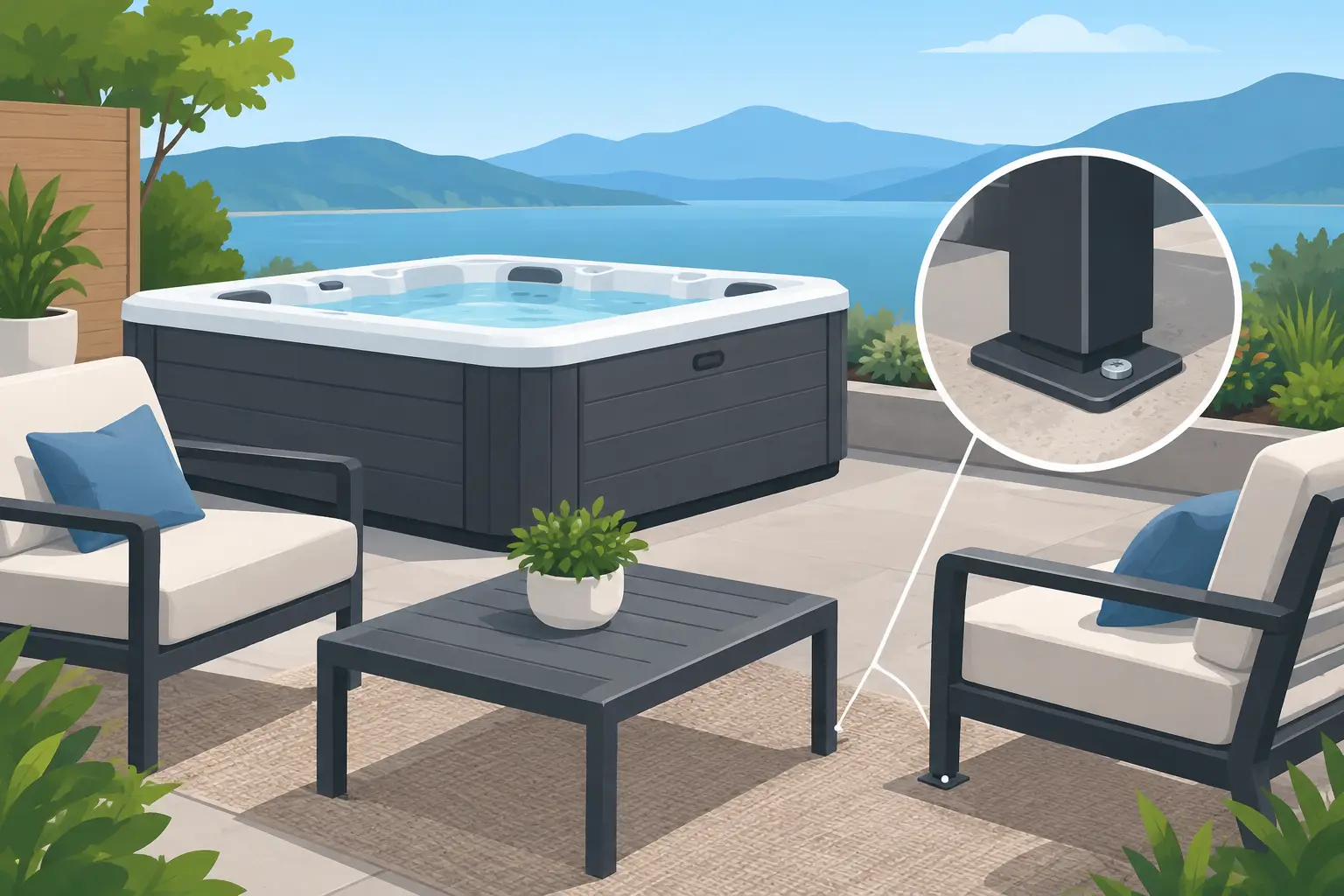
A spa area can look complete when every piece is in place, then feel noticeably less polished after one season of use. Steps creep away from the cabinet. A side table rocks on a paver. Storage seating shifts when guests sit down. To prevent spa furniture shifting, start by treating the space around your hot tub or swim spa as a working outdoor environment, not simply a patio with accessories.
Furniture near water, changing temperatures, and frequent foot traffic needs more than an attractive design. It needs a level foundation, a thoughtful layout, and materials that hold their shape through years of outdoor exposure. The result is a more comfortable spa area, safer entry and exit, and an outdoor setting that continues to look intentionally designed.
Why Spa Furniture Starts to Move
Shifting is rarely caused by one major issue. More often, several small conditions work together. A slightly uneven surface lets a step rock. Repeated entry into the spa gradually pushes it outward. Rain settles beneath a leg, softens soil, or exposes an uneven paver. Freeze-thaw cycles can raise and lower portions of a patio enough to affect furniture that once sat perfectly flat.
The location of a hot tub also creates unique forces. Users often put their full weight on the same spot when stepping in and out. They may brace against a handrail, set towels on a table, or pull a storage bench closer to reach supplies. On a wet surface, even a small amount of movement can be distracting and may become a safety concern.
Lightweight furniture is particularly prone to wandering. So are pieces with narrow feet, flexible frames, or unevenly distributed weight. A well-built spa step or surround should feel substantial, but weight alone is not the full answer. The furniture must also meet the surface correctly.
Start With a Stable, Level Foundation
The best way to prevent spa furniture shifting is to address the ground beneath it before repositioning the furniture itself. A solid, level surface distributes weight evenly and reduces the rocking that encourages a piece to migrate over time.
Concrete pads, properly installed pavers, composite decking rated for the intended load, and well-built spa decks can all work well. The key is checking the immediate footprint of each accessory, not just assuming the overall patio is level. A pad may drain correctly while still having a slight dip exactly where a step leg sits.
Place each piece in its intended location and apply pressure at several points. Step onto spa stairs as you normally would. Sit on benches. Press down on each corner of a table. If you hear clicking, feel movement, or see one foot lift, correct it before regular use. Small adjustments at this stage are far easier than dealing with uneven wear, scraped decking, or an unstable entry path later.
On paver patios, inspect joints and edge restraints. Pavers that have settled or spread apart can create an unstable base even when they appear level from a distance. On decks, check for loose boards, damaged fasteners, and areas where water pools after rain. Any surface supporting spa accessories should be clean, sound, and capable of handling concentrated use.
Be Careful With Grass, Gravel, and Loose Stone
Placing furniture directly on turf, pea gravel, or loose decorative stone is usually a temporary solution at best. Furniture legs sink into these surfaces at different rates, especially after rain or when the ground freezes and thaws. Each movement can change the height and position of the piece.
If your spa is set near a landscaped area, consider creating a defined accessory pad with compacted base material and stable pavers. This approach can preserve the look of the landscape while giving steps, tables, and storage units a dependable footing. It also creates a clean transition between the spa and the rest of the backyard.
Choose Furniture Built for the Spa Environment
The right furniture construction makes daily stability much easier to maintain. Outdoor accessories should be designed to handle moisture, heat, UV exposure, and the regular use that comes with a well-loved hot tub or swim spa.
Furniture-grade recycled HDPE is a strong choice for spa environments because it is substantial, moisture-resistant, and easy to maintain. Unlike lower-grade plastic products that can become brittle or flex over time, quality HDPE construction helps furniture retain its form and provides a more planted feel underfoot. It also avoids the recurring refinishing associated with many wood products.
Pay attention to the footprint of the piece. Wide, evenly supported bases generally offer greater stability than tall, narrow designs. For hot tub steps, a broad platform and carefully engineered tread depth are especially valuable. The step should support a natural, confident movement into and out of the spa without feeling like it needs to be nudged back into place after use.
That does not mean every accessory needs to be oversized. A compact table can still be stable when its base is properly proportioned to its top, and a slim storage solution can remain secure when designed for its intended placement. The goal is purposeful design, not unnecessary bulk.
Plan the Layout Around Real Movement
A beautiful spa setting should also make room for the way people actually use it. When furniture is placed in a traffic path, it is more likely to be bumped, dragged, or shifted to make space. Layout is therefore part of stability.
Begin at the spa entry point. There should be a clear, comfortable route from the main walking area to the steps. Leave sufficient space for users to turn, carry towels, or assist someone entering the water. If a side table is close enough that it catches a hip or towel every time someone exits, it will eventually move.
Place frequently used accessories within easy reach without crowding the entry zone. A table for beverages or spa controls should sit on a stable surface beside the seating area, not at the edge of the step platform. Storage benches work best where their lids and doors can open fully without forcing users to pull them away from the spa.
For swim spas, think beyond one entry point. The larger footprint often creates multiple activity zones: a place for towels, a rest area for swimmers, a route around the cover, and access for routine maintenance. Defining these areas prevents furniture from becoming an obstacle that is constantly relocated.
Account for the Spa Cover and Service Access
It is easy to create a layout that looks ideal with the cover closed but becomes inconvenient when the spa is ready to use. Before settling on furniture placement, open the cover fully and confirm that lifters, cover folds, and clearance zones are unobstructed. Also leave access for service panels and equipment.
When furniture has to be moved for every soak or service appointment, it will be dragged, set down unevenly, and eventually placed wherever it is most convenient. A permanent, practical arrangement protects both the appearance of the area and the furniture itself.
Use Surface Protection Where It Helps
On smooth concrete, tile, or composite decking, non-marking furniture pads can reduce minor sliding and protect the finish beneath the furniture. Choose pads intended for outdoor use and inspect them periodically. Pads that collect grit or deteriorate in sun and moisture can scratch a surface instead of protecting it.
Rubber leveling shims can also be useful for correcting a small, isolated wobble. They should be used as a fine adjustment, not as a substitute for repairing a severely uneven patio or deck. If a piece requires several shims or shifts despite them, revisit the foundation.
Avoid improvised solutions such as stacked wood scraps, cardboard, or loose stones. They absorb moisture, break down, and can create a new instability. Premium spa furniture deserves a support solution that is equally durable and discreet.
Inspect the Area Through the Seasons
A furniture arrangement that feels solid in July may need attention after a wet fall or a hard winter. Seasonal inspection is especially worthwhile in regions with freezing temperatures, heavy rainfall, or expansive clay soils.
At the start of the spa season, check that steps remain level, fasteners are secure, and furniture feet are clean. Remove leaves, mulch, sand, and other debris that may collect under the base. After major storms, look for standing water and newly uneven areas around the spa. Addressing changes early helps preserve a safe, polished setup.
For homeowners investing in a coordinated spa surround, color-matched steps, or custom storage, this maintenance is a small part of protecting the larger outdoor space. A&B Outdoor Products designs USA-made accessories with the durable materials and exact-fit thinking that premium spa areas require, but even the best-built piece performs best on a stable foundation.
Your spa furniture should feel like a lasting part of the setting, not something that needs to be pulled back into position after every weekend. A level base, well-planned traffic flow, and quality construction allow the details around your spa to stay where they belong – so the space remains comfortable, safe, and ready whenever you are.
