
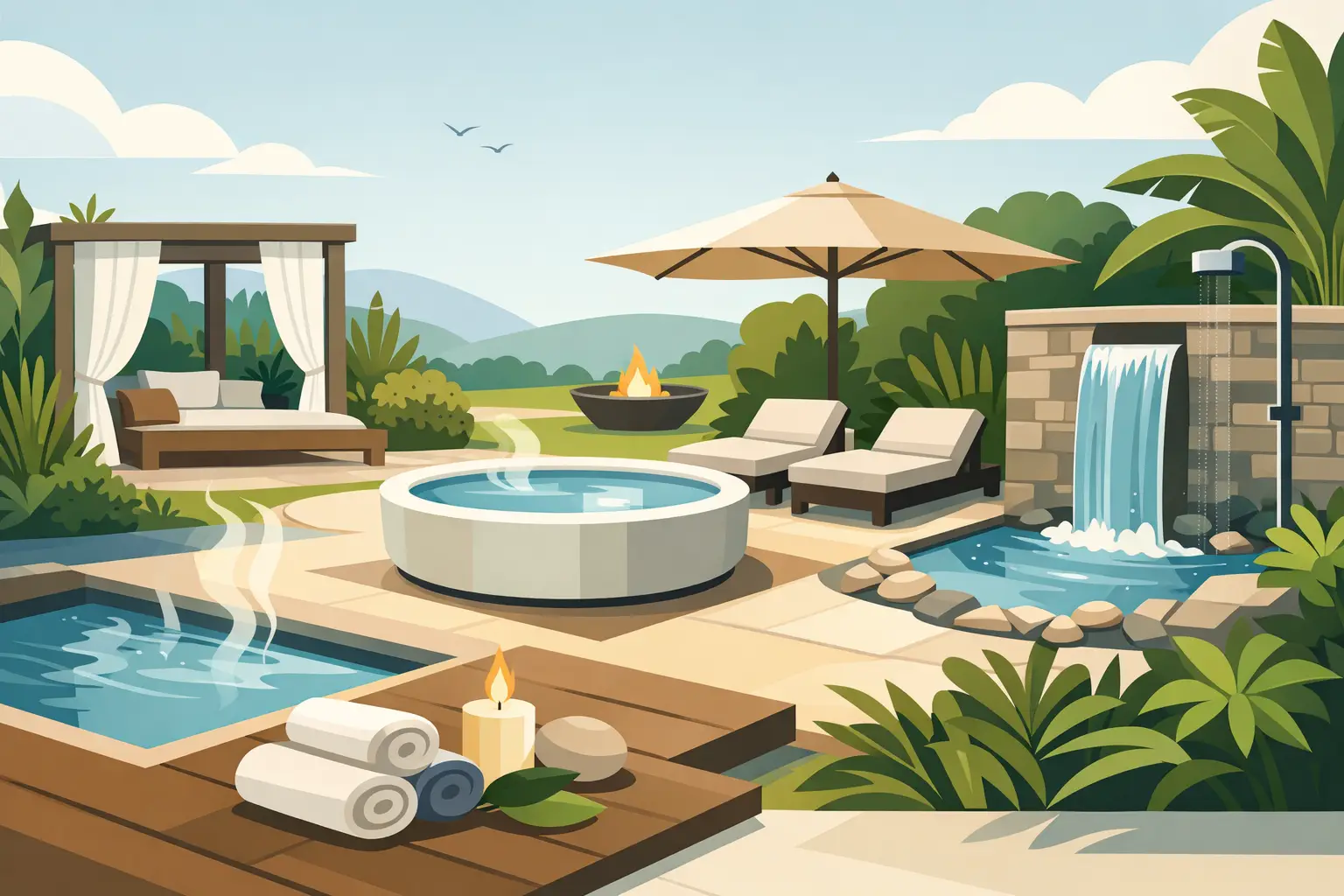
A hot tub can be the centerpiece of a backyard, but the area around it determines whether it feels like a true retreat or an appliance set on a concrete pad. The best outdoor spa design trends are moving beyond decorative patio pieces and toward well-planned spaces that are comfortable to use, easy to maintain, and tailored to the way each household relaxes.
For homeowners investing in a premium spa or swim spa, that shift matters. A polished setting should make entry and exit more secure, keep towels and essentials within reach, complement the spa cabinet color, and hold up through changing weather. Good design is not just what looks impressive on installation day. It is what continues to work beautifully years later.
Outdoor Spa Design Trends That Put Function First
The strongest trend in outdoor spa spaces is intentional integration. Rather than treating steps, storage, seating, and spa-side tables as separate purchases, homeowners are creating coordinated zones around the water. This creates a more finished appearance, but the practical benefit is just as valuable: everything needed for a relaxing soak has a proper place.
A custom-matched surround can visually anchor a spa within the broader backyard design. Color coordination with the spa cabinet, decking, trim, and outdoor furniture makes the installation feel considered instead of pieced together. This is particularly effective with swim spas, which have a larger footprint and can otherwise dominate the yard.
The right approach depends on the space. A compact patio may call for a simple, tailored step and a slim spa-side table. A larger outdoor living area may support a full surround with integrated storage, bar-height seating, and a defined path from the house. In either case, the goal is the same: reduce clutter and make the spa inviting at any time of day.
Custom Layouts Are Replacing One-Size-Fits-All Accessories
Standard accessories can solve a basic need, but they often leave gaps, awkward walkways, or mismatched finishes around a premium spa. Customization is becoming a priority because spa owners want their investment to fit the backyard, not force the backyard to fit a collection of generic products.
Custom hot tub steps can be designed around the height and shape of a specific model, creating a more natural entry point. They can also improve the transition from deck to spa when the installation sits above grade or when the surrounding ground is uneven. For families and guests, that thoughtful access can make a meaningful difference in daily use.
Surrounds are also becoming more purposeful. They can conceal open space around a spa, create a landing area for towels and drinks, and establish a clear boundary between the spa and adjacent patio furniture. When built to the correct dimensions, they bring a furniture-quality look to an area that is often overlooked.
For dealers and installers, model-compatible designs can prevent the last-minute compromises that occur after a spa is delivered. A well-planned accessory package lets the finished installation look as premium as the spa itself.
Elevated Access Is a Safety Feature and a Design Feature
Spa steps are no longer an afterthought. Homeowners are selecting wider, sturdier designs with comfortable tread depth and stable footing, especially for raised hot tubs and swim spas. The visual result is more substantial, but the real value is confidence when entering or leaving wet.
A stair system should suit the surrounding surface and the users of the spa. Narrow steps may be adequate in a tight location, while a generous platform offers a safer pause point for older adults, children under supervision, or anyone carrying towels and spa supplies. Where a spa is positioned several feet above the patio, multiple-step configurations and handrail-compatible solutions deserve careful consideration.
There is a balance to maintain. Oversized stairs can overwhelm a smaller spa pad, while minimal steps may look clean but provide limited usable footing. The best choice is proportional to the spa, the available clearance, and how often the space is used after dark or in cold weather.
Furniture-Grade Materials Are Setting the Standard
Outdoor spa accessories live in demanding conditions. They are exposed to sun, rain, snow, heat, temperature swings, splashing water, and the occasional chemical residue from spa use. That is why material quality has become central to outdoor design decisions.
Furniture-grade recycled HDPE is well suited to spa environments because it is designed for all-weather use and is easy to maintain. Unlike materials that may require seasonal staining, sealing, or frequent repainting, quality HDPE construction delivers a clean, substantial finish with straightforward care. It also gives manufacturers the ability to offer coordinated colors that complement popular spa cabinet finishes.
Durability should not mean settling for an industrial appearance. Today’s premium designs combine thick, clean-lined components with thoughtful details that make an accessory look at home beside refined outdoor furniture. USA-made craftsmanship also gives homeowners and dealers confidence that the product has been built for long-term performance rather than temporary convenience.
Spa-Side Storage Is Becoming Part of the Experience
A well-designed spa area should not require a trip back into the house every time someone needs a towel, water bottle, cover lifter accessory, or reading material. Convenient storage and usable surfaces are increasingly expected in a complete outdoor spa setting.
Spa-side tables provide a stable place for drinks, phones, eyewear, and other essentials that should stay dry and close by. Storage cabinets and enclosed sections can keep towels, cleaning supplies, and seasonal accessories organized while preserving a clean view around the spa. The best designs make these practical elements feel built in, even when they are freestanding.
It is worth separating leisure storage from maintenance storage. Fresh towels and guest items belong in an easy-to-access, polished location. Chemicals and service supplies should be secured and kept away from children and pets. Planning for both prevents the spa area from becoming a catchall for items that do not belong in sight.
Coordinated Color Creates a More Finished Space
Color matching is a quiet detail with an outsized effect. When spa steps, tables, and surrounds coordinate with the spa cabinet, the installation reads as a complete outdoor living environment. It also gives homeowners more flexibility to carry a preferred palette through deck cushions, pergola finishes, planters, and landscape elements.
Exact matching is not always necessary. A complementary neutral can add contrast while still looking intentional, especially when a spa has a darker cabinet and the patio needs visual lift. What matters is choosing colors as part of the full setting, not as an isolated accessory decision.
Before selecting a finish, consider direct sun exposure, the color of the home exterior, and the level of visual contrast desired. Lighter tones can brighten a shaded space, while darker tones can give a large swim spa installation a more grounded look. A design consultation can be especially helpful when several materials need to work together.
Privacy and Defined Zones Are Shaping Backyard Plans
As spas become more central to outdoor entertaining and personal wellness routines, homeowners are defining the space around them more deliberately. Privacy screens, pergolas, landscaping, and carefully placed furniture can create a sense of enclosure without making the area feel closed off.
The practical layout still comes first. Leave enough clearance to remove and service the spa cover, use a cover lifter, access equipment panels, and walk safely around the unit. A beautiful surround that blocks routine maintenance will create frustration long after the project is complete.
For swim spas, zones are particularly useful. Separating the exercise side from the relaxation side, with a convenient area for towels and water, helps the space support both active use and quiet recovery. The same principle works for hot tubs near outdoor kitchens or fire features: define paths and keep wet traffic from crossing cooking or dining areas.
A Premium Backyard Should Feel Easy to Use
The most enduring outdoor spa design trend is not a single color, shape, or accessory. It is the expectation that every part of the space should earn its place. A&B Outdoor Products helps homeowners and spa professionals create that result with custom, USA-made accessories built for the dimensions, color, and practical demands of real spa installations.
Choose pieces that make the spa easier to enter, easier to organize, and more enjoyable to share. When the setting is built with the same care as the spa itself, a quick evening soak can feel like time spent at a destination just beyond the back door.
