
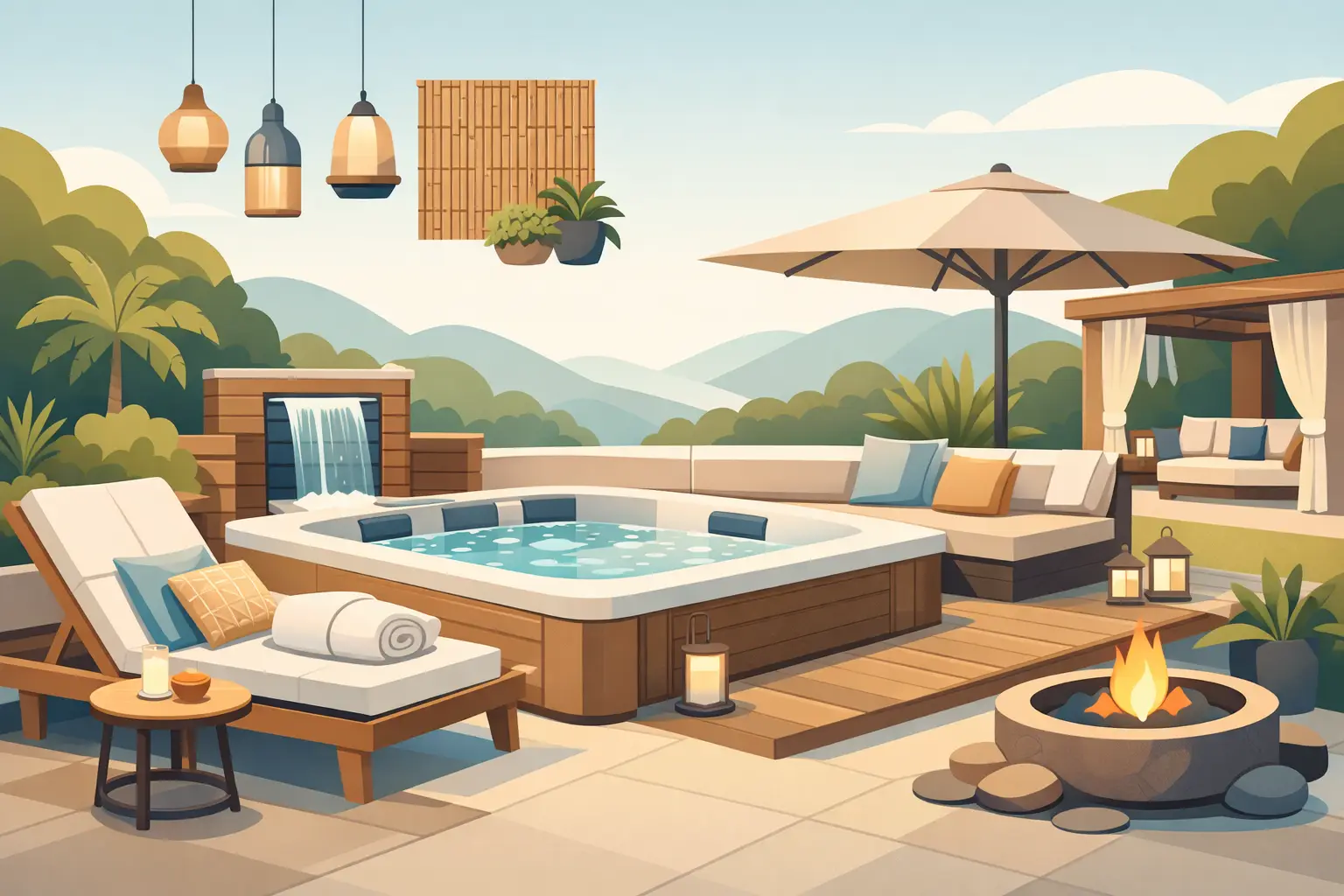
A hot tub can be the focal point of a beautiful backyard, yet generic steps and patio pieces can make the area feel unfinished. Learning how to customize spa furniture starts with looking beyond appearance. The right furniture should make entry safer, keep essentials within reach, fit the exact dimensions of your spa, and create a setting that feels intentionally designed rather than added on over time.
For homeowners, customization is an opportunity to build a space that works for the people using it. For spa dealers and professionals, it is a reliable way to provide a finished, premium installation that reflects the quality of the spa itself. The best choices balance style with real-world details: wet feet, changing weather, spa cover clearance, storage needs, and the route in and out of the water.
Start With How the Spa Area Is Used
Before selecting a color or style, consider what happens around the spa on a typical evening. Is it used mainly by two people relaxing after work, by a family with children, or as part of a larger entertaining area? The answer affects the size, placement, and features that will add the most value.
A compact hot tub on a deck may need a narrow step with a handrail and a small table for towels or beverages. A large swim spa often benefits from a more complete surround, multiple entry points, and storage designed for exercise equipment, cover accessories, or pool towels. If the spa is used year-round, furniture should also support winter routines, when a stable walking surface and easy access matter even more.
Think through the approach to the water. Guests should not have to squeeze between a grill, planter, and cover lifter to reach the steps. Leave clear walking space, especially where users will enter and exit with wet feet. A custom layout can turn an awkward side of the spa into a useful landing area instead of a neglected corner.
How to Customize Spa Furniture for Exact Fit
Exact fit is where custom spa furniture separates itself from standard outdoor furniture. Hot tubs and swim spas vary widely in cabinet shape, height, corner treatment, and equipment access. A well-designed step, surround, or storage piece should complement those details without blocking service panels, drains, or cover mechanisms.
Start by documenting the space carefully. Measure more than the spa shell. Record:
- The spa’s exterior length, width, and cabinet height
- The location of access panels, controls, drains, and electrical connections
- The cover lifter’s movement and the clearance behind the spa
- Nearby walls, rails, fences, doors, and changes in deck elevation
Photos from several angles are equally useful, particularly when a spa sits close to a house or in a corner of a deck. They show obstacles that a simple measurement may miss, such as downspouts, post locations, uneven pavers, or a gate that needs room to swing open.
Height deserves special attention. Steps that are too tall can make entry uncomfortable, while steps that are too low can create an awkward final climb into the spa. The ideal configuration depends on the spa height and the needs of the people using it. A lower, wider step can feel more secure for children, older adults, or anyone who prefers a gradual transition. Handrails and supportive side panels can add confidence without making the setting look institutional.
For swim spas, customized access may include longer platforms or stair systems that accommodate the raised height of the unit. These pieces should feel proportional to the scale of the spa. Small, lightweight patio steps beside a substantial swim spa rarely look right and may not provide the stability users expect.
Choose Materials Made for Water, Sun, and Temperature Changes
Spa furniture lives in a demanding environment. It is exposed to splashing water, humidity, UV rays, chlorinated or saltwater residue, and large temperature swings. That is why material choice should be a performance decision first and a style decision second.
Furniture-grade recycled HDPE is a strong choice for premium spa settings because it is designed for outdoor exposure. It will not rot, splinter, or require the regular staining and sealing associated with wood. It is also easy to maintain – usually a simple cleaning is enough to keep it looking its best.
Wood can bring warmth, but it asks for more attention. In a covered, protected spa area, it may be appropriate for homeowners who enjoy its natural character and are prepared for routine care. Around an uncovered spa, however, moisture and seasonal weather can make maintenance more frequent. Lower-priced plastic furniture may seem convenient initially, but it can fade, flex, or feel less stable under regular use.
Quality construction matters alongside material. Look for substantial components, clean edges, secure fasteners, and designs that are built to carry real weight. A spa step is not decorative. It is a safety item used in wet conditions, often at night, and it should feel solid every time someone uses it.
Coordinate Color Without Making Everything Match Exactly
A polished spa area does not require every surface to be the same color. In fact, an exact match across the spa cabinet, steps, tables, and surrounding deck can make the space feel flat. The goal is coordination: colors that relate to one another while giving the area depth and definition.
Begin with the fixed finishes you already have. The spa cabinet, cover, deck, patio, siding, and fencing will set the palette. A darker furniture color can ground a light-gray spa cabinet, while a warm neutral may soften a black cover and stone patio. If your backyard includes natural wood or landscape stone, choose tones that support those elements rather than compete with them.
Color-matched furniture is especially valuable when a custom surround is intended to look integrated with the spa. It can create a tailored appearance while still allowing a contrasting tabletop, accent piece, or cushions elsewhere in the outdoor room. When reviewing colors, view samples outdoors whenever possible. Sunlight can make a shade appear much lighter than it does in a showroom or on a screen.
Practical considerations also apply. Very light colors may show dirt and leaf debris more readily. Very dark surfaces can become warmer in full sun. The right option depends on the site, the amount of shade, and how often the area is used.
Add Function Where It Will Actually Be Used
Customization earns its place when it solves a daily problem. A table beside the entry can hold drinks, phones, towels, or a book without placing them on the spa cover. A storage bench can keep chemicals, toys, towels, and accessories organized, provided it is placed away from areas that need service access. A wider top surface may be useful for a towel station, while a smaller table may be better for a tight deck.
Consider the small habits that can make the experience easier. Where do users set sandals before entering? Where do towels go when they come out? Is there a protected spot for a cover that has been removed? Do children need a designated place for goggles and water toys? These details shape whether furniture becomes part of the routine or simply occupies space.
Avoid overfurnishing. A surround with every possible feature may look impressive on paper but can crowd a modest patio and complicate cleaning. In a smaller setting, a custom step and one well-placed table may provide a more elegant result than a full perimeter installation. In a large backyard, a more substantial configuration can create a true outdoor living zone around the spa.
Plan for Service Access and Long-Term Ownership
A custom piece should enhance the spa without making it harder to own. Equipment panels, electrical connections, and drainage areas need to remain accessible for routine maintenance and future service. Removable or modular sections can be a smart choice when a surround extends along a service side.
It is also worth considering how the furniture will perform five or ten years from now. Will its material still handle sun and moisture? Can it be cleaned easily? Does the design allow the spa cover to open fully? Will it still fit if the cover lifter is replaced? These questions are less exciting than selecting colors, but they protect the investment in the entire spa area.
A consultative custom process can help identify these concerns before production begins. A&B Outdoor Products has built its reputation on USA-made, all-weather accessories designed around the practical realities of hot tub and swim spa ownership. Clear measurements, photos, and an honest discussion of how the space is used make it possible to recommend features that belong in the design and leave out those that do not.
The most successful customized spa areas feel easy from the first step to the last towel put away. Choose furniture that fits the spa, supports the way your household relaxes, and holds its finish through every season. That is how a hot tub becomes a more welcoming and complete part of the backyard.
