
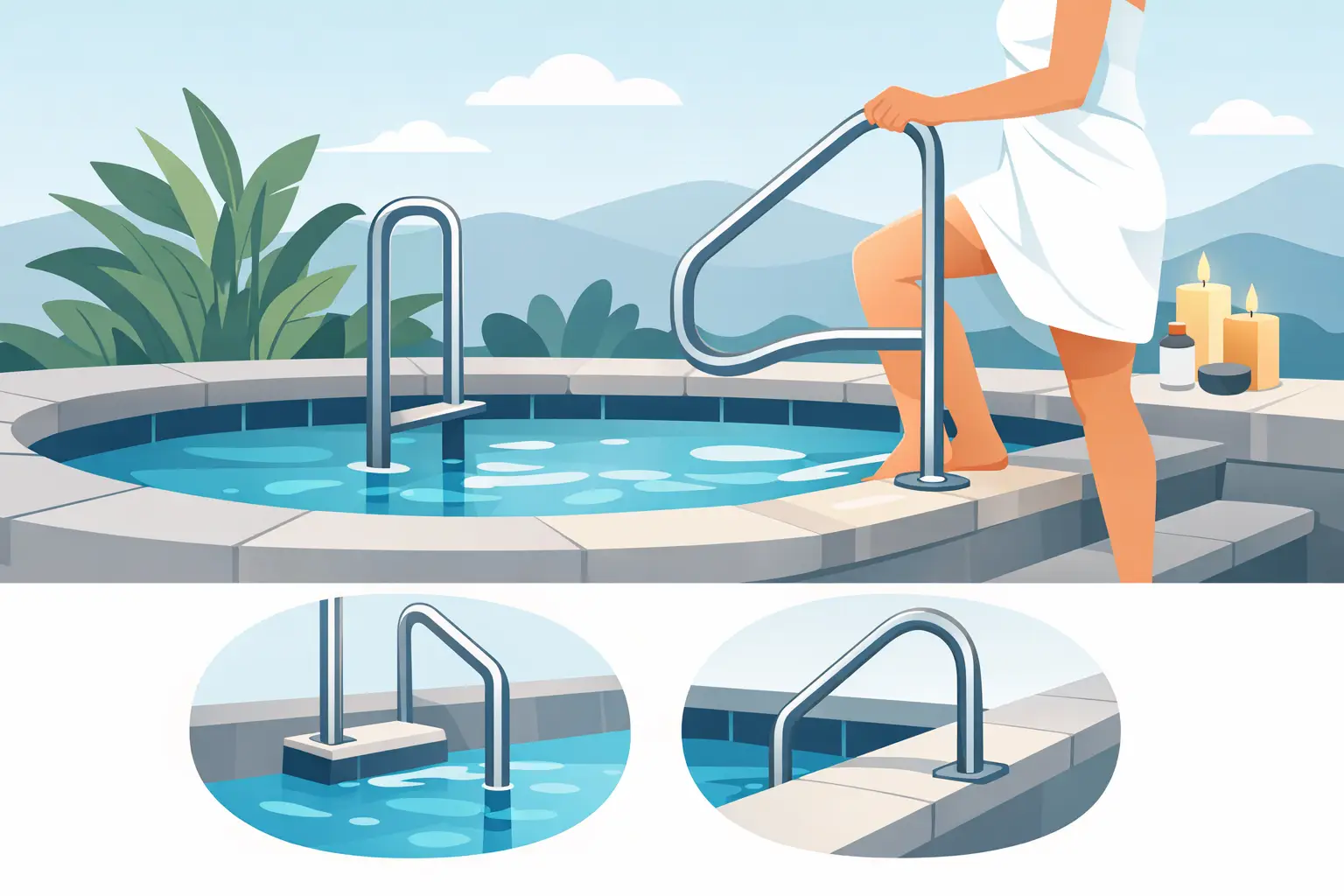
A handrail can be the difference between stepping into your spa with confidence and bracing yourself against a wet, unstable surface. Knowing how to choose spa handrails starts with looking beyond a basic grab bar. The right rail should support the way you enter and exit, stand up to outdoor exposure, fit your spa area properly, and complement the quality of the space you have created.
For many homeowners, a handrail becomes more valuable over time. It provides welcome stability after a long soak, makes the spa more comfortable for guests of different ages and mobility levels, and adds a finished, intentional look beside your steps. The best choice is not always the biggest or most elaborate option. It is the one that gives dependable support without crowding the path into your hot tub or swim spa.
Start With the Way You Use Your Spa
Before comparing materials or finishes, consider the actual approach to your spa. Is your hot tub elevated on a deck, set on a patio, or partially recessed? Do you enter from the front of the cabinet, from the side, or through a surrounding deck? A handrail must work with that path rather than force an awkward turn or reach.
Think about the people who use the spa most often. A tall, athletic adult may only need a light point of contact. A parent helping a child, an older family member, or anyone recovering from an injury may need a rail that offers more consistent support while stepping up, turning, and lowering into the water. If guests regularly use your spa, choose for the person who needs the most assistance, not the person who finds entry easiest.
Also consider when the spa gets used. Evening soaks, winter weather, rain, and splash zones all make surfaces less predictable. A properly placed rail gives users a stable reference point when visibility is lower and steps are wet.
Choose a Handrail Style That Fits the Installation
Spa handrails generally fall into a few practical categories. The best style depends on your spa base, surrounding surface, and need for adjustability.
Cabinet-Mounted Handrails
Cabinet-mounted rails attach directly to the spa cabinet or a compatible mounting point. They can be an attractive option when the spa sits on a solid, level surface and you want the rail close to the entry point. Their compact footprint helps preserve open patio space.
The critical question is whether your specific spa cabinet and frame are designed to support that type of installation. Never assume a decorative cabinet panel alone can carry body weight. Confirm compatibility with the spa manufacturer or accessory provider before drilling or fastening anything to the cabinet.
Base-Mounted or Under-Spa Handrails
Under-spa handrails use a mounting plate positioned beneath the spa. The weight of the filled spa helps stabilize the rail, which can eliminate the need to fasten into the cabinet or patio. This approach is often useful when protecting the spa exterior is a priority.
Because the spa must sit squarely over the base, this style needs to be planned before installation. It may not be practical for a full spa that is already in place unless the unit can be lifted safely. It also requires a solid, level foundation. An uneven pad can affect both rail alignment and overall stability.
Deck- or Surface-Mounted Handrails
A deck-mounted rail can be a strong choice for a spa built into a deck or surrounded by a substantial platform. It can be positioned precisely where the entry path needs support and may coordinate beautifully with a more permanent outdoor living design.
This installation depends on the structure below the deck surface. The rail should be anchored into proper framing or blocking, not simply fastened to surface boards. For concrete patios, use hardware and installation methods rated for the slab and outdoor environment. When in doubt, have a qualified installer assess the mounting location.
Adjustable and Pivoting Handrails
Some handrails include pivoting or adjustable features that allow the support bar to swing into a more convenient position. This can be especially helpful where the entry direction changes or where users need support during more than one part of the movement.
Adjustability is useful, but it should not come at the expense of stability. Test how the rail locks into place and whether it remains secure under normal use. Moving parts should feel substantial, operate smoothly, and be designed for repeated outdoor exposure.
Evaluate Height, Reach, and Hand Clearance
A spa handrail should be easy to reach before the user takes the first step. If it is too far from the stair edge, too low to grasp comfortably, or placed behind the body during entry, it will not provide the support it should.
Stand near the intended access point and walk through the full motion of entering and exiting. You should be able to reach the rail naturally from the ground, maintain contact while stepping onto the spa stairs, and use it again while rising from the water. If possible, have the people who will use the spa test the position before final installation.
Look for a handhold that is comfortable to grip with wet hands. The diameter should feel secure without requiring an overly tight grasp, and there should be sufficient space between the rail and nearby cabinetry, covers, or walls for a full hand. A sleek profile is appealing, but clearance and usability matter more.
Select Materials Made for Outdoor Spa Conditions
Heat, humidity, chlorinated or brominated water, ultraviolet exposure, and changing temperatures are demanding conditions. A handrail that looks good in a showroom but uses low-grade metal or exposed hardware can quickly become a maintenance problem outdoors.
Powder-coated aluminum and corrosion-resistant stainless steel are common choices for premium spa handrails. Aluminum is lightweight and naturally resistant to rust, while quality stainless steel offers a substantial feel and excellent durability when properly specified. The finish matters as much as the base material. Choose a finish designed to resist fading, peeling, and corrosion in wet outdoor settings.
Pay close attention to fasteners, brackets, and adjustment hardware. These smaller components are often where lower-quality products show wear first. Hardware should be appropriate for outdoor use and capable of handling repeated moisture exposure.
A rail does not need to match every accessory exactly, but it should look at home beside your spa steps, cover lift, table, and surrounding furniture. Dark metal finishes can create a clean contrast with many spa cabinets, while coordinated colors can make the access area feel more integrated. A&B Outdoor Products can help homeowners and dealers consider accessories as part of a complete, polished spa environment rather than as unrelated add-ons.
Make Sure the Handrail Works With Your Steps and Cover
A well-chosen handrail should improve access without creating a new obstacle. Measure the available space around the spa steps and confirm that the rail will not narrow the walking path. This is particularly important on smaller patios, where a rail, stair unit, cover lifter, and side table may all compete for room.
If your spa cover opens toward the entry side, verify the clearance needed for the cover and its lifting mechanism. A rail placed too close to the cabinet can interfere with the cover’s movement or make routine maintenance less convenient. The same applies to removable panels, access doors, and equipment areas.
For swim spas, think about the longer access route. A rail near the steps may be enough for a simple entry point, but a deck-level installation could be more appropriate when users walk along a platform before entering. The goal is a clear, supported path from dry ground to water.
Do Not Treat a Handrail as a Substitute for a Safe Setup
Handrails add support, but they cannot correct unstable stairs, poor lighting, slippery surfaces, or an improperly installed spa. Start with level, well-built steps that have a comfortable rise and a non-slip surface. Keep the access area clear of hoses, toys, towels, and loose furniture.
Good lighting is equally worthwhile. A softly illuminated path and visible stair edges make evening use safer without taking away from the relaxed atmosphere. In cold climates, remove snow and ice promptly around the spa entrance. If a rail is used by someone with significant mobility concerns, discuss the broader access plan with an appropriate professional.
Ask the Questions That Protect Your Investment
Before ordering, confirm the handrail’s mounting method, compatible spa types, dimensions, material specifications, and recommended installation process. Ask whether it is intended for hot tubs, swim spas, or both. If the product is adjustable, ask how it locks and what maintenance it requires.
For dealers and installers, clear measurements and photos of the site can prevent avoidable fit issues. For homeowners, a short consultation before purchase can be far easier than relocating a rail after installation. Premium outdoor accessories should feel considered from the start, not added as an afterthought.
The right spa handrail should fade into the routine in the best way: it is there when you need a steady hold, attractive enough to suit the rest of the backyard, and built to keep doing its job season after season.
