
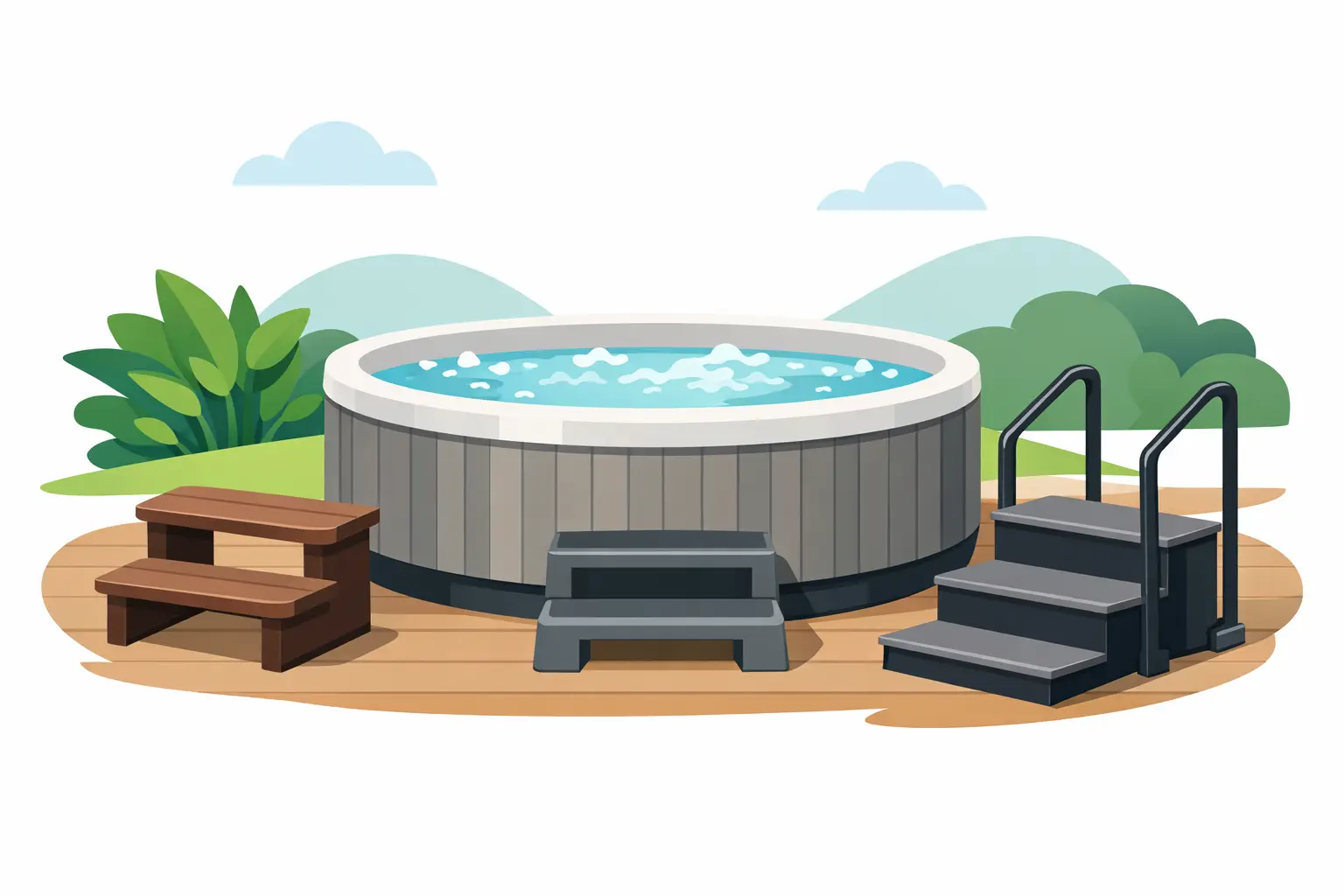
A hot tub step can either make spa entry feel secure and natural, or turn every soak into an awkward climb. If you are wondering how to choose hot tub steps, the right answer starts with more than color or price. It comes down to fit, stability, material quality, and how well the steps work with your spa, your space, and the way you actually use it.
Many homeowners buy steps as an afterthought. That is usually when they end up with something too short, too narrow, slippery when wet, or visually disconnected from an otherwise well-designed backyard. Good hot tub steps should improve safety first, but they should also support the look and function of the entire spa area.
How to Choose Hot Tub Steps for Real-World Use
The best hot tub steps are the ones that match your spa height, feel comfortable underfoot, and hold up in all weather without looking worn after a season or two. That sounds simple, but there are a few details that separate a smart purchase from a frustrating one.
Start by thinking about who uses the spa most often. A younger household may be comfortable with a taller rise and a narrower footprint. If the tub is used by older adults, children, or guests, wider treads and a more stable platform matter much more. A step that looks clean and compact in a photo may not feel nearly as reassuring when someone is stepping down with wet feet at night.
Placement matters too. Some spa areas have plenty of room for broad, furniture-style steps. Others need a tighter layout because of decking, rails, privacy walls, or nearby seating. The right step is not just a match for the tub. It is a match for the whole environment around it.
Start With Hot Tub Height and Step Rise
The first measurement to check is the height from the ground to the spa cabinet or entry point. This helps determine whether you need a low-profile single step, a two-step design, or a deeper stair-style unit.
If the rise between each level is too tall, entry feels unstable. If it is too shallow, the steps can feel unnecessarily bulky. Most buyers are best served by steps that break the climb into comfortable, even levels. The goal is to reduce strain on knees and hips while creating a natural stepping motion.
This is especially important for taller hot tubs and many swim spas, which often sit higher than standard portable spas. In those cases, undersized steps can make the access point feel poorly planned, even if the spa itself is premium.
A practical rule is to measure first and choose second. Do not estimate based on photos or assume all hot tubs need the same step height. A proper fit is what makes the step feel integrated instead of improvised.
Tread Depth and Width Matter More Than Most Buyers Expect
Once height is covered, look closely at tread size. A shallow tread may save space, but it gives the user less room to place a full foot securely. Wider treads feel more stable and more comfortable, especially when entering slowly or carrying a towel, cover lifter bar, or drink tray nearby.
Width also affects appearance. A narrow set of steps in front of a large spa can look undersized. A broader step often feels more substantial and better balanced with the proportions of the hot tub. For premium outdoor spaces, that visual fit matters just as much as the physical one.
Choose a Material Built for Water, Sun, and Heavy Use
This is where quality differences show up quickly. Hot tub steps live outside. They get wet often, sit in full sun, and deal with temperature swings, dirt, and repeated foot traffic. Materials that look acceptable on day one can fade, crack, wobble, or become difficult to maintain over time.
Plastic steps are often chosen for price, but lower-grade options can feel light and less secure. Wood can be attractive, though it usually demands more upkeep and may not hold its finish as well in damp conditions. Furniture-grade recycled HDPE has become a preferred option in premium spa settings because it is durable, weather-resistant, easy to maintain, and capable of a more refined finished look.
That last point matters. Steps should not look like a temporary accessory beside a major spa investment. Well-made HDPE steps offer a cleaner, more architectural appearance while resisting moisture and requiring far less maintenance than many traditional materials.
Texture and Slip Resistance Are Essential
A step surface should feel secure when wet. Smooth surfaces may be easier to wipe down, but if they become slick, that convenience is not worth much. Look for designs with traction-friendly tread surfaces and solid construction that does not flex under weight.
Stability and slip resistance work together. Even a textured tread is less reassuring if the entire unit shifts slightly during use. Well-built steps should feel planted, balanced, and dependable every time someone enters or exits the spa.
Match the Steps to the Style of the Spa Area
Homeowners investing in a high-end hot tub setup usually care about more than access. They want the entire space to look intentional. That means the steps should coordinate with the cabinet color, decking tones, nearby furniture, and the broader backyard design.
This is where generic one-size-fits-all steps often fall short. They may function adequately, but they can interrupt the look of an otherwise polished installation. Color coordination, profile, shape, and finish all influence whether the steps blend in or stand out for the wrong reasons.
Curved spas may pair better with contoured or wrap-style steps, while square or rectangular models often look best with cleaner, straight-line designs. In some spaces, a broader step unit can visually anchor the tub and create a more furnished, upscale appearance. In others, a streamlined form is the better fit because it preserves movement around the spa.
If you want the area to feel complete rather than pieced together, aesthetics deserve the same attention as dimensions.
Think About Safety Beyond the Steps Themselves
When homeowners ask how to choose hot tub steps, they often focus on the step unit alone. That is understandable, but the surrounding conditions matter just as much.
Consider the surface beneath the steps. Grass, gravel, or uneven pavers can compromise stability. The ideal setup places the steps on a level, supportive base so they remain steady over time. Also think about lighting. A beautiful step with the right rise and tread still becomes a safety risk if users cannot clearly see it after dark.
Households with older adults or anyone with limited mobility may also benefit from integrating handrails or pairing the steps with other access solutions. The best answer is not always the largest set of steps. Sometimes it is a coordinated entry system designed around comfort and confidence.
Storage and Multi-Function Design Can Add Value
Some step designs do more than provide access. Depending on the layout, built-in storage or integrated functionality can improve the overall usability of the spa area. This can be especially useful when homeowners want a cleaner space without extra bins or clutter around the tub.
That said, extra features only add value if they do not compromise stability or design. A bulky storage step that feels awkward to use is not an upgrade. The smarter choice is a product that solves a practical need while still looking refined and performing well every day.
Custom Fit vs. Off-the-Shelf
This is often the deciding factor for premium spa owners. Off-the-shelf steps can work for common dimensions and straightforward installations. But if your spa has a unique shape, specific cabinet color, unusual height, or a carefully designed backyard layout, a custom or model-conscious solution often delivers a much better result.
Custom-fit steps are especially valuable when the goal is an exact visual match and a more integrated feel. They can align with the tub more precisely, complement the finish, and solve space or access issues that standard products cannot. For dealers and homeowners working on high-end installations, that difference is easy to see.
A&B Outdoor Products has built its reputation around this kind of detail, helping customers find step solutions that are not only durable and easy to maintain, but also tailored to the way the spa is actually used.
Questions to Ask Before You Buy
Before making a final decision, ask yourself a few practical questions. How high is the spa entry point from the ground? Who uses the spa most often? Do you want the steps to blend in quietly or make more of a design statement? Is your priority compact access, broader comfort, or a custom look that coordinates with the entire setup?
Also be honest about long-term expectations. If you want something that still looks good several years from now with minimal upkeep, material quality should carry more weight than the lowest price. If your spa area is a centerpiece of the backyard, the visual finish should not be treated as secondary.
The best hot tub steps do not call attention to themselves once they are in place. They simply make the spa easier to enjoy, safer to access, and more polished as part of the whole outdoor space. Choose with that standard in mind, and you will end up with steps that feel like a real upgrade every time you use them.
