
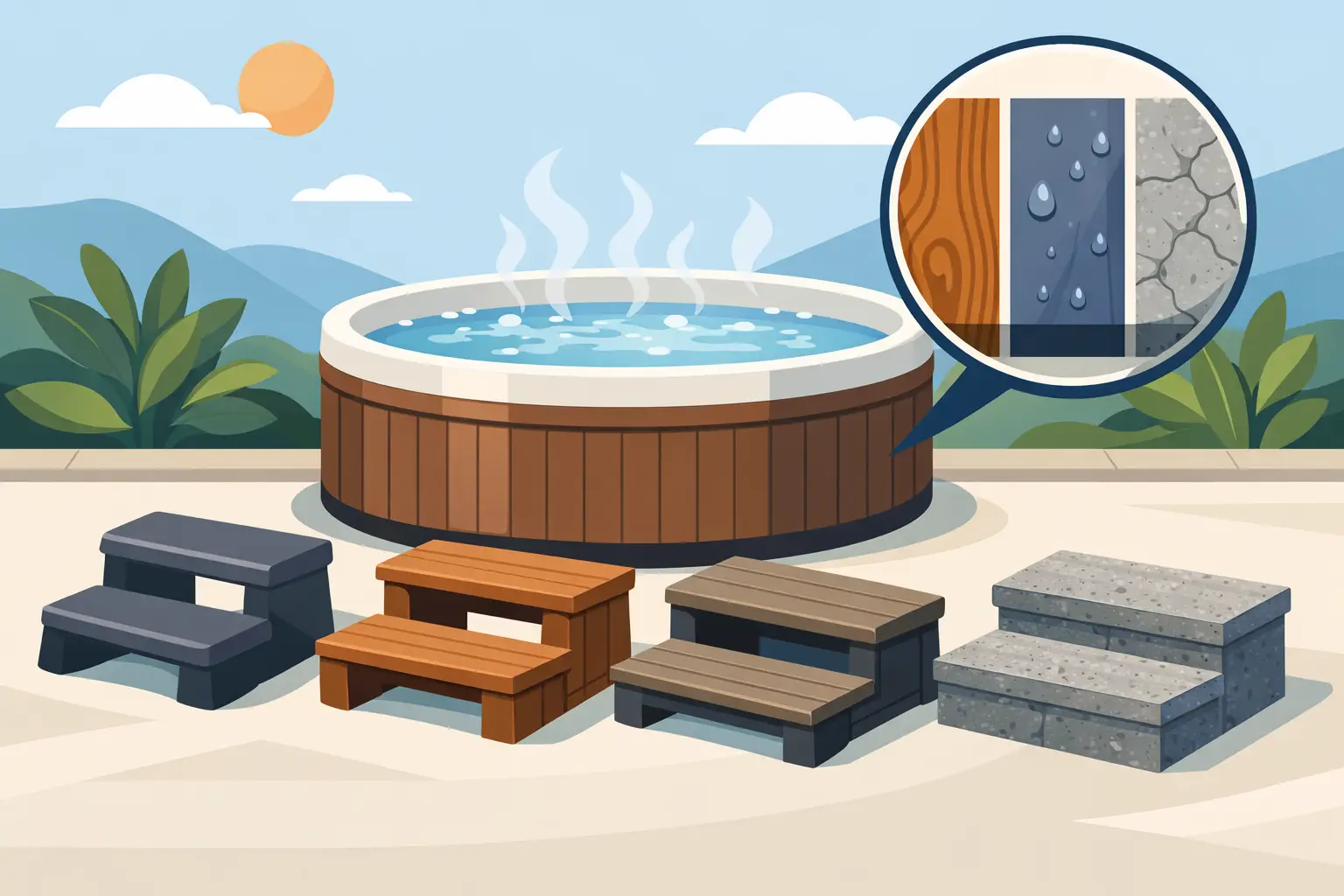
A hot tub step is one of the first things people touch when they enter your spa, and one of the first things they notice from across the patio. That makes a hot tub step material review more than a question of price or color. The right material affects safe entry, long-term appearance, maintenance time, and whether the entire spa area feels thoughtfully finished.
For many homeowners, the decision comes down to four common choices: recycled HDPE, natural wood, molded resin or plastic, and composite materials. Each can serve a purpose. The difference is how well it holds up beside warm water, chemical splash, wet feet, sunlight, changing temperatures, and everyday use.
What a Hot Tub Step Must Handle
Hot tub steps live in a demanding environment. They are exposed to rain, snow, ultraviolet light, condensation, sanitizer residue, and the repeated pressure of people stepping in and out of the spa. A material that looks acceptable in a showroom can become slippery, faded, warped, or unsteady after a few seasons outdoors.
A quality step should provide a stable platform underfoot, a practical tread depth, and enough weight or structure to remain in place. It should also be easy to clean. Spa ownership is meant to be relaxing, not another weekend maintenance project.
Appearance matters, too. A step sits directly against the hot tub cabinet, so a close color match and furniture-grade finish can make the installation feel intentional. A mismatched, lightweight plastic step can make even a premium spa look unfinished.
Hot Tub Step Material Review: The Main Options
Recycled HDPE: Built for Long-Term Outdoor Use
High-density polyethylene, commonly called HDPE, is a premium choice for hot tub steps because it is designed to perform in outdoor conditions. Furniture-grade recycled HDPE is solid, color-stable, and nonporous. It does not absorb water the way wood can, which helps prevent rot, swelling, splitting, and insect damage.
Unlike painted surfaces, quality HDPE carries its color throughout the material. Minor scuffs are less noticeable, and there is no paint or stain coating to peel. This is especially valuable around spas, where wet towels, splash-out, and chemical-treated water are part of normal use.
HDPE steps can also be constructed with substantial panels, reinforced framing, and integrated storage. The material supports refined designs that feel more like outdoor furniture than an accessory added at the last minute. For homeowners creating a coordinated backyard retreat, that distinction is significant.
The trade-off is initial cost. HDPE generally costs more than basic molded plastic or entry-level wood steps. Yet for owners who plan to keep their spa for years, its low maintenance and durability can make it the better value over time. It is also a strong option for regions with intense sun, freeze-thaw cycles, coastal moisture, or heavy seasonal use.
Natural Wood: Traditional Appeal With Ongoing Care
Wood steps offer warmth and a classic spa-side appearance. Cedar and teak are often chosen for their natural resistance to moisture and their attractive grain. When properly built and maintained, wood can complement a rustic deck, cabin setting, or natural landscape beautifully.
However, hot tub conditions are hard on wood. Even rot-resistant species need periodic cleaning, sealing, and inspection. Moisture can encourage checking, splintering, fading, and surface wear. In shaded locations, mildew may become an issue. In sunny locations, wood can dry out and lose its original color quickly.
Wood also requires closer attention to traction. A smooth, wet board can be slick, especially when bare feet are involved. Textured treads and thoughtful construction help, but the surface should be inspected regularly.
Wood remains a reasonable choice for homeowners who enjoy the look and are comfortable with seasonal care. It is less practical for buyers looking for a color-matched, easy-to-maintain step that will retain a polished appearance with minimal intervention.
Molded Resin and Plastic: Affordable but Often Short-Lived
Molded resin and lightweight plastic steps are widely available and usually have the lowest upfront cost. They are easy to move, simple to rinse off, and suitable for temporary setups or occasional spa use. For a budget-conscious buyer, that accessibility can be appealing.
The limitations become more apparent over time. Thin plastic can flex under weight, particularly on uneven patio surfaces. Sun exposure may lead to fading or brittleness, and lower-profile designs may not provide the substantial footing that many adults prefer. Some molded steps also have limited color choices, making a coordinated spa installation harder to achieve.
This material can work for a short-term need, a rental property, or a lightly used inflatable spa. For a permanent hot tub installation, homeowners should compare the purchase price with the likelihood of replacement. A step that needs replacing after a few years is rarely the least expensive option in the long run.
Composite: A Variable Category Worth Examining Closely
Composite steps generally combine plastic with wood fibers or other fillers. Their appeal is understandable: they can resemble wood while requiring less maintenance than natural lumber. Some composite products perform well, particularly when they are engineered for full outdoor exposure.
Still, composite is not one uniform material. Quality varies considerably by manufacturer and construction method. Some products can become hot in direct sun, show surface scratching, or retain moisture around cut edges and joints. Others are designed primarily for decking rather than freestanding furniture or steps.
Before choosing composite, ask how the step is supported, whether the tread surface provides dependable traction, and how the product performs in your local climate. A well-made composite option may fit a specific design goal, but it should be evaluated on construction quality rather than appearance alone.
Safety Depends on Design as Much as Material
Material is only one part of a safe hot tub entry. The best step for your spa also has the correct height, width, and placement. A step that is too low creates an awkward climb; one that is too high can make exit more difficult. For many installations, a two-step design offers a more comfortable transition than a single tall platform.
Look for broad treads with a stable stance. Textured surfaces, open drainage areas, and a level installation surface all help reduce slip concerns. If anyone in the household has mobility limitations, consider pairing steps with a properly positioned handrail. The goal is a calm, natural entry and exit, not a careful balancing act.
Storage can improve safety as well. A storage step or cabinet helps keep spa chemicals, towels, and floating accessories from collecting around the base of the hot tub. Clear pathways create a cleaner look and reduce tripping hazards.
Color Coordination Is More Than a Cosmetic Detail
A hot tub is a large visual feature in the backyard. Its steps, side table, storage, and surrounding furniture should support that investment rather than compete with it. Materials that offer multiple solid colors and consistent finishes make it easier to coordinate with the spa cabinet, decking, fencing, and outdoor furniture.
This is where furniture-grade HDPE is particularly useful. It can be fabricated into matching steps, benches, storage units, and custom surrounds, allowing the entire area to look planned rather than pieced together. A&B Outdoor Products has built its reputation around this kind of coordinated, USA-made spa-side design, including solutions tailored to specific spa dimensions and homeowner preferences.
Exact matching is not always necessary. A contrasting color can look excellent when it is chosen intentionally. The key is to select a finish that belongs in the space and will continue looking good after years outside.
How to Choose the Right Material for Your Spa
Start with your climate and how you use the hot tub. A covered spa in a mild climate has different needs than an uncovered installation in the Midwest, Southwest, or along the coast. Think about the people using it, too. A frequently used family spa needs more stability and storage than a rarely used retreat for two.
Then consider how much maintenance you genuinely want to perform. If refinishing wood every year sounds satisfying, natural lumber may be worthwhile. If you prefer to wash the step occasionally and spend your time in the water instead, HDPE or a high-quality composite is likely a better fit.
Finally, measure before ordering. Record the spa height, available clearance, cover-lift location, door access, and any nearby equipment. A beautiful step that blocks a service panel or interferes with the cover is not a successful solution. Custom sizing is often worthwhile when the spa area has tight dimensions or a specific layout challenge.
A well-chosen hot tub step should feel solid on day one and remain dependable season after season. Choose the material that fits your climate, maintenance expectations, and design standards, then give your spa the entry it deserves.
