
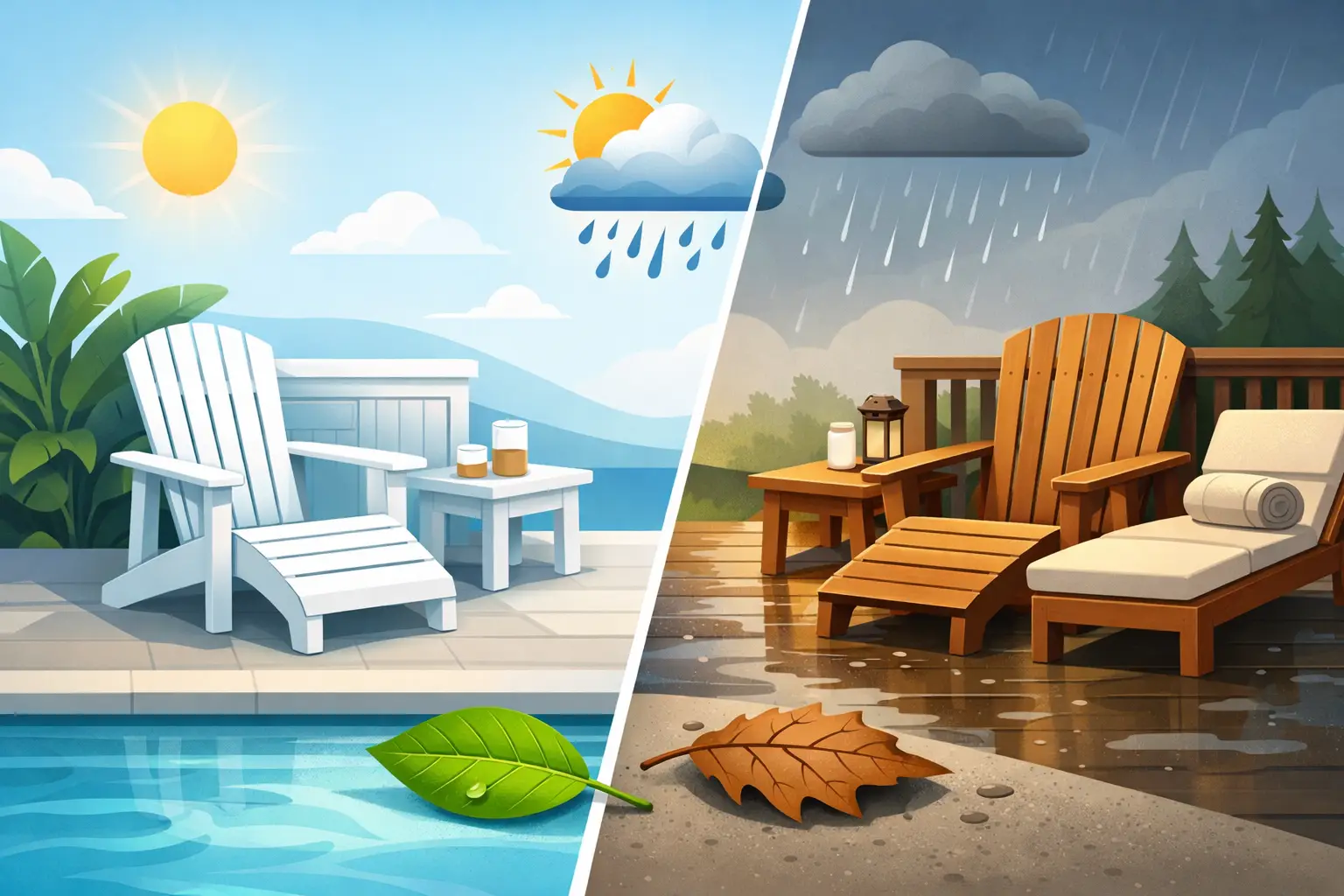
A spa-side chair can look perfect on delivery day and feel like a mistake one season later. That is usually where the real hdpe vs wood spa furniture question begins – not in a showroom, but after rain, sun, splashing water, and daily use start testing every surface around your hot tub or swim spa.
For homeowners building a polished outdoor retreat, furniture choice is not just about appearance. It affects maintenance, safety, comfort, and how well the entire spa area holds up over time. If you are deciding between HDPE and wood, the right answer depends on your climate, your expectations, and how much upkeep you are willing to take on.
HDPE vs wood spa furniture at a glance
Wood has natural warmth and a traditional look that many homeowners still love. It can feel high-end, familiar, and inviting, especially in rustic or natural landscape settings. But in a spa environment, wood also brings a recurring maintenance schedule and more sensitivity to moisture.
HDPE, by contrast, is built for exposure. Furniture-grade HDPE is engineered to handle wet conditions, direct sunlight, temperature swings, and regular use without the same level of deterioration you would expect from untreated or aging wood. Around hot tubs and swim spas, that difference matters more than it does in an ordinary patio setup.
This is why many premium spa owners increasingly choose HDPE when they want a clean, coordinated space that stays attractive with less effort.
Why spa environments are harder on furniture
Not all outdoor furniture lives in the same conditions. A spa area creates a more demanding environment than a standard deck or porch. Water splashes are constant. Steam can settle into surfaces. Chemical exposure is more likely. Entry and exit create repeated wear, and bare feet tend to notice every rough edge, splinter, or unstable surface.
That means materials need to do more than look good. They need to remain dependable when wet, maintain structural integrity, and stay comfortable to use after repeated exposure. For spa owners investing in steps, side tables, storage, or coordinated furniture, durability is not a luxury feature. It is part of everyday usability.
Durability: where HDPE usually pulls ahead
If longevity is the main concern, HDPE often has a clear advantage in the hdpe vs wood spa furniture comparison. Quality HDPE does not rot, absorb water like wood, or become vulnerable to the same cycle of swelling, cracking, and splitting. In areas with snow, heavy rain, humid summers, or strong UV exposure, that resilience becomes especially valuable.
Wood can absolutely be durable, but only under the right conditions and with regular care. Some hardwoods perform better than others, and properly maintained wood can last for years. Still, the spa setting accelerates wear. Moisture, sun exposure, and temperature fluctuation tend to reveal weak points faster.
For buyers who want furniture that keeps its shape, color consistency, and surface quality with minimal intervention, HDPE is often the more reliable long-term material.
How weather changes the equation
In mild climates, wood may remain visually appealing for longer stretches with manageable maintenance. In harsher climates, the gap widens. Freeze-thaw cycles can stress joints and finishes. Constant sun can fade stain or dry out the surface. Repeated wetting can encourage warping or mildew.
HDPE is not completely immune to outdoor wear, but it handles those conditions far more predictably. That consistency is one reason it is widely chosen for premium outdoor applications where homeowners expect furniture to perform year after year.
Maintenance: the difference most owners feel first
The most immediate difference between wood and HDPE is maintenance. Wood typically needs periodic sealing, staining, painting, or refinishing to protect its appearance and structural integrity. It also requires closer inspection for splinters, soft spots, discoloration, or loosened hardware as it ages.
HDPE is much easier to maintain. In most cases, routine cleaning with soap and water is enough to keep it looking sharp. That makes it especially attractive for spa owners who want an elegant backyard environment without adding another seasonal maintenance project.
For many households, that convenience becomes the deciding factor. A spa is supposed to make outdoor living more enjoyable, not create more chores.
Appearance: natural charm vs tailored consistency
This is where preference plays a real role. Wood offers organic grain variation, natural texture, and a classic visual character that some homeowners strongly prefer. If your outdoor space leans heavily into natural stone, cedar structures, or a woodland aesthetic, wood may feel like the more intuitive match.
HDPE takes a different approach. It delivers a cleaner, more controlled look with consistent color, refined lines, and a furniture-grade finish suited to upscale spa installations. For homeowners who want coordinated steps, tables, cabinetry, and accessories around a hot tub or swim spa, HDPE often makes it easier to create a finished, intentional appearance.
That consistency matters in premium backyard design. When each element around the spa works together in color and form, the whole space feels more complete.
Color matching and design flexibility
One area where HDPE stands out is customization. It is well suited to coordinated color palettes and model-specific outdoor layouts. That can be a major benefit when you are not just buying a single chair, but designing a full spa surround with functional pieces that need to look like they belong together.
A&B Outdoor Products has built much of its reputation on exactly that kind of tailored outdoor solution – combining durable HDPE construction with exact color coordination and custom design support for spa owners who want more than off-the-shelf patio furniture.
Comfort and everyday use around the spa
Comfort depends on design as much as material, but the surface behavior of each material still matters. Wood can become rough over time, especially if the finish wears down. In a spa setting, where users are often barefoot or wearing minimal cover, a splintered armrest or weathered bench edge is more than a minor annoyance.
HDPE stays smoother and more consistent with less upkeep. It also tends to feel sturdier in wet environments because it is not degrading in the same way wood can. For steps, benches, and side tables used regularly during spa entry and exit, that reliability adds real value.
If safety and ease of use are priorities, especially for families, older adults, or frequent spa users, low-maintenance surface stability should not be overlooked.
Cost: initial price vs long-term value
Wood furniture can sometimes appear more affordable upfront, depending on species and construction quality. But purchase price alone rarely tells the full story. Ongoing maintenance supplies, refinishing time, potential repairs, and earlier replacement can increase the true cost of ownership.
HDPE furniture often represents stronger value over time because it asks less of the owner and tends to maintain its performance longer. For premium buyers, that equation usually makes sense. Paying more initially for a material that stays attractive and functional with less effort is often the more cost-effective decision in the long run.
This is especially true for spa owners who view their outdoor area as an extension of the home rather than a temporary seasonal setup.
When wood still makes sense
There are cases where wood is the right fit. If you prefer a deeply natural look, enjoy hands-on maintenance, and are comfortable with periodic refinishing, wood can be rewarding. It may also suit spaces where furniture is more decorative than heavily used, or where climate conditions are less punishing.
Wood can also appeal to buyers who appreciate how materials age and do not mind variation over time. Some homeowners see weathering as character, not damage. That is a personal design choice, and it can work beautifully in the right setting.
The key is going in with realistic expectations. Wood usually asks for more attention in exchange for its appearance.
When HDPE is the better spa-side investment
For most hot tub and swim spa applications, HDPE is the more practical premium choice. It offers durability, easy maintenance, weather resistance, and a polished look that suits custom outdoor living spaces. If your goal is to create a spa area that feels finished, performs reliably, and stays attractive through changing seasons, HDPE is hard to beat.
That does not mean wood has no place. It simply means the spa environment favors materials designed to handle moisture and wear without constant intervention.
The best outdoor spaces are the ones you can actually enjoy. If you want furniture that supports the look of a high-end spa setting without demanding regular refinishing, HDPE is usually the material that keeps pace with the way you live. Choose the option that fits not just your style today, but the level of care you want to give it a few years from now.
