
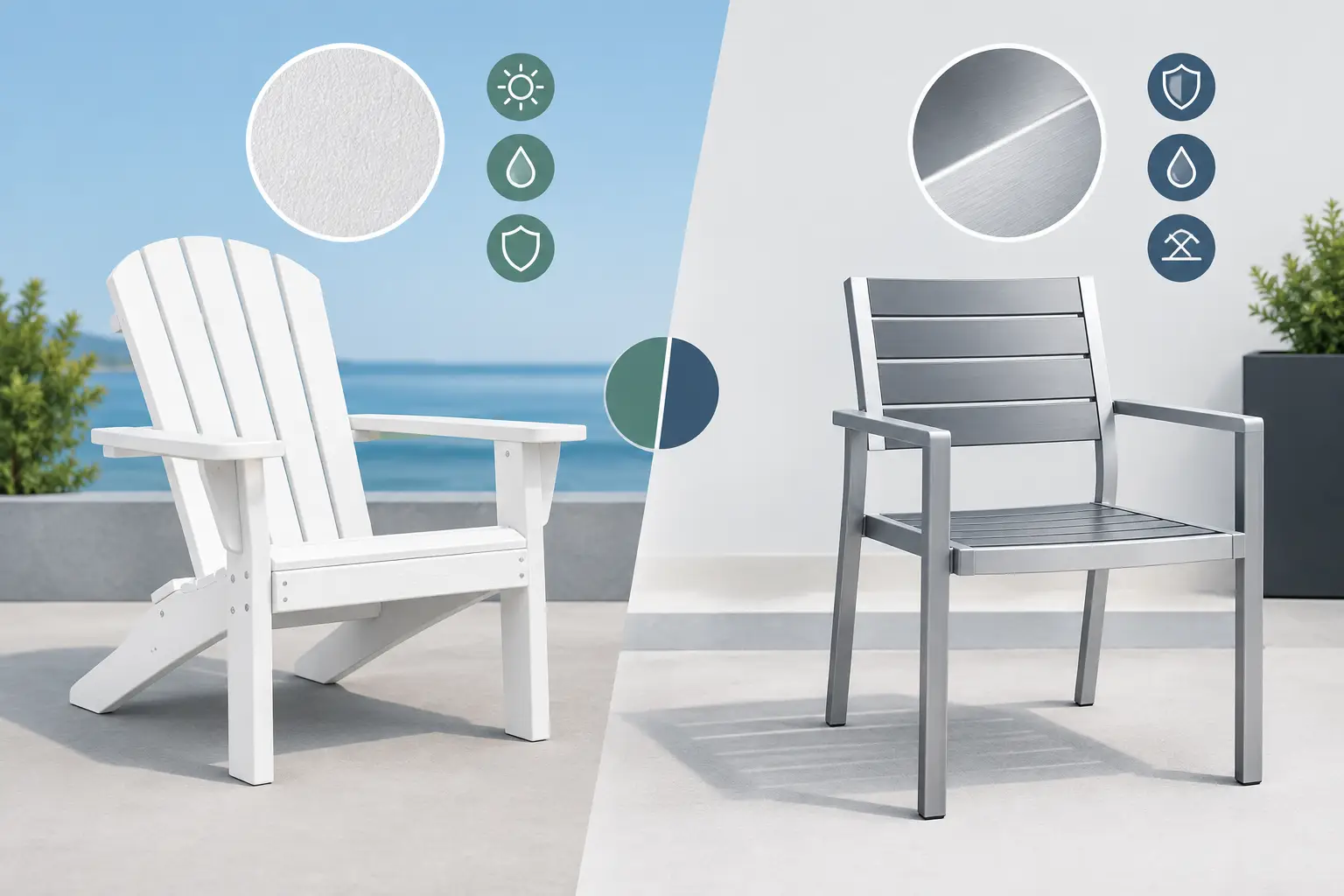
A hot tub deck has different demands than a typical patio. It sees splashing water, bare feet, wet towels, chemical residue, intense sun, and frequent temperature changes. When comparing HDPE versus aluminum furniture for this setting, the better choice is not simply the one that looks good on delivery day. It is the material that continues to look polished, feel comfortable, and perform safely through years of real spa use.
Both materials have a place outdoors. Aluminum is lightweight and familiar, while high-density polyethylene, or HDPE, is valued for substantial construction and low-maintenance performance. The right selection depends on where the furniture will sit, how it will be used, and the level of finish you want around your hot tub or swim spa.
HDPE versus aluminum furniture around a spa
Aluminum furniture is commonly found in patio dining sets, lounge chairs, and occasional tables. Its main appeal is its low weight. A homeowner can move an aluminum side table or chair with little effort, which can be useful when rearranging an open patio for entertaining.
HDPE furniture is different by design. Furniture-grade recycled HDPE is a dense, solid material that is often formed into substantial components rather than thin frames. For spa areas, that added weight can be a practical advantage. A table beside a hot tub should stay put when someone reaches for a drink, sets down a towel, or uses it for support while moving around the spa.
For accessories such as spa steps, storage benches, bar-height tables, and surrounds, the decision should account for more than portability. These pieces are part of the everyday path into and out of the water. They need to feel stable underfoot and coordinate with the spa cabinet, cover, and surrounding outdoor space.
Weather resistance is more than a finish
Quality aluminum does not rust in the way untreated steel does. That is a meaningful benefit, particularly in humid climates. However, aluminum is usually protected by a powder-coated or painted finish. If that finish is scratched, worn, or damaged over time, the exposed area can oxidize and lose its uniform appearance. Coastal air, pool chemicals, fertilizer, and accumulated grime can also make routine cleaning more important.
HDPE does not rely on a surface coating for its color. The material is colored throughout, so ordinary scuffs are less visually disruptive than scratches on painted metal. It will not rot, peel, or rust, and it does not absorb water like wood. That makes it especially well suited to the wet perimeter around a spa.
No outdoor material is entirely maintenance-free. Pollen, sunscreen, spills, hard-water marks, and airborne dirt will collect on any surface. The advantage of HDPE is that routine care is typically straightforward: mild soap, water, and a soft brush are generally enough to keep it looking presentable. Aluminum may require more attention to preserve the condition of its finish, particularly when it has textured surfaces, woven details, or tight joints that trap debris.
Sun, heat, and seasonal changes
Both aluminum and HDPE can live outdoors year-round, but they react differently to direct sun. Metal readily conducts heat. An aluminum armrest, chair frame, or tabletop in full summer sun can become uncomfortably hot to touch. This matters around a spa, where people are often barefoot and may be moving between warm water and a sunny deck.
HDPE can also warm in sunlight, especially in darker colors, but it does not conduct heat in the same way as aluminum. The surface generally feels more forgiving for everyday use. Color selection still matters. A lighter color can be a smart choice for a full-sun patio, while deeper tones may better coordinate with dark spa cabinetry or a more dramatic outdoor design.
Freezing temperatures are another consideration. Well-made HDPE is designed for outdoor exposure and handles seasonal swings without the refinishing schedule associated with many wood products. Aluminum is also weather-capable, but hardware, joints, and finish quality deserve close attention. A lightweight chair may survive the winter, yet still become wobbly or visually worn sooner than a solid, purpose-built spa accessory.
Stability, comfort, and daily use
The light weight of aluminum is a benefit until wind, uneven surfaces, or repeated use turn it into a drawback. On an exposed deck or patio, lighter chairs and tables can shift, tip, or require frequent repositioning. That may be acceptable for occasional seating, but it is less desirable for steps, drink tables, and other pieces used near water.
HDPE furniture has a more grounded feel. This is particularly valuable for hot tub steps and swim spa access products, where confident footing matters. A well-designed HDPE step system can also incorporate wide treads, practical handhold positions, storage, and proportions that fit the spa rather than looking like an unrelated piece of patio furniture.
Comfort is not only about cushions. Aluminum seating often needs fabric cushions or slings to soften the experience. Those materials add care requirements of their own, including drying after rain, cleaning, and eventual replacement. HDPE chairs and tables have a solid, substantial presence that works well on its own, although the design of the seat, back, and armrests still matters. For a spa retreat, the goal is furniture that feels intentional and comfortable even when guests are carrying towels or moving in and out of the water.
Appearance and color coordination
An aluminum set can suit a contemporary backyard, especially one built around slim profiles and neutral finishes. It can also be a good choice when furniture must be moved often or stored away between uses. The trade-off is that many aluminum collections look distinctly separate from the spa itself. Their finish, fabric, and frame geometry may not relate to the spa cabinet or cover.
HDPE offers more opportunity to create a coordinated outdoor room. It is available in a range of colors and can be used to complement spa cabinetry, deck materials, and existing outdoor features. For homeowners investing in a premium hot tub or swim spa, this is often the difference between an accessory area and a finished environment.
Customization is especially valuable when working with nonstandard spa dimensions, tight clearances, or a specific entry location. A generic patio table cannot solve every problem. A custom surround, fitted step, or purpose-built storage solution can improve circulation around the spa while giving towels, water-care supplies, and personal items a defined place to go.
Cost: compare the years, not only the receipt
Entry-level aluminum furniture is often less expensive than premium HDPE furniture. That can make it appealing for a quick patio refresh. Yet price comparisons should be made carefully. Thin aluminum frames, inexpensive coatings, lightweight hardware, and disposable cushions do not perform like higher-grade aluminum pieces.
Premium HDPE construction may carry a higher initial price because of material density, fabrication, hardware, and customization. Its value comes from long-term use. If the piece will remain beside a spa through summer heat, winter weather, splashes, and daily family use, durability and easy care can matter more than the lowest purchase price.
For dealers and spa professionals, this same distinction affects customer satisfaction. A well-fitted, durable accessory reflects well on the spa installation and reduces the risk that a customer will be left with an awkward, mismatched, or short-lived solution.
When aluminum is the better choice
Aluminum is not the wrong answer. It can be a practical option for a covered patio, a flexible entertaining area, or a homeowner who regularly rearranges furniture. High-quality aluminum can also deliver a refined look when it is paired with durable fabrics and maintained properly.
Choose aluminum when low weight and easy mobility are your top priorities. Choose HDPE when the piece needs to be stable, close to water, simple to maintain, and visually integrated with a hot tub or swim spa setting. For steps, surrounds, storage, and tables used every day beside the water, HDPE often matches the demands of the space more naturally.
The best outdoor spa area feels easy to use before anyone steps into the water. Consider where towels land, where guests set a drink, how people enter safely, and which surfaces will still look right after several seasons outside. A&B Outdoor Products can help turn those practical details into a coordinated, USA-made solution built for the way you enjoy your spa.
