
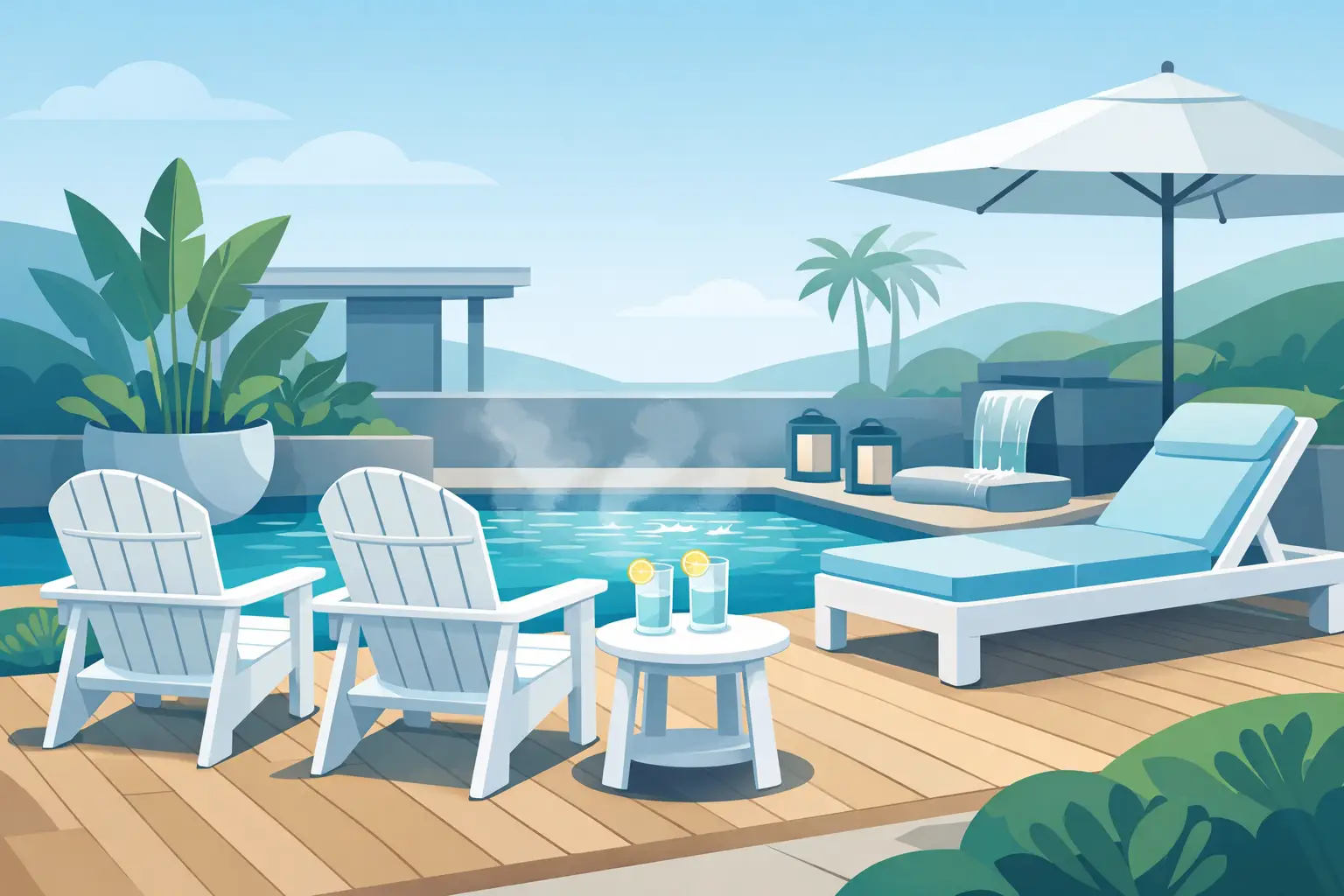
A hot tub step, storage cabinet, or surround has a tougher job than ordinary patio furniture. It sits near heat, moisture, splashing water, chemicals, sunscreen, and changing weather while still needing to look appropriate beside a premium spa. That is where furniture grade HDPE benefits become clear. This material gives homeowners a practical way to build a more polished spa area without signing up for seasonal sanding, staining, or replacement.
For hot tub and swim spa owners, the material behind an accessory matters as much as its style. Well-designed steps need to feel secure underfoot. A table needs to hold towels and drinks without becoming another maintenance project. A surround should create a finished appearance while standing up to the conditions that come with regular spa use. Furniture-grade recycled HDPE is designed for that kind of long-term outdoor performance.
What Makes HDPE Furniture Grade?
HDPE stands for high-density polyethylene, a dense plastic material widely used in products that need dependable moisture resistance. Not all HDPE is the same, however. Furniture-grade HDPE is made into substantial boards for outdoor use, rather than thin molded plastic parts that can feel light, flex under load, or weather poorly over time.
For spa accessories, board thickness, construction methods, hardware, and design all affect the finished result. Quality furniture-grade HDPE components are typically cut and assembled into stable, purposeful pieces. The result can be a step, table, or cabinet that feels like a permanent part of the backyard rather than a temporary accessory placed beside the spa.
At A&B Outdoor Products, that distinction matters because spa areas call for more than generic outdoor furniture. Accessories need to support safe movement around the water, fit the available space, coordinate with the spa cabinet, and remain attractive through real use.
Furniture Grade HDPE Benefits Where Spas See the Most Use
The best material choice is rarely about a single feature. It is about how several performance qualities work together over years of ownership.
It Handles Water Without Rotting or Splintering
Wood can be beautiful, but around a hot tub it requires steady attention. Frequent moisture may lead to swelling, checking, splinters, mildew, or finish wear, especially when a step or table is exposed throughout the year. Furniture-grade HDPE does not absorb water the way wood does, so it will not rot, crack from moisture exposure, or create splinters under bare feet.
That is especially valuable near a spa entry, where wet feet and dripping towels are part of normal use. Homeowners can focus on enjoying the water instead of wondering whether the next rainy season will leave their accessories looking worn.
It Is Built for Changing Outdoor Conditions
A spa area can experience direct summer sun, freezing winter temperatures, wind-driven rain, and abrupt temperature changes around heated water. Furniture-grade HDPE is well suited to these conditions because it is made for outdoor exposure and can expand and contract without the same concerns associated with painted wood or brittle plastic.
Color quality still depends on the material formulation and the amount of sun an area receives. Premium HDPE with color integrated through the board is a stronger choice than surface-painted materials, since small scratches are less likely to reveal a different color beneath. For homeowners who want a coordinated installation, this helps the accessory retain a more consistent appearance over time.
It Keeps Maintenance Simple
Outdoor upgrades should add comfort, not a list of chores. HDPE furniture generally cleans with mild soap, water, and a soft brush or cloth. There is no regular staining, sealing, painting, or waterproofing schedule required.
This is not a promise that the furniture will never need care. Pollen, mineral deposits, sunscreen residue, and spa-water splashes can collect on any outdoor surface. The difference is that routine cleaning is usually enough to restore the appearance of HDPE. That makes it a particularly sensible option for a spa space used often by family and guests.
It Delivers a More Substantial Feel Than Lightweight Plastic
Many homeowners have owned inexpensive resin furniture that shifts in the wind, flexes when someone sits down, or starts looking tired after a few seasons. Furniture-grade HDPE is a different category. Its heavier, denser boards allow manufacturers to create accessories with more visual weight and a more settled feel.
That matters for hot tub steps and swim spa products. A well-built unit can provide a confident transition into and out of the water while giving the surrounding area a tailored look. The material alone does not guarantee stability, of course. Proper dimensions, thoughtful tread design, structural support, and quality fasteners are equally important.
It Supports a Refined, Coordinated Backyard Design
A spa is often a major investment and a focal point of the backyard. Accessories that are mismatched, faded, or obviously temporary can make the whole installation feel less finished. HDPE can be produced in a range of colors and textures, giving homeowners more flexibility to complement spa cabinetry, decking, hardscape, and outdoor furniture.
For a custom project, color coordination and exact fit can be as valuable as weather resistance. A wraparound surround, storage solution, or step designed around a specific spa model can improve the visual flow of the area while solving practical needs at the same time.
Why Recycled HDPE Is a Practical Premium Choice
Furniture-grade recycled HDPE gives durable material a second life in a product intended to serve for years outdoors. For many homeowners, that is an appealing part of the purchase decision. It offers a responsible material story without asking them to compromise on performance or upkeep.
The more immediate benefit is longevity. Replacing low-cost accessories repeatedly can cost more over time and creates unnecessary waste. A well-made HDPE product may carry a higher initial price than a basic plastic step or untreated wood table, but it is intended to stay in service through many seasons of use.
For dealers and spa professionals, this durability also helps protect the customer experience. Recommending an accessory that complements a premium spa and continues to look appropriate after installation reinforces confidence in the entire project.
Where HDPE Is Not the Only Answer
Furniture-grade HDPE is an excellent fit for many spa environments, but the right choice depends on the project. If a homeowner wants the exact grain variation and aging character of natural wood, wood may be the preferred aesthetic, provided they are willing to maintain it. Metal can also suit a contemporary setting, though it may become hot in direct sun and requires finishes that hold up near moisture.
HDPE has its own considerations. It is substantial, which is a benefit once installed but can make larger pieces less convenient to move. In extreme heat, darker colors may feel warm to the touch, just as they would on many outdoor surfaces. And because quality HDPE accessories are built with thicker materials and durable hardware, they are not usually the least expensive option upfront.
Those trade-offs are worth weighing against how the spa area will actually be used. A lightly used, covered patio may place fewer demands on materials than an uncovered swim spa deck used by an active family year-round.
Choosing HDPE Accessories That Perform Well
Material is only one part of a successful purchase. Look closely at how the accessory will function around the spa. Steps should offer comfortable tread depth and a stable footprint. Storage should be accessible without blocking service panels or creating congestion around the cover lifter. Tables should be placed where guests can reach them without introducing a trip hazard.
For custom or model-specific work, accurate measurements are essential. Consider the spa’s cabinet color, cover position, access points, nearby doors, and traffic pattern before selecting a size or configuration. A solution that looks attractive in a product photo may not solve the real needs of a narrow deck, sloped patio, or high-sided swim spa.
It also pays to ask about hardware and construction. Stainless steel fasteners, reinforced connection points, and careful assembly help ensure the benefits of HDPE are matched by the quality of the finished product. A premium board material deserves equally dependable craftsmanship.
A Better Material for the Way You Use Your Spa
The value of furniture-grade HDPE is not simply that it survives outdoors. It helps create an outdoor spa area that is easier to use, easier to maintain, and more consistent with the quality of the spa itself. From safer entry steps to coordinated storage and surrounds, the right accessories can make the space feel intentional every time the cover comes off.
Before choosing your next spa accessory, consider the daily details: wet feet, changing weather, available space, color coordination, and the level of maintenance you are willing to take on. Those answers will point you toward a material and design that will continue serving your backyard well long after the first season.
