
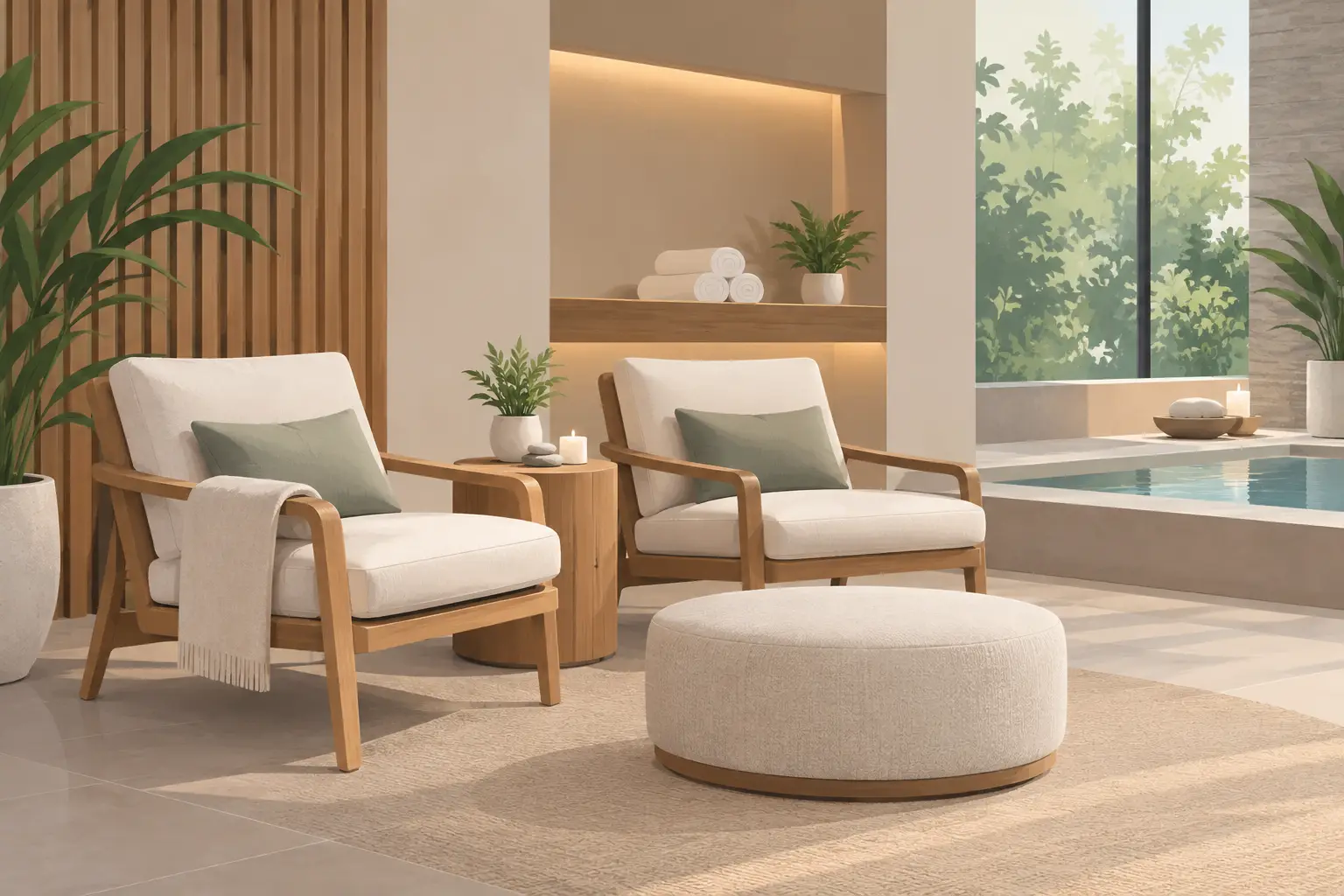
A hot tub can be the best seat in the backyard, but it should not be the only place to sit. When you design a spa seating area, you are creating the space where guests gather before getting in, where towels land after a soak, and where a quiet evening can continue long after the cover is closed. The right plan makes the spa feel like an intentional part of your outdoor living space rather than a large piece of equipment on a patio.
For most homeowners, the goal is not to fill every open square foot with furniture. It is to create a comfortable, organized setting that supports how the spa is actually used. That means considering circulation, wet feet, privacy, storage, weather exposure, and the visual relationship between your spa, seating, and surrounding landscape.
Start With the Spa’s Working Zone
A seating area should support safe, easy spa access before it adds visual impact. Begin by identifying the working zone around the hot tub or swim spa: the path from the house, the primary entry side, the cover lifter clearance, service-panel access, and the route people take when stepping out wet.
Leave the entry side open enough for a person to step down, turn, and reach a towel without navigating around chair legs. If your spa uses steps, treat them as a central part of the layout, not an afterthought. Well-placed steps establish a natural approach to the water and give the entire area a more finished appearance.
Service access matters, too. A beautiful arrangement that blocks equipment panels becomes frustrating the first time maintenance is needed. Keep movable seating, planters, and side tables clear of panels that may need occasional attention. For a swim spa, allow extra room around the longer sides and consider where users will enter after a workout versus where they will relax afterward.
Choose Seating for the Way You Entertain
The best seating configuration depends on whether the spa is mainly a private retreat, a family gathering place, or a hub for entertaining. A pair of deep, comfortable chairs with a small table may be all a couple needs near a hot tub. A larger spa used by family and friends may call for a conversation grouping that accommodates people waiting for their turn in the water.
Place seating close enough to feel connected to the spa, but far enough away that it does not become a splash zone. A distance of several feet often gives guests room to move while preserving an easy conversation. Angle chairs toward both the spa and a shared focal point, such as a fire feature, garden view, or outdoor kitchen. This prevents the arrangement from feeling like a row of furniture aimed at a single object.
Built-in benches are useful in compact spaces, especially along a fence or privacy wall. They can provide generous seating without the visual bulk of multiple chairs. The trade-off is flexibility. Freestanding furniture can be moved for entertaining, cleaning, seasonal changes, or access to the spa cabinet. If your use changes often, movable pieces usually offer the better long-term value.
Make Comfort Practical, Not Precious
Outdoor spa seating has a different job than indoor lounge furniture. It must handle damp swimwear, spilled drinks, sunscreen, changing temperatures, and frequent cleaning. Select chairs with supportive proportions and arms sturdy enough to help guests stand, particularly if older family members or guests will use the space.
Cushions can add comfort, but they also require storage and regular care. In a covered spa area, high-quality outdoor cushions may be a worthwhile choice. In an exposed location, furniture made from solid, weather-resistant material is often the easier option. It stays ready for use without the daily routine of carrying cushions in and out.
Furniture-grade recycled HDPE is especially well suited to spa settings because it resists moisture, will not rot or splinter, and is easy to maintain. Its substantial feel also helps it remain stable around an active outdoor space. Unlike lightweight patio pieces that can shift in wind or feel unsteady on uneven surfaces, well-made HDPE seating is built for years of everyday use.
Design a Spa Seating Area in Layers
A polished outdoor spa area usually has three layers: functional pieces nearest the water, comfortable lounge seating just beyond the access route, and finishing elements that create privacy and atmosphere. Thinking in layers keeps the design organized and prevents one large furniture grouping from doing too many jobs.
Near the spa, use practical surfaces for drinks, phones, towels, or a book. A spa-side table should be stable, easy to clean, and positioned where it will not interfere with the cover or entry steps. If you have room, a larger storage bench or cabinet can hold towels, water-care essentials, and extra supplies while keeping clutter out of sight.
Beyond that immediate zone, establish the true seating area. This is where two chairs and an occasional table, a loveseat and chairs, or a bench arrangement can create a place to relax in dry clothes. The final layer can include planters, screens, low landscape walls, or lighting. These elements define the room without closing it in.
Color coordination brings the layers together. Match or complement the spa cabinet, cover, decking, and exterior trim rather than choosing furniture in isolation. A coordinated finish can make steps, tables, seating, and surrounds look purpose-built for the spa. This is one reason custom color matching is valuable: it creates a unified result that generic patio furniture rarely achieves.
Plan for Water, Weather, and Cleanup
The surface beneath your seating has as much influence on usability as the furniture itself. Decking, textured concrete, pavers, and other slip-resistant materials are sensible choices near a spa. Avoid placing seating where water naturally pools, and make sure drainage moves away from the spa foundation and main walking paths.
Think about sun exposure at the time you are most likely to use the spa. West-facing seating can be pleasant on cool mornings but uncomfortably bright on summer afternoons. An umbrella, pergola, shade structure, or strategically placed trees can help, but each option has trade-offs. A fixed structure provides dependable shade, while an umbrella is more flexible and may work better when clearance around a cover lifter is limited.
Wind deserves attention as well. An open yard may need a privacy screen that also reduces gusts. A screen should protect the seating area without trapping steam around the spa or obstructing a desirable view. Slatted panels, plantings, and partial walls often provide a better balance than a fully enclosed structure.
Choose materials that make cleanup simple. Spa areas collect moisture and the occasional bit of debris from landscaping. Furniture with smooth, durable surfaces can be wiped clean quickly, allowing you to spend less time maintaining the setting and more time enjoying it.
Give Every Spa Essential a Home
A well-designed seating area feels calm because the necessities are organized. Towels, cover tools, water bottles, sandals, and cleaning supplies should have a logical place. Without storage, these items migrate to chair arms, deck corners, and the top of the spa cover.
A storage bench can work well for towels and outdoor accessories, while a dedicated cabinet is better for keeping maintenance products secured and separate from entertaining supplies. Consider the habits of your household. If children use the spa, a convenient towel station may be more useful than decorative shelving. If the area is primarily for evening relaxation, a drink table and a discreet place for throws may matter more.
Lighting completes the practical plan. Use gentle path lighting to guide wet feet from the house to the spa, then add warmer ambient light around the seating area. Avoid fixtures that shine directly into the water or create glare for people seated nearby. The goal is enough illumination to move safely, with a quieter atmosphere once everyone settles in.
Invest Where It Shows Every Day
A spa seating area is exposed to more use and more moisture than a typical patio corner. That is why construction quality matters. Furniture that warps, fades quickly, loosens at the joints, or requires constant protection can make a premium spa setting feel temporary.
A&B Outdoor Products builds USA-made accessories and furniture from durable recycled HDPE, with custom options designed to coordinate with specific spa models and backyard plans. For homeowners and dealers alike, that combination of exact fit, all-weather performance, and hands-on design support helps solve the details that make a spa area genuinely enjoyable.
Start with a clear path to the water, add seating that invites people to stay, and choose materials that look as good after years outdoors as they do on installation day. The result is not simply more places to sit. It is a backyard retreat that feels ready whenever you are.
