
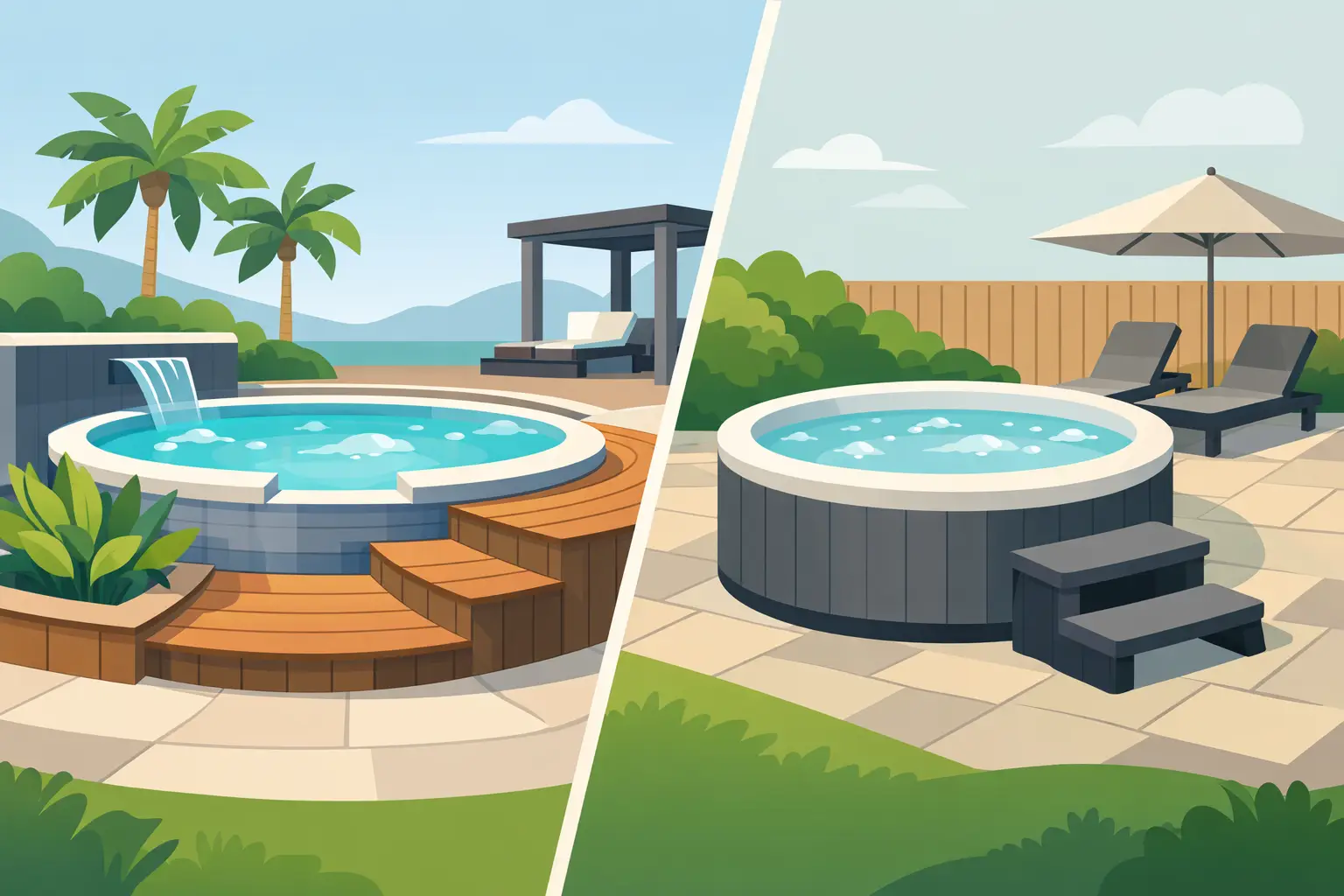
A spa step can either finish the look of a carefully planned backyard or stand out as the one piece that never quite belonged. When weighing custom versus standard spa steps, the right choice comes down to more than price. Entry height, available space, the shape of the spa cabinet, storage needs, and the rest of your outdoor furnishings all affect what will work best for years to come.
Standard steps remain a practical choice for many hot tub owners. Custom steps offer a higher level of fit, coordination, and function when the spa area calls for something more specific. Understanding the trade-offs helps you invest with confidence.
What Standard Spa Steps Do Well
Standard spa steps are designed to work with a broad range of hot tubs. They are typically offered in familiar sizes, straightforward configurations, and a limited selection of popular colors. For a conventional hot tub installation with an accessible entry side and adequate patio space, that simplicity can be exactly what is needed.
The main appeal is speed and convenience. A standard step is often an efficient solution when the spa cabinet is a common height, the cover lifter does not interfere with access, and the homeowner needs a dependable path in and out of the water without redesigning the entire area. It also works well when a spa dealer needs a reliable accessory option that can serve many customers and spa models.
That does not mean every standard step is built alike. Material quality matters greatly outdoors. Steps made from furniture-grade recycled HDPE offer a solid, substantial feel and hold up far better against moisture, sun, and seasonal temperature changes than lightweight alternatives. They are easy to maintain and do not require the sanding, staining, or sealing associated with wood.
For a simple installation, a well-built standard step can provide dependable footing and a clean, finished appearance. The key is making sure “standard” does not become “close enough.”
Where Standard Steps Can Fall Short
A standard size may not align cleanly with the spa entry. It may be too narrow for the visual scale of a large hot tub, too shallow for a high swim spa platform, or positioned awkwardly around a cover lifter, handrail, landscaping edge, or raised deck. These small compromises can become noticeable every time the spa is used.
Color is another common consideration. A standard black, gray, or brown step may be serviceable, but it can look disconnected when the spa has a distinctive cabinet finish or the patio includes coordinated outdoor furniture. Homeowners who have invested in a premium spa often want the surrounding accessories to look intentional rather than added as an afterthought.
Storage can also be limited. Many spa owners need a convenient place for towels, water care supplies, cover accessories, or frequently used items. If the selected step has no integrated storage or does not fit the equipment you need nearby, the spa area can become cluttered quickly.
Standard steps are best when the dimensions, access requirements, and finish are genuinely compatible. If one or more of those factors is a compromise, a custom solution may deliver much stronger value over the life of the spa.
Custom Versus Standard Spa Steps: The Real Difference
The most meaningful difference between custom versus standard spa steps is not simply appearance. It is the ability to design around the way a specific spa area is used.
Custom steps can be built to suit the dimensions of a particular hot tub or swim spa, including unusual cabinet lengths, elevated installations, recessed areas, or tight backyard layouts. Instead of forcing a universal product into a unique space, the step becomes part of the overall installation. This can make entry and exit feel more natural, especially for families, older adults, and guests who appreciate secure, generously sized footing.
A custom approach also allows for more purposeful storage. A step can be designed to provide accessible space for towels or spa essentials while keeping the outdoor area polished. For larger swim spas, custom platforms and coordinated steps can help address the greater height and footprint that standard products may not accommodate well.
Color coordination is equally valuable. Matching or complementing the spa cabinet, cover, decking, and surrounding outdoor furniture creates the composed look homeowners expect from a premium backyard retreat. It is a design detail, but it carries practical weight too: when every piece has a place, the entire area is easier to maintain and enjoy.
Fit and Safety Should Lead the Decision
A beautiful spa setup should never make access an afterthought. The rise between the patio and the spa lip, the depth of each tread, and the usable width of the step all contribute to a safer experience. This is especially relevant for tall spas, partially raised installations, and swim spas that sit higher than a typical portable hot tub.
Before choosing either option, measure the spa entry height and the clear area in front of it. Consider where the cover opens, whether a cover lifter swings behind the spa, and how people naturally approach the water. A step positioned too close to the shell can feel cramped. One placed too far away can create an uncomfortable gap.
Surface stability deserves attention as well. The step should sit on a firm, level base and remain secure through changing weather. Premium recycled HDPE construction is well suited to outdoor spa environments because it resists moisture and is easy to clean, while a substantial design helps the step feel stable underfoot.
If mobility is a concern, a wider platform, additional tread depth, or a coordinated handrail can be worth considering. The best configuration depends on the homeowner, the spa height, and the site conditions. Customization is particularly useful when one member of the household needs a more gradual, confident path into the water.
Appearance Matters More Than Many Buyers Expect
A hot tub is often the focal point of a patio, deck, or poolscape. The accessories around it determine whether it looks integrated into the outdoor living space or simply placed there. Standard steps can look excellent when their size and color suit the installation. A custom design becomes more compelling when the backyard has a defined architectural style or the spa is part of a larger entertaining area.
For example, a compact hot tub beside a simple concrete patio may only need a clean, durable two-step unit. A large swim spa beside a covered structure, outdoor kitchen, or upgraded deck may call for a wider platform, storage, and colors that complement the surrounding finishes. Neither choice is automatically better. The setting should set the standard.
Custom work also gives homeowners the opportunity to coordinate related pieces, such as spa-side tables, storage, surrounds, and steps. The result can feel more like outdoor furniture designed for the space than a collection of separate accessories.
Consider Long-Term Value, Not Just the Initial Purchase
The least expensive step is not always the most economical choice. Replacing a faded, unstable, poorly fitting, or difficult-to-clean product costs more than money. It interrupts the use of the spa and can leave the backyard looking unfinished in the meantime.
A durable step built for all-weather exposure can provide years of dependable service with minimal upkeep. Recycled HDPE is a strong option for homeowners who want the look and substance of premium outdoor furniture without routine refinishing. For a custom piece, the higher initial investment can be justified when it solves multiple problems at once: access, storage, color coordination, and efficient use of limited space.
For dealers and spa professionals, the same principle applies. A thoughtfully matched accessory supports the quality of the spa sale and reduces the chance that a customer will need to replace a generic option shortly after installation.
When to Choose Each Option
Choose standard spa steps when your spa has a conventional entry height, the available space is open and uncomplicated, and a proven size and color already suit the setting. This is often the right route for homeowners who want a quick, durable upgrade without special storage or layout requirements.
Choose custom spa steps when your spa installation has a unique footprint, a higher entry point, limited clearance, a need for integrated storage, or a carefully coordinated outdoor design. Custom is also worth exploring when the step needs to work with a particular spa model or solve a specific access concern.
A&B Outdoor Products has built its reputation around helping homeowners and spa professionals find solutions that look refined, perform outdoors, and fit the way each space is actually used. A short design conversation and accurate measurements can prevent a long-term mismatch.
The right spa step should make getting into the water feel easy, keep essentials close at hand, and look like it was always meant to be there. Start with the realities of your space, then choose the level of customization that lets your backyard work as beautifully as it looks.
