
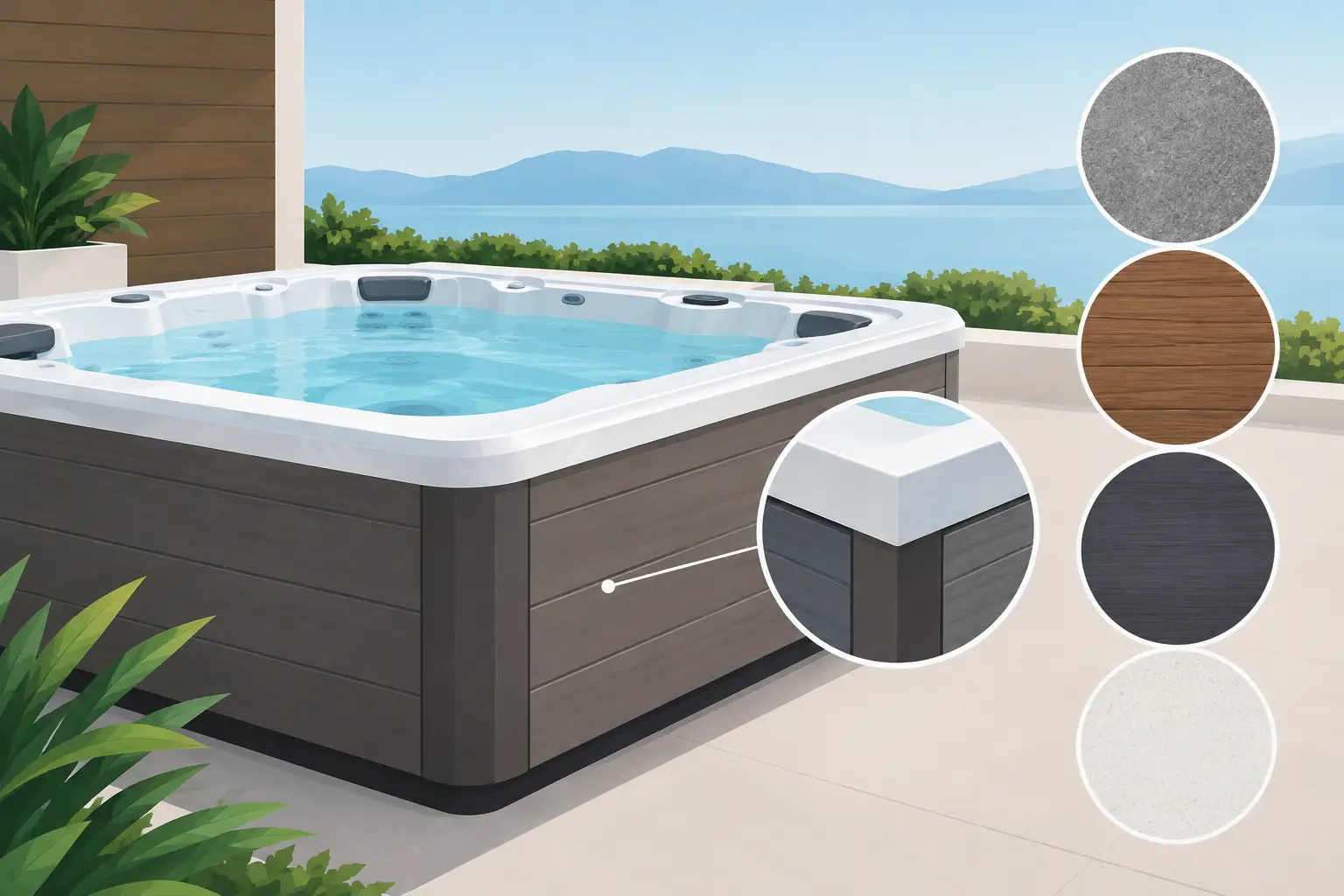
A hot tub can be a beautiful centerpiece, but the space around it determines whether it feels like a finished outdoor retreat or an appliance placed on a patio. The right spa surround finish brings the entire area together while solving everyday concerns: safe footing, convenient storage, comfortable seating, and materials that hold their appearance through changing weather.
For homeowners investing in a premium hot tub or swim spa, finish is not an afterthought. It is the visible and tactile connection between the spa shell, the home, the landscape, and the furniture used every day. A well-chosen surround should look intentional on installation day and remain easy to maintain years later.
What a Spa Surround Finish Needs to Do
A surround finish has a larger job than matching a color sample. It must work with the scale of the spa, the available deck or patio space, the direction of traffic, and the way the family uses the backyard. A small, smooth-sided portable spa may benefit from steps and cabinetry that add visual presence. A large swim spa often needs an integrated layout that makes entry, exercise, towels, and seating feel organized rather than crowded.
Durability is equally important. Spa areas experience a demanding mix of moisture, sanitizing chemicals, sun, temperature swings, and frequent use. Materials that look attractive in a showroom can become stained, faded, warped, or difficult to clean when they are constantly exposed to those conditions.
The best finish balances four priorities: appearance, performance, safety, and maintenance. The exact balance depends on the setting. A covered patio has different needs than an uncovered deck in full sun, and a quiet two-person spa calls for a different footprint than a swim spa used by an active family.
Material Choice Sets the Standard
Natural wood, composite decking, stone, tile, and outdoor polymer furniture can all play a role around a spa. Each creates a distinct look, but they do not offer the same long-term experience.
Wood delivers warmth and traditional character. It can be an excellent choice when it coordinates with an existing deck, pergola, or architectural detail. Its trade-off is maintenance. Wood near a spa needs regular attention to help prevent moisture damage, splintering, fading, and finish wear. Homeowners who enjoy caring for natural materials may welcome that routine. Those seeking a more carefree setting often prefer another option.
Stone and tile can create a refined, built-in appearance. They are especially effective for permanent installations and patios designed as full outdoor living spaces. However, the surface needs to be selected carefully for traction, comfort underfoot, and freeze-thaw conditions in colder regions. Installation is also more involved, and changes later can be costly.
Furniture-grade recycled HDPE is a practical premium choice for spa steps, surround components, storage, and tables. Unlike many lower-grade plastics, quality HDPE is designed for outdoor use and does not require painting, staining, or sealing. It resists moisture and is easy to maintain, making it particularly well suited to the splash zone around a hot tub or swim spa.
At A&B Outdoor Products, USA-made recycled HDPE is used to create durable accessories with the substantial feel and clean detailing expected in a high-end spa setting. The material supports a polished finish without asking homeowners to spend weekends refinishing furniture.
Texture and traction deserve equal attention
A beautiful surface is not automatically a safe one. Water, steam, and bare feet change how a surround performs. Steps should have stable construction and surfaces that provide confident footing, especially for children, older adults, or anyone entering the spa after dark.
Texture should feel purposeful rather than aggressively rough. The goal is reliable traction without creating a surface that is uncomfortable to stand on or difficult to clean. Consider where towels will be dropped, where bathers will step first, and whether the route from the house to the spa becomes slick in rain or snow.
Coordinate Color Without Making Everything Match
A coordinated spa area does not require every component to be the same color. In fact, a little contrast often makes the installation look more considered. The spa cabinet may be a deep gray, while the surround uses a warm driftwood tone that relates to the deck. A black or espresso finish can give light-colored spa cabinetry visual definition. Coastal neutrals can soften a bright patio and complement surrounding landscaping.
Start with the largest visual elements: the spa cabinet, decking or patio, and exterior of the home. Then choose the surround finish as a bridge among them. A finish that echoes an undertone in the deck boards or window trim will usually look more natural than one selected in isolation.
Color coordination becomes particularly valuable with custom spa accessories. Purpose-built steps, planters, storage units, and tables can be selected to complement the spa rather than compete with it. This creates the built-in appearance homeowners want without the complexity of a complete construction project.
Before finalizing a color, view samples outdoors whenever possible. Direct sun can make a finish appear lighter, while shade can bring out cooler or warmer undertones. Consider the appearance across the day, not only at the time a photo or sample was viewed.
Design the Finish Around How the Space Is Used
The most successful surround layouts begin with use, not decoration. Ask where people enter the spa, where they will place drinks and towels, and whether the cover lifter needs clear operating space. These practical details should guide the design before selecting accessories.
For a compact hot tub area, a coordinated step and side table may be enough to create order. Choose pieces that give users a stable place to enter and a convenient surface for towels, water, or spa controls without consuming the full patio.
For larger installations, the surround may include storage, privacy elements, multiple access points, and seating. Swim spas often benefit from designated zones. One area can support entry and exit, another can hold fitness equipment or towels, and another can provide seating for guests. Matching finishes across these pieces help a larger layout feel unified.
Do not overlook service access. A spa surround should enhance the cabinet, not block panels that technicians may need to reach. Thoughtful modular designs and properly planned clearances preserve the polished appearance while protecting the ability to maintain the spa over time.
Custom fit creates a more finished result
Standard accessories are convenient, but they are not always the best answer for an unusual spa shape, a tight patio, or a specific access need. Custom pieces can follow the dimensions of the spa, account for cover mechanisms, accommodate uneven terrain, and create more useful storage where it is needed.
This is where a consultative approach matters. Accurate spa measurements, cabinet style, intended traffic flow, and homeowner preferences all influence the final design. A surround that is made to fit can look integrated from every angle instead of appearing added on after the fact.
Choose for the Climate You Actually Have
Outdoor finishes must perform in real local conditions, not ideal ones. Intense sun can fade lesser materials and make dark surfaces hot to the touch. Coastal air can be hard on hardware. Heavy rain, snow, and freeze-thaw cycles demand materials that resist water absorption and movement.
HDPE offers a clear advantage for many climates because it is nonporous and made for all-weather exposure. Still, placement matters. Provide appropriate drainage around the spa, avoid trapping debris beneath accessories, and ensure components sit level. Even the best material benefits from a well-prepared site.
Maintenance expectations should be honest and practical. Low-maintenance does not mean no maintenance. A periodic rinse, mild soap when needed, and a quick check of hardware will keep a quality surround looking its best. The difference is that homeowners can spend their time enjoying the spa instead of sanding, staining, and repairing the furniture around it.
A Finish That Earns Its Place Every Day
The right spa surround finish makes ownership easier in small but meaningful ways. It gives you secure steps when the evening is cool and dark. It keeps towels, robes, and essentials within reach. It gives the backyard a finished appearance that welcomes guests and makes a private soak feel more relaxing.
Choose materials and colors that support the way you live, allow room for service and movement, and favor construction built for outdoor conditions. When the surround feels intentional, the spa becomes more than a destination in the yard – it becomes a comfortable, lasting part of your home.
