
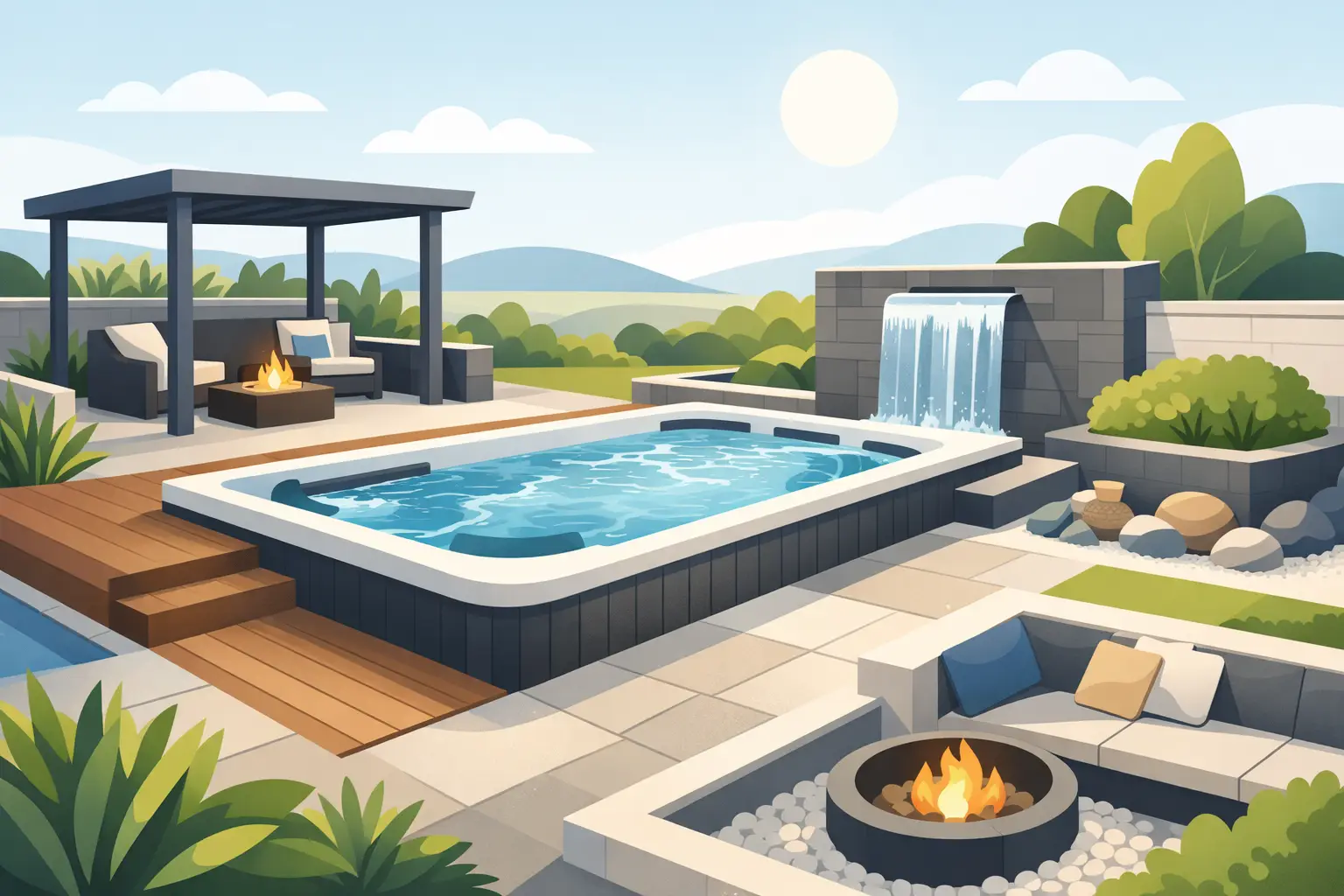
A swim spa can look impressive on its own, but the area around it is what determines how it feels to use every day. The best swim spa surround options do more than frame the shell. They improve entry and exit, create usable storage, give the installation a finished look, and help the entire backyard feel intentional rather than pieced together.
That matters because a swim spa is not a small accessory purchase. It is a major backyard feature, and the surround has to work just as hard. If the area feels awkward, exposed, slippery, or unfinished, you notice it every time you lift the cover, reach for towels, or help a family member get in and out.
What swim spa surround options really need to solve
Most buyers start by thinking about appearance. That makes sense. A surround has a big visual footprint, and it can either elevate the swim spa or make it look like an afterthought. But the strongest surround designs also solve practical issues that show up in daily use.
Entry is usually the first one. Swim spas sit higher than many people expect, and a basic portable step often does not provide the comfort or confidence homeowners want. A more integrated surround can create wider, more stable access and reduce the sense of climbing into a large unit.
Storage is close behind. Covers, chemicals, towels, accessories, and small outdoor items need a place to go. Without a dedicated solution, the area can start looking crowded fast. The right surround can hide clutter and keep essentials close by without making the space feel busy.
Then there is the issue of proportion. Swim spas are long, substantial installations. A small, undersized accessory next to them can look out of scale. A well-designed surround helps the swim spa feel anchored within the yard, especially when paired with coordinating steps, cabinetry, and outdoor furnishings.
The most common swim spa surround options
There is no single best answer for every backyard. The right choice depends on your layout, the spa model, who uses it, and how polished you want the finished area to look.
Basic step-and-access setups
This is the simplest end of the spectrum. Instead of surrounding the swim spa, the setup focuses on one or two access points with larger steps or entry platforms. It is often the right move for homeowners who want better function without changing the entire footprint around the unit.
This approach works well when the swim spa is already installed in a tight space or when the surrounding patio is attractive enough on its own. The trade-off is that it will not create the same built-in, furniture-grade appearance as a more complete surround. It solves access, but usually not storage or visual integration.
Partial surrounds
A partial surround frames one side, one end, or a key entry zone of the swim spa. This option gives homeowners more usable surface area and a more finished appearance without committing to a full perimeter design.
For many backyards, this is a strong middle ground. It can provide steps, storage compartments, and a tailored look while preserving open deck or patio space. It is especially useful when one side of the swim spa sits near a fence, wall, or traffic path where a full surround would feel crowded.
Full surround systems
A full surround wraps the swim spa with a coordinated, built-in look. This is often the most refined choice visually, and it can dramatically improve the way the entire installation feels. When designed well, it turns a large spa into part of a complete outdoor living area rather than a standalone vessel.
The main advantage is cohesion. Entry points can be wider and safer, storage can be integrated more naturally, and the visual weight of the swim spa is balanced by the surround itself. The trade-off is space and budget. A full surround requires enough room to breathe, and the best versions are custom-fit rather than one-size-fits-all.
Material matters as much as layout
Not all surround materials hold up the same way outdoors. This is one of the biggest differences between a quick cosmetic upgrade and a long-term solution.
Wood can look beautiful at first, but it often demands more maintenance than homeowners expect. Moisture, sun, freeze-thaw cycles, and regular exposure to spa water all take a toll. If you want a natural wood look, it is worth being realistic about staining, sealing, and long-term wear.
Lower-cost plastic options may reduce maintenance, but they can also look lightweight next to a premium swim spa. In high-end backyard settings, that mismatch tends to stand out.
Furniture-grade recycled HDPE has become a strong option for premium spa environments because it is designed for weather exposure and easy upkeep. It does not have the same maintenance demands as wood, and when manufactured well, it gives the surround a more substantial, finished appearance. For homeowners investing in a long-lasting outdoor space, material quality is not a small detail. It affects color consistency, structural stability, and how polished the installation looks after several seasons.
Style should match the spa and the home
A surround should not compete with the swim spa. It should make the unit feel like it belongs.
That starts with color coordination. A surround that complements the cabinet and nearby outdoor elements will feel intentional. One that misses the mark can make even an expensive installation look disconnected. This is one reason custom and semi-custom options appeal to homeowners who care about design continuity.
Profile also matters. Some backyards benefit from clean, modern lines. Others look better with a more classic furniture-style approach. The right choice depends on the home, surrounding patio materials, and whether the swim spa is meant to be a visual centerpiece or part of a larger outdoor room.
For dealers and installers, this is often where off-the-shelf options fall short. A generic surround may technically fit the area, but that does not mean it will suit the project.
Safety and usability are where value shows up
A surround can look attractive in product photos and still disappoint in daily use. That is why practical design details matter so much.
Wide, stable steps are one of the biggest upgrades. They make the swim spa easier to use for children, older adults, and anyone who wants a more secure entry point. Handrail compatibility, textured walking surfaces, and thoughtful step height all contribute to confidence and comfort.
Surface space is another overlooked benefit. Homeowners often need a place to set towels, drinks, sandals, or spa accessories. A surround can provide that without turning the patio into a holding area for miscellaneous items.
Storage should also be considered early, not added as an afterthought. Hidden compartments or integrated cabinets can keep the area cleaner and more functional. If the swim spa is used often, those details quickly become part of the value equation.
Custom vs. standard swim spa surround options
Standard options can work when the installation is simple and the goal is basic improvement. They are usually faster to specify and may suit more budget-conscious projects.
Custom options are usually the better fit when homeowners want precise dimensions, coordinated colors, and a surround that accounts for real site conditions. Swim spas vary in size, cabinet design, and access requirements. Patios and decks do too. A custom surround can address those variables instead of forcing the space to adapt to a generic product.
This is where an experienced manufacturer adds value. A consultative approach helps avoid mistakes like blocking service access, crowding the cover system, or creating a surround that looks too bulky for the yard. For a premium installation, those details matter.
A&B Outdoor Products has built its reputation around that kind of problem-solving. For buyers who want more than a decorative add-on, that level of expertise can make the difference between a surround that simply fits and one that truly finishes the space.
How to choose the right option for your backyard
Start with how you use the swim spa now, not just how you want it to look. If daily access feels awkward, prioritize steps and circulation. If the area always seems cluttered, storage should move up the list. If the swim spa dominates the yard visually, a more complete surround may be the right answer.
Next, look at the available space from every side. Measure clearances, account for cover operation, and think about traffic flow. A surround should improve movement around the spa, not tighten it.
Then consider how permanent you want the solution to feel. Some homeowners want a modest improvement that keeps the patio flexible. Others want the swim spa to read as a built-in outdoor feature with a custom, high-end finish. Both are valid. The key is choosing a solution that matches the level of investment you want the backyard to reflect.
Finally, think beyond the first season. A surround has to handle weather, water, regular use, and changing needs over time. The right choice is rarely the one that only looks good on installation day. It is the one that still feels solid, attractive, and easy to maintain years later.
The best swim spa surround options are the ones that make ownership easier and the space more beautiful at the same time. When those two goals come together, the swim spa stops feeling like a standalone unit and starts feeling like part of a well-designed outdoor living environment.
