
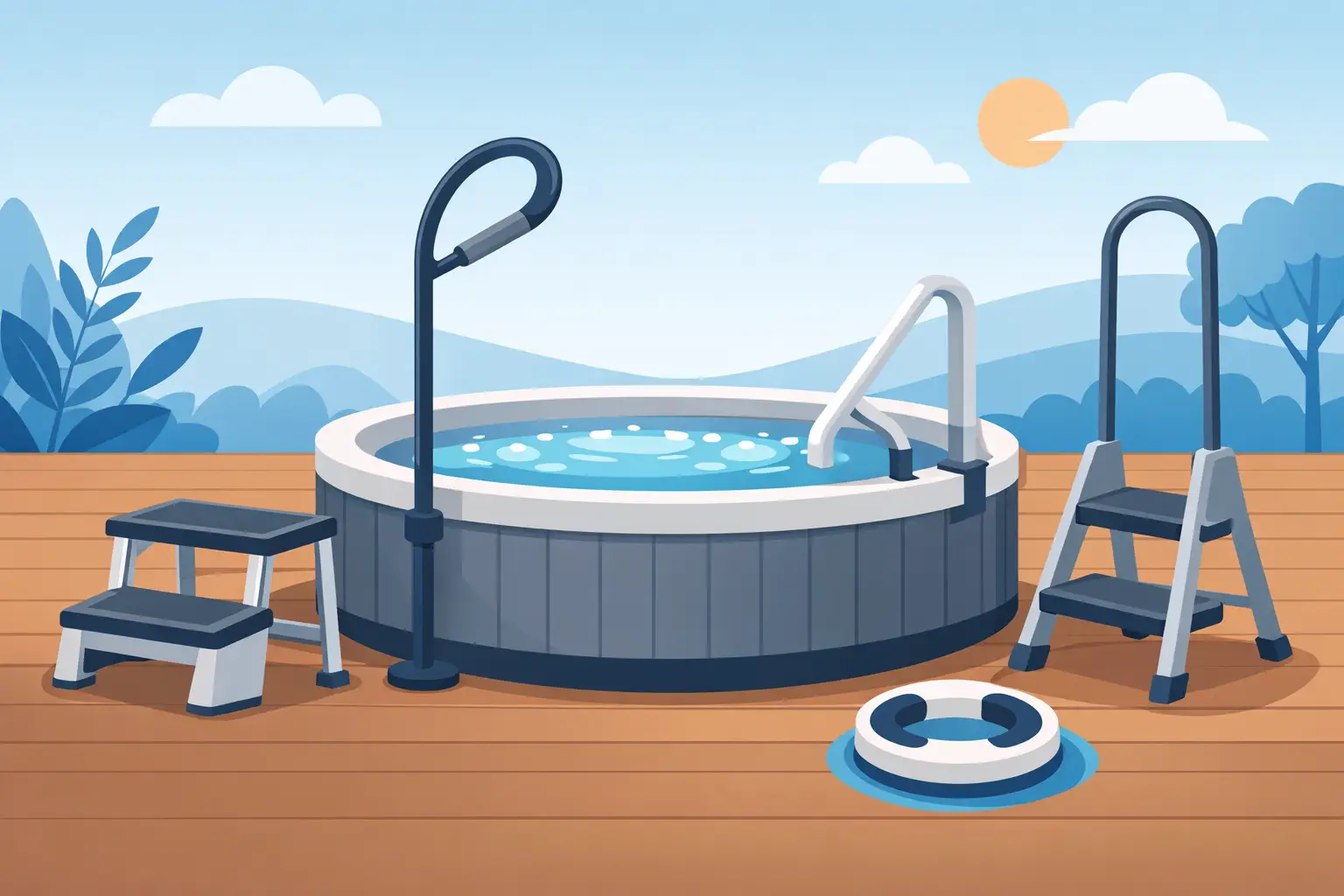
A handrail can make hot tub entry easier, but it is not the only way to create a safer, more comfortable path in and out of the water. The best hot tub handrail alternatives address the full experience around your spa: where you place your feet, what you can hold, how stable the surface feels, and whether the area still looks appropriate for a well-designed backyard.
For many homeowners, the goal is not simply to remove a rail. It is to replace a single-purpose accessory with a more complete access solution that feels substantial, coordinates with the spa, and holds up in every season. The right choice depends on your spa height, deck layout, mobility needs, and how often family and guests use the tub.
Why a Handrail Is Not Always the Right Answer
A conventional hot tub handrail is compact and can be helpful, particularly when installed in the right position. Yet it can also look visually separate from the rest of the spa area, take up valuable deck space, or provide support only at one specific point of entry. A rail that shifts, is poorly placed, or is difficult to reach does little to improve confidence on wet surfaces.
Some homeowners also prefer a cleaner, furniture-quality setting over a visible metal or plastic add-on. That preference is reasonable, but safe access still needs to be the priority. Replacing a handrail should mean improving the entire entry sequence, not simply taking away a point of support.
If a member of the household has balance limitations, recent surgery, or a medical condition that affects mobility, consult a qualified professional before changing the spa access area. A handrail or another dedicated support feature may still be appropriate, even alongside an upgraded step or surround.
Best Hot Tub Handrail Alternatives to Consider
Wide, stable hot tub steps
A properly sized set of spa steps is often the most practical alternative to a standalone handrail. Broad treads give users more room to place their feet securely, while a lower step height reduces the awkward climb that can happen with undersized, lightweight plastic steps. The improvement is especially noticeable when exiting the tub, when wet feet and relaxed muscles can make the last step down feel less certain.
Look for steps with a solid footprint, slip-conscious tread design, and materials that will not rust, crack, or become unstable after repeated exposure to water and temperature changes. Furniture-grade recycled HDPE is a strong option for premium spa settings because it is easy to maintain, resists moisture, and delivers the substantial feel that flimsy molded steps often lack.
The trade-off is space. A wide step unit needs enough clearance in front of the spa to avoid obstructing traffic around the deck or patio. Before selecting one, measure the full approach area, including room for a person to stand comfortably after stepping out.
A custom spa surround with integrated entry
A surround can turn an exposed hot tub shell into a polished outdoor living feature while making entry more intuitive. By building a deck-like perimeter at an appropriate height, a surround reduces the visual and physical gap between the patio and the spa. It can incorporate a dedicated opening with steps, creating a clear route in and out without placing a separate rail beside the cabinet.
This is one of the strongest choices for homeowners who want their hot tub to feel built into the backyard rather than added onto it. A well-planned surround can also provide space for towels, beverages, spa controls, and cover storage solutions. For swim spas, it can be especially valuable because it helps organize a larger footprint and creates a more finished transition from yard to water.
Customization matters here. The surround should account for access panels, cover operation, drainage, electrical requirements, and service clearance. A beautiful design that prevents a technician from reaching the equipment is not a practical long-term investment. A&B Outdoor Products works with homeowners and dealers on custom, USA-made spa furniture designed around real spa dimensions and everyday use.
Spa-side benches and support surfaces
A sturdy spa-side bench can give users a useful pause point before stepping in or after stepping out. It is not a handhold in the traditional sense, but it offers a stable place to sit, set down a towel, or brace a hand while adjusting footwear. For homeowners who want a relaxed, resort-inspired layout, a bench also adds function without the institutional look of an upright rail.
This option works best when paired with quality steps. A bench alone does not solve a steep entry, and it should never be treated as a substitute for a properly engineered support feature when someone needs firm assistance with balance. Its value is in making the access area more usable and less hurried.
Choose a bench with enough weight and a level base so it will not shift on a wet patio. Coordinate its height with the steps and spa cabinet rather than selecting a generic patio bench that happens to fit nearby.
A landing platform or raised deck transition
If your hot tub sits on a lower patio while the home, deck, or seating area is at another elevation, a landing platform can be a better answer than a rail. Instead of asking users to manage one large change in height, the platform breaks the transition into smaller, more comfortable movements. It also creates a natural place to stand while opening the cover or preparing to enter.
A platform is particularly effective beside taller spas and swim spas. It should have a non-slip surface, positive drainage, and a layout that avoids puddling near the first step. In regions with freezing weather, consider how snow, ice, and runoff will affect the route. A safe access plan in July should remain manageable in January.
Built-in grab points within a designed access area
For some layouts, the ideal alternative is not eliminating support altogether but integrating it more thoughtfully. A custom surround, privacy screen, or adjacent structural feature may allow for a discreet, properly secured grab point near the entry. This keeps support exactly where it is needed while preserving a more intentional appearance.
The key word is secured. Decorative furniture, cover lifters, towel bars, and lightweight tables are not designed to bear a person’s weight. Never use them as an improvised grab bar. If you need a support point, select a product or installation method intended for that purpose and verify that it is compatible with the spa location and surrounding structure.
How to Choose the Right Alternative for Your Spa
Start with the user, not the accessory. Consider who enters the hot tub most often, whether guests or older family members use it, and how people typically approach the spa. A tall acrylic spa on a concrete pad presents a different challenge than a partially recessed model beside a deck.
Next, evaluate the entire path. Check the surface from the house to the spa, outdoor lighting, drainage, and the placement of covers, tables, and planters. A premium step unit is less effective if it opens onto a slick, poorly lit walkway. Good access design makes every transition feel deliberate.
Color and proportion deserve attention, too. Hot tubs are large visual features, and accessories that clash with the cabinet can make even an expensive spa area feel unfinished. Color-coordinated steps, surrounds, and benches create a cohesive setting while delivering practical benefits that generic accessories rarely offer.
Finally, think beyond the first season. All-weather materials, reinforced construction, and easy-clean surfaces reduce the maintenance burden and protect the investment. The least expensive option can become costly if it fades, warps, loosens, or needs replacement after a few years outdoors.
Create an Entry Area That Invites You In
The best access solution should make stepping into the hot tub feel natural, not cautious. Whether that means substantial steps, an integrated surround, a landing platform, or a carefully planned combination of these features, the goal is the same: a safer route that belongs in the design of your backyard.
Measure carefully, prioritize stable footing, and choose components made to withstand real outdoor use. When the entry area is designed with the same care as the spa itself, every soak begins and ends on a more comfortable note.
