
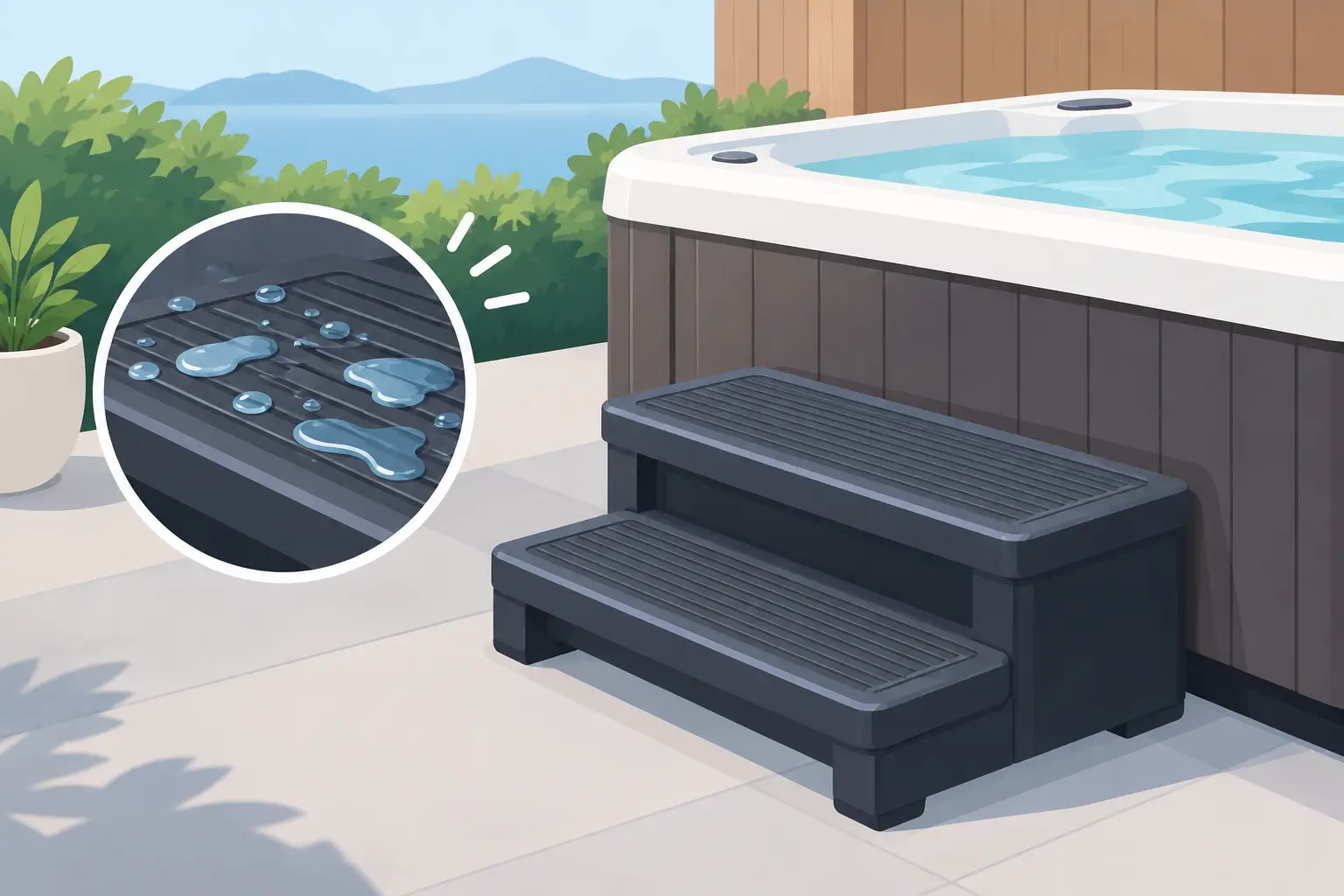
A hot tub can be the most relaxing place in the backyard – until getting in or out feels uncertain. So, are hot tub steps slippery? They can be, especially when water, spa chemicals, oils, changing weather, or a smooth walking surface combine. The good news is that slipperiness is not simply something spa owners have to accept. The right step design, material, placement, and maintenance routine can make entry and exit feel much more secure.
For a premium spa setting, safety and appearance should work together. A well-made set of steps should complement the spa cabinet and surrounding outdoor furniture while giving every guest a stable, comfortable place to step.
Are Hot Tub Steps Slippery in Normal Use?
Even a quality step surface can become slick under the wrong conditions. Bare feet carry water from the spa onto the treads. Body lotions, sunscreen, and natural skin oils can leave behind a nearly invisible film. In shaded areas, pollen, mildew, algae, wet leaves, and dust can accumulate more quickly than many homeowners expect.
Seasonality matters, too. Rain can make any outdoor walking surface wet, while freezing temperatures introduce the obvious hazard of ice. In warm, humid climates, a step that stays damp for long periods may develop surface buildup more quickly. A spa used regularly by children, older adults, or guests deserves particular attention, since people may be less familiar with the location of each step or the best way to enter the water.
That does not mean every wet step is automatically unsafe. It means traction depends on the complete setting: the texture and condition of the treads, the width and stability of the stair unit, drainage around the spa, lighting, and the habits of the people using it.
What Makes a Safer Set of Hot Tub Steps?
A safer spa entry begins with a purpose-built product, not an improvised bench, loose patio block, or lightweight plastic stool. Steps should sit flat and remain stable under normal use. A generous tread depth gives users room to place their whole foot, rather than balancing on a narrow edge. Consistent step heights also make movement feel more natural, particularly when exiting the tub after a long soak.
Surface texture is just as meaningful. Completely smooth materials can feel slick when wet, while a thoughtfully textured or grooved tread provides more purchase for bare feet. Texture should be effective without being harsh or uncomfortable. It should also be easy to clean, because traction features cannot do their job if they are clogged with residue.
Material selection affects both safety and long-term appearance. Furniture-grade recycled HDPE is a strong choice for outdoor spa accessories because it is designed to handle moisture and changing conditions without the routine sanding, staining, or splinter concerns associated with some wood products. Quality construction also helps the steps stay solid and square over time rather than becoming unsteady as seasons pass.
At A&B Outdoor Products, USA-made HDPE hot tub steps are built for the practical realities of spa ownership while offering color coordination and design options that make the entire spa area look intentional. That combination matters. A stable, attractive entry is much more likely to stay in place and be used properly than a temporary solution that never quite fits the space.
Width, Height, and Placement Matter More Than Many People Think
The best step is not necessarily the largest one. It is the one that suits the height of the spa and leaves enough clear space around the entry. If steps are too high, too narrow, or positioned at an awkward angle, users may rush their footing. If they are placed where a cover lifter, handrail, planter, or nearby furniture restricts movement, the path in and out becomes less natural.
Measure the spa entry height before selecting steps, then consider who uses the tub most often. A low-profile spa may need only one broad platform, while a taller hot tub or swim spa may call for a multi-step arrangement. For households where balance or mobility is a concern, adding an appropriately positioned handrail can provide valuable support. Steps and handrails serve different purposes, but together they create a more confident entry sequence.
Leave room for water to drain away from the base of the steps. Constant puddling will not only make the area feel less inviting, but can also carry residue onto the treads every time someone enters or exits the spa.
Common Reasons Hot Tub Steps Become Slick
Most slippery-step problems build gradually, not all at once. A quick visual inspection before using the spa can catch obvious water, leaves, or ice, but regular cleaning handles what the eye may miss.
Four conditions deserve the most attention:
- Spa water dripping from swimmers and wet towels left near the entry.
- Sunscreen, lotions, beauty products, and body oils that leave a slippery coating.
- Organic buildup, including pollen, algae, mildew, grass clippings, and damp leaves.
- Winter moisture, frost, or ice around the spa and on step surfaces.
Avoid assuming that a recently rinsed surface is fully clean. Water alone may not remove oily residue. Follow the step manufacturer’s care guidance and use a cleaner suitable for the material. A soft brush can help lift dirt from textured areas without damaging the finish. Rinse thoroughly, then allow the surface to dry when conditions permit.
How to Keep Hot Tub Steps Safer Year-Round
A practical maintenance routine does not need to be complicated. Before a soak, take a few seconds to clear standing water, leaves, or snow from the steps. After heavier use, wipe up obvious splashes and move wet towels away from the entry path. These small habits keep residue from building into a more persistent problem.
Give the steps a closer cleaning as part of normal spa-area care. The exact frequency depends on your climate, tree coverage, and how often the hot tub is used. A covered patio in a dry region may need less attention than a shaded spa surrounded by mature landscaping. During pollen season or periods of heavy rain, inspect more often.
Lighting is another often-overlooked safety feature. The path to the spa should be easy to see after sunset, and the edge of each tread should be distinguishable without producing harsh glare. Low outdoor lighting near the steps, paired with a clear walkway, helps users place their feet with confidence.
Footwear also has a place in the conversation. While many owners prefer bare feet at the spa, slip-resistant outdoor sandals can be useful for walking across wet decking, concrete, or stone. They are especially practical when moving between the house and spa in cold or rainy weather. The key is to keep the walking route clear so footwear does not become another tripping issue.
Do Not Try to Solve Every Problem With Add-Ons
Adhesive traction strips and mats may seem like an easy answer, but they are not always ideal for outdoor spa steps. Some can trap dirt and moisture around their edges, peel over time, or create a raised lip that changes the feel of the tread. Others may not adhere well to certain materials or may detract from a carefully designed spa area.
A better first approach is to choose stable, well-proportioned steps with an appropriate tread surface, then keep them clean and properly positioned. Add a handrail when extra support is needed. Consider supplemental traction products only after confirming they are compatible with the step material and will not interfere with drainage or regular cleaning.
When It Is Time to Replace Spa Steps
Inspect older steps for movement, cracks, warping, loose fasteners, worn tread areas, or a surface that no longer cleans up well. Wood steps can also develop splinters, soft spots, or finish deterioration after repeated exposure to moisture and sun. Any instability deserves prompt attention, even if it seems minor.
Replacement is also an opportunity to improve the overall spa environment. Steps can be selected to coordinate with the hot tub cabinet, nearby seating, storage, and tables, creating a finished outdoor living area rather than a collection of mismatched accessories. For custom spa shapes or unusually tight layouts, an exact-fit solution may be worth considering.
A safer spa entry is rarely about one dramatic change. It comes from dependable steps, a clean surface, good drainage, and a layout that gives people room to move naturally. When those details are handled well, stepping into the water feels like it should: easy, secure, and part of the relaxation.
