
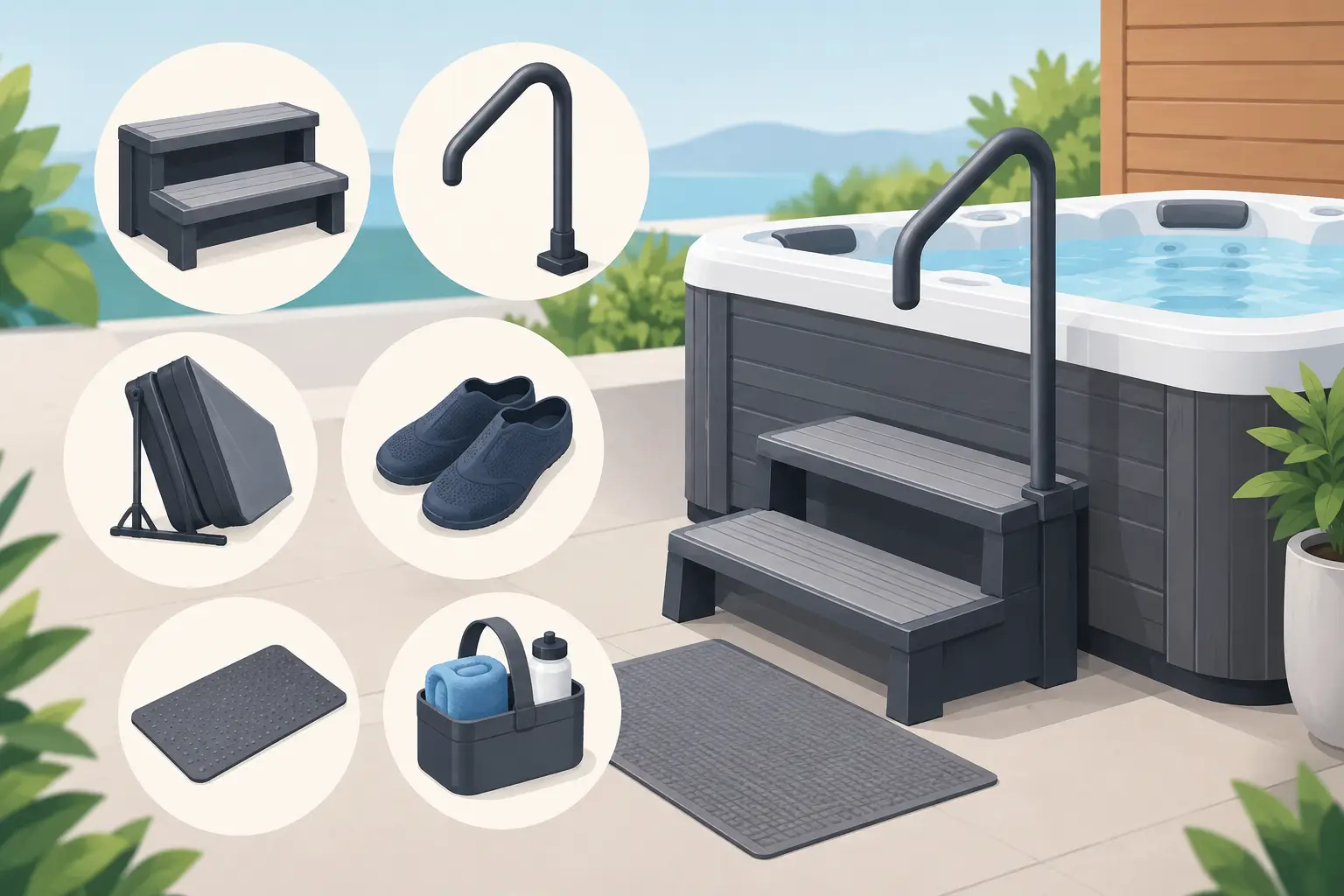
A hot tub should feel inviting from the moment you approach it, not like something you have to carefully navigate in the dark or bad weather. The top hot tub entry accessories solve the practical details that affect every soak: a stable first step, a secure handhold, a dry place for towels, and a clean-looking area around the cabinet. When chosen to suit your spa and backyard, these additions make the entire installation feel more finished.
For homeowners investing in a premium outdoor space, entry accessories are not an afterthought. They are the connection between the patio and the spa itself. The right combination improves access for family and guests, keeps necessities close at hand, and complements the color and scale of the hot tub rather than crowding it.
1. Spa Steps Built for Stable, Comfortable Access
Quality hot tub steps are the foundation of a safer entry area. They should provide a comfortable rise from the ground to the spa shell, a broad surface underfoot, and enough depth to avoid the cramped feeling common with lightweight plastic steps. This matters even more when feet are wet, when the cover is open after sunset, or when guests are unfamiliar with the layout.
Start with height. A low-profile spa may need a simple two-step configuration, while a taller model or an elevated pad may call for three steps or a platform-style design. The goal is a natural step height, not a large climb followed by an awkward turn into the water. Measure from the finished ground surface to the spa entry before selecting a design.
Material makes a lasting difference. Furniture-grade recycled HDPE does not absorb moisture, rot, splinter, or require seasonal staining like wood. It is also substantial enough to feel secure underfoot while remaining easy to maintain. For a coordinated outdoor setting, choose a step color that complements the cabinet, cover, decking, or surrounding furniture.
2. A Spa Handrail Where It Is Needed Most
A handrail adds confidence at the point where balance is most likely to be challenged: stepping over the spa wall. It is especially valuable for households with older adults, people recovering from injuries, or anyone who wants a more secure way to enter and exit after a relaxing soak.
Placement matters as much as the rail itself. A handrail should be easy to reach from the top step and remain useful while entering the water. It should not interfere with the cover, block a frequently used walkway, or create a tight corner around the stairs. This is where a thoughtful accessory layout is better than simply adding components one at a time.
A handrail is not a substitute for properly sized steps or a level foundation. It works best as part of a complete access plan that gives users stable footing before they ever reach for the support.
3. A Side Table for Towels, Drinks, and Essentials
The best spa entry area has a convenient landing place for the items that should not be set on the ground. A weather-resistant side table can hold folded towels, water bottles, a phone kept safely away from splashes, or the book you plan to read between soaks. It also gives guests a clear place to put their belongings instead of balancing everything on the spa cover.
Look for a table with a stable footprint and a height that works from the steps or nearby seating. A compact table may be all that is needed beside a smaller spa, while a larger gathering area can benefit from coordinated tables placed near the entry and lounge seating. Avoid overfilling the perimeter. The walkway to the steps should remain open and easy to use.
Matching materials and colors help the table look intentional. A coordinated HDPE piece can bring the spa cabinet, steps, and surrounding patio furnishings into one cohesive outdoor room.
4. Storage That Keeps the Entry Clear
Hot tub ownership comes with useful equipment: towels, water-care supplies, test strips, floating accessories, cleaning tools, and seasonal items. Without a designated storage solution, those items often migrate to a nearby chair, the ground beside the spa, or a garage shelf far from where they are needed.
A storage bench or cabinet near the spa can solve that problem while adding useful seating or surface space. It is particularly helpful for homeowners who want the area to look polished when the spa is not in use. The key is choosing storage designed for outdoor conditions, not an indoor-style cabinet that will swell, fade, or deteriorate under sun and moisture.
Keep chemicals separated from towels and personal items, and follow product-label storage instructions. The most attractive storage solution is still only useful if it supports safe, orderly spa care.
5. Lighting for Safe Evening Entry
A beautiful hot tub is often used after the sun goes down, which makes lighting an entry accessory rather than a decorative extra. Soft, well-positioned lighting helps users see each step, identify changes in level, and move comfortably between the house and spa.
The best lighting plan avoids glare. Bright fixtures aimed directly at the water or step surface can make it harder to see, particularly when people are transitioning from a darker yard. Low pathway lighting, step-adjacent fixtures, and gentle illumination around the perimeter usually create a more comfortable result.
Consider the path as a whole. Lighting only the spa steps does not help much if the route from the patio door, gate, or changing area remains dim. A clear, consistent path improves safety and makes the backyard feel more welcoming for guests.
6. A Cover Lifter That Protects Access Space
A cover lifter may not look like an entry accessory at first, but it has a direct effect on how easily the spa can be used. A heavy cover that must be dragged across the patio or leaned against a wall creates clutter and can turn a quick evening soak into a two-person job. A properly selected lifter keeps the cover managed, protects it from damage, and preserves a clean route to the steps.
Before choosing one, account for clearance behind and beside the spa. Some lifters need generous space to fold the cover down, while others are designed for tighter installations. Also consider the viewing angle. You do not want a stored cover blocking the preferred view from the water or narrowing the walking area near the entry.
7. A Custom Surround or Entry Platform
For a spa that sits higher off the ground, has an unusual shape, or occupies a prominent place in the backyard, a custom surround can be the most effective long-term answer. It can combine steps, handrails, storage, tables, and transition areas into one tailored design. The result is easier access and a more architectural look than separate accessories placed around the cabinet.
Custom work is particularly worthwhile when standard steps leave gaps, when the spa sits near a deck edge, or when homeowners want exact color coordination with an existing outdoor kitchen, railing, or furniture collection. It also gives you the opportunity to account for cover-lifter clearance, equipment access, drainage, and traffic flow from the beginning.
At A&B Outdoor Products, custom hot tub products are built in the USA from durable recycled HDPE and designed around the real dimensions and needs of the installation. That level of fit can turn a difficult entry area into a natural extension of the backyard.
How to Choose the Right Combination
There is no single accessory package that fits every spa. A compact hot tub on a level concrete patio may only need quality steps, a handrail, and a small table. A swim spa or elevated hot tub can require a broader platform, multiple access points, more storage, and carefully planned lighting.
Before buying, measure the spa height, available clearance, and the main walking routes around the unit. Think about who uses the spa most often, including guests and family members who may need more stable support. Then consider the visual goal. If your backyard includes premium furnishings and landscaping, entry accessories should uphold that standard rather than look temporary beside the spa.
The strongest choices balance safety, durability, and appearance. Invest first in stable access and clear walkways, then add the details that make every use more convenient. A well-designed entry area does more than help people get into the water – it gives everyone a better reason to use the spa often.
