
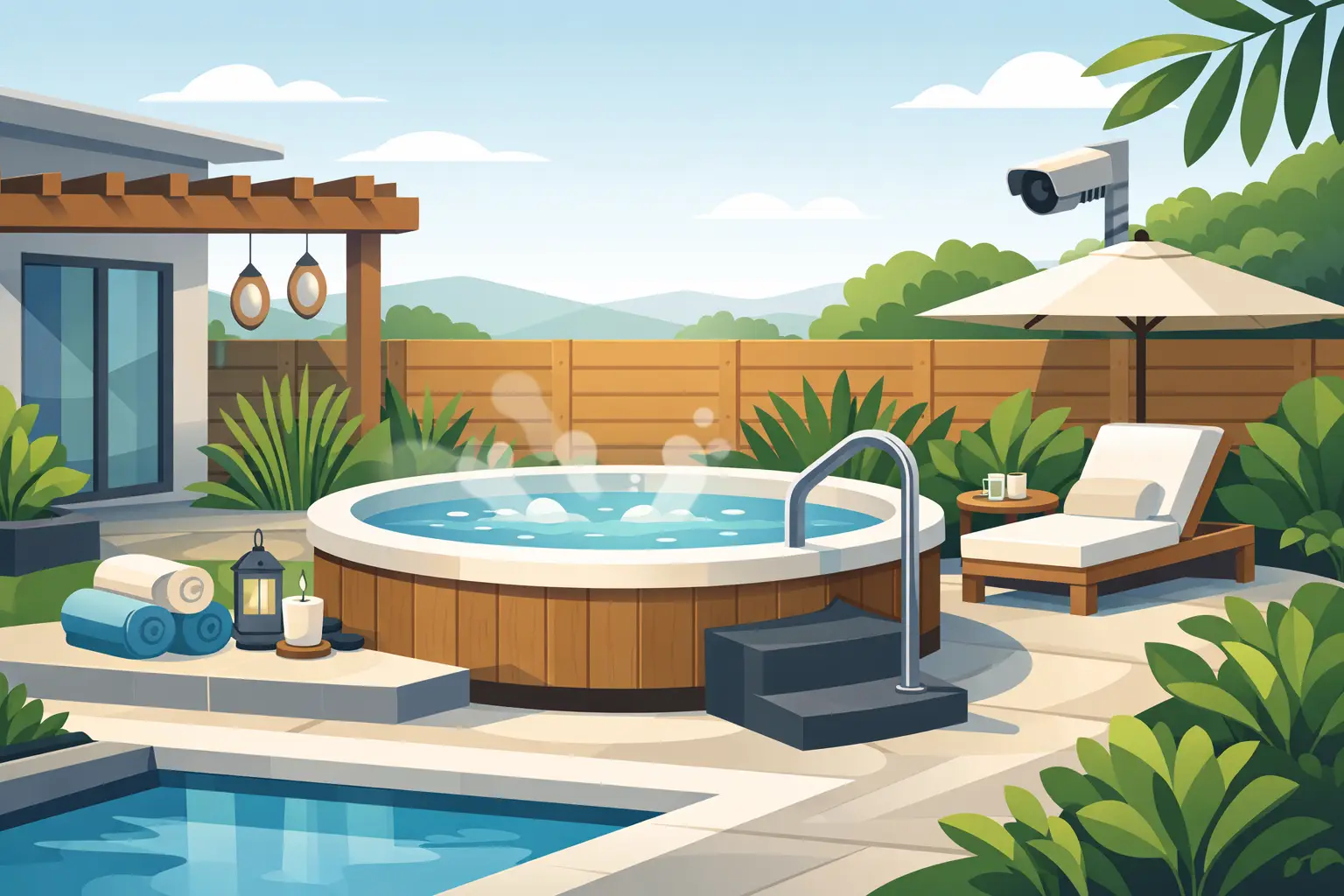
A beautiful hot tub area can become a safety concern in seconds when wet feet meet a slick deck, an unstable step shifts underfoot, or a loose cover lifter blocks a clear path. Spa safety is not a single product or a checklist completed once. It is the result of a backyard setup that makes entering, exiting, relaxing, and maintaining the spa feel natural for everyone who uses it.
For homeowners, this means looking beyond the spa shell itself. Steps, handholds, surfaces, storage, lighting, and furniture placement all influence how confidently people move through the space. For dealers and spa professionals, these details are often what turn a standard installation into a polished, dependable outdoor environment that customers enjoy for years.
Spa Safety Is Built Into the Space
The most effective safety improvements are usually the ones people barely notice because they make the spa area easier to use. A stable set of steps at the proper height, for example, reduces the awkward reach from the ground to the spa rim. A well-placed table keeps drinks, towels, and personal items from collecting on the deck where they can create clutter and tripping hazards.
Every spa installation is different. A low-profile hot tub on a level patio may need a simple, wide entry solution, while a raised spa, sloped yard, or swim spa may call for a more substantial platform or custom-fit step arrangement. The right choice depends on spa height, deck material, available clearance, and the needs of the people using the space.
Safety should also complement the setting. Homeowners should not have to choose between a refined backyard design and reliable access. Furniture-grade recycled HDPE accessories can provide the solid feel and weather resistance needed around water while offering coordinated colors and clean lines that suit a premium spa installation.
Start With Entry and Exit
Getting in and out of a hot tub is where many avoidable accidents begin. Water changes the equation. Even someone with good balance may be less steady after a long soak, especially on a cold evening or when carrying a towel, beverage, or cover in one hand.
A quality spa step should sit firmly on a stable, level surface. It should not rock, slide, or sink into soft ground. The tread should be wide enough for a secure stance, with enough depth to avoid forcing users to place their feet at an awkward angle. Steps that are too narrow, too tall, or poorly positioned can make each entry feel uncertain.
Consider who uses the spa most often. Older adults may benefit from lower, broader steps and a nearby grab bar or rail. Families with children need a setup that supports supervised use and discourages unsupervised access. For swim spa owners, the greater height of the vessel often makes a purpose-built entry system especially valuable.
A handrail can be a smart addition, but it should be treated as support rather than a substitute for stable stairs. If the footing below is slippery or the step placement is wrong, a rail alone will not solve the problem. The entire route from the house or patio to the spa should feel clear and secure.
Keep Wet Surfaces From Becoming Hazards
Water will leave the spa. The goal is not to eliminate every splash, but to manage where water lands and how quickly it can drain or dry. Review the surface around the spa after normal use, not just when it is clean and dry. This is when slick areas, puddles, and uneven transitions become obvious.
Textured, slip-resistant decking and properly maintained patio surfaces provide a better foundation than smooth, worn, or algae-covered materials. If the spa sits on a deck, check for loose boards, raised fasteners, and areas that hold water. On concrete or pavers, watch for settlement that creates low spots near the steps.
Outdoor rugs can add comfort, but they are not automatically safer. A rug that curls at the edges, stays saturated, or slides across the surface can create a new problem. If one is used, choose an outdoor-rated option designed to drain and stay in place, and inspect it regularly.
Drainage matters just as much. Downspouts, landscape grading, and spa overflow should direct water away from walking paths whenever possible. During winter, a small area of standing water can become ice, turning a minor inconvenience into a serious fall risk. In regions with freezing weather, keep de-icing materials appropriate for the surrounding surface available before the first hard freeze.
Use Lighting That Helps People See the Next Step
Soft backyard lighting creates atmosphere, but spa-area lighting also has a practical job. Users should be able to see the path to the spa, identify the edge of each step, and find a towel or cover handle without fumbling in the dark.
Lighting does not need to be harsh or overly bright. Low-voltage path lights, step lighting, and thoughtfully placed fixtures near key transitions can provide useful visibility while preserving the relaxed feel of the space. Avoid placing lights where glare reflects off wet decking or the water surface. The best lighting reveals changes in level without shining directly into someone’s eyes.
Check the lighting from the perspective of a person leaving the spa at night. Stand where the user would stand, with the cover open and steam in the air. If steps, rails, or route changes disappear into shadow, adjust the plan.
Reduce Clutter Around the Spa
A spa area works best when the essentials have a proper home. Towels draped over steps, chemicals tucked behind the cabinet, and floating toys scattered across a patio make the area less inviting and less safe.
Storage should be close enough to be convenient without narrowing the entry path. A durable storage bench, cabinet, or integrated accessory station can keep towels, water-care supplies, cover accessories, and outdoor items organized. Chemical storage deserves particular attention. Keep products in their original containers, away from children and pets, protected from moisture, and separate from towels or entertainment items.
Cover lifters should also be installed and used according to their intended clearances. An improperly positioned cover can obstruct walkways, catch in wind, or encourage users to drag it across the deck. A cover that is easy to open and close is more likely to be used consistently, which supports both safety and water quality.
Keep a clear perimeter around the primary entry point. A stylish table or planter can enhance the space, but it should never force users to squeeze past furniture or step around objects while wet. Leave room for the natural movements of opening the cover, stepping in, and sitting down.
Protect Water Quality and the People in It
Spa safety continues below the waterline. Clean, balanced water protects equipment, supports comfort, and reduces the chance of skin or eye irritation. Follow the spa manufacturer’s guidance for testing, sanitizing, filtration, and water changes. If the water looks cloudy, smells unusual, or feels irritating, address it before inviting anyone in.
Temperature deserves the same attention. Hot water affects people differently depending on age, health, medication, hydration, and how long they have been soaking. Keep the temperature within the manufacturer’s recommended limits, encourage guests to take breaks, and make drinking water readily available nearby. Alcohol can impair judgment and increase the risk of overheating or falls, so it should never be treated as part of the spa safety plan.
Children require active adult supervision around any body of water, including a hot tub. A secured cover, barriers where appropriate, and clear household rules all help, but none replace attentive supervision. Pets should be considered as well. They may be drawn to the warmth or water but can slip on steps and decks just as easily as people.
Choose Accessories Made for Outdoor Use
Outdoor spa accessories live in demanding conditions. They face sun exposure, rain, snow, temperature swings, pool or spa chemicals, and frequent contact with wet hands and bare feet. Lightweight or poorly made furniture can fade, crack, shift, or become difficult to maintain over time.
That is why material quality matters. USA-made, furniture-grade recycled HDPE is engineered for outdoor use and is easy to maintain, making it well suited for spa steps, tables, storage, and surrounding furniture. The goal is not simply to add accessories. It is to invest in pieces that remain stable, attractive, and functional through changing seasons.
Custom sizing can be especially worthwhile when standard products leave an awkward gap, block equipment access, or fail to align with the spa’s entry height. A&B Outdoor Products works with homeowners and dealers to create coordinated, practical solutions that fit the spa and the way the space is used. The result can feel more intentional while solving real access and organization concerns.
Before choosing any accessory, consider weight capacity, footing, maintenance needs, equipment access, and how it will perform in your local climate. A piece that looks right in a product photo may not be right for a raised deck, uneven paver patio, or exposed coastal setting.
Make Safety Part of Regular Spa Care
A well-designed setup still needs periodic attention. Include the surrounding area in routine spa maintenance. Check steps for movement, inspect rails and fasteners, sweep away leaves and debris, test lighting, and look for surfaces that have become slippery. Seasonal changes often reveal issues that were not present at installation.
After storms, high winds, or freezing weather, take a quick walk around the spa before using it. Confirm that furniture has not shifted, the cover is secure, and the path remains clear. Small adjustments made early can prevent a damaged accessory or a minor drainage issue from becoming a bigger repair.
The best spa spaces invite people to slow down, not watch every step. When entry is secure, essentials are organized, and every accessory is selected for the environment, the backyard becomes easier to enjoy in every season. Start with the route your family and guests take to the water, then build a space that supports them from the first step to the final towel.
